
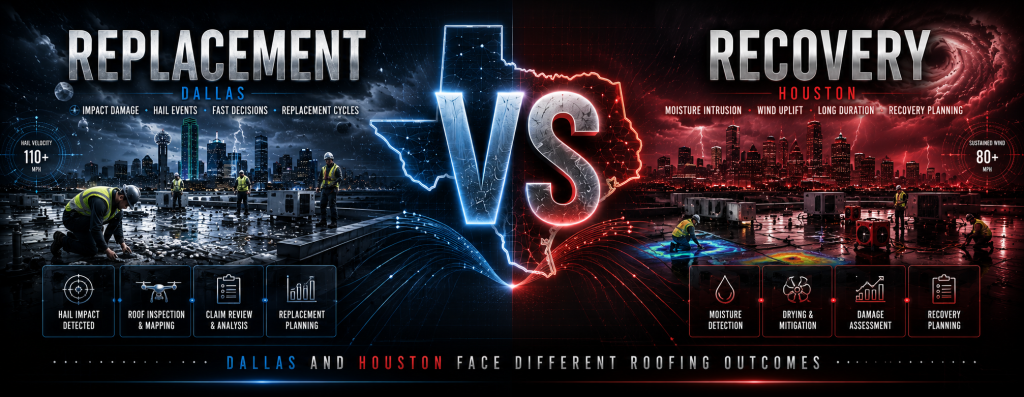

Richardson vs Sugar Land Roofing — Technology Districts And Commercial Roof Aging
Technology districts create a unique commercial roofing environment.
Buildings often remain occupied for long periods.
Operational uptime becomes critical.
Infrastructure reliability affects thousands of employees.
Richardson and Sugar Land represent two of Texas’ most established business and technology-oriented commercial markets. Both communities contain office campuses, research facilities, healthcare properties, financial services operations, corporate headquarters, and professional office environments.
Innovation helped shape both regions.
Long-term investment supported growth.
Commercial development expanded steadily over decades.
Time now introduces a new challenge.
Aging commercial roofing systems increasingly require attention.
Understanding how those replacement cycles develop helps property owners plan more effectively.
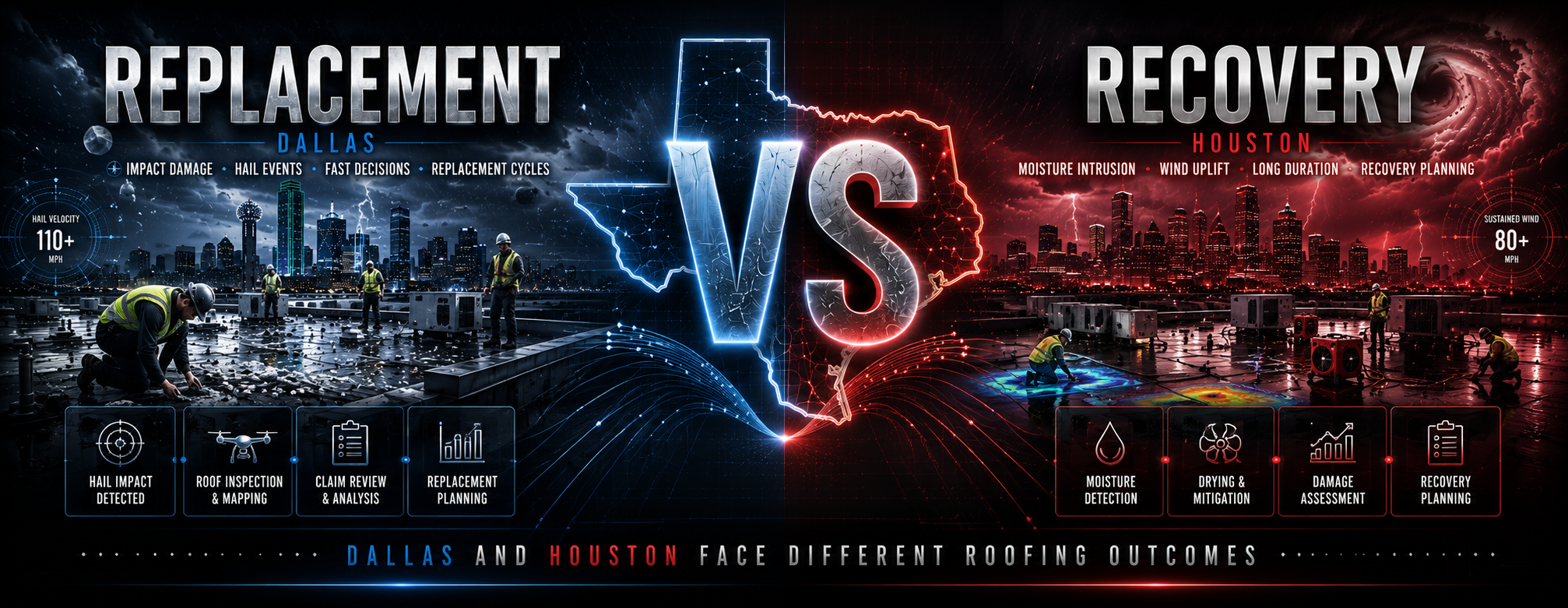
Quarter 1: Building Age Begins Influencing Roofing Decisions
Every commercial district eventually enters a maturity phase.
Development history matters.
Construction timing matters.
Roofing lifecycles matter.
Richardson experienced substantial growth during the telecommunications and technology expansion that transformed the region into one of North Texas’ most important business centers.
Many office buildings now operate within advanced stages of their roofing lifecycle.
Original systems have aged.
Second-generation systems continue maturing.
Replacement planning becomes increasingly important.
Sugar Land followed a different growth pattern.
Master-planned development drove expansion.
Corporate growth arrived steadily over multiple decades.
Many commercial properties remain newer than comparable inventory in Richardson.
Lifecycle timelines therefore differ.
Replacement demand often reflects those age differences.
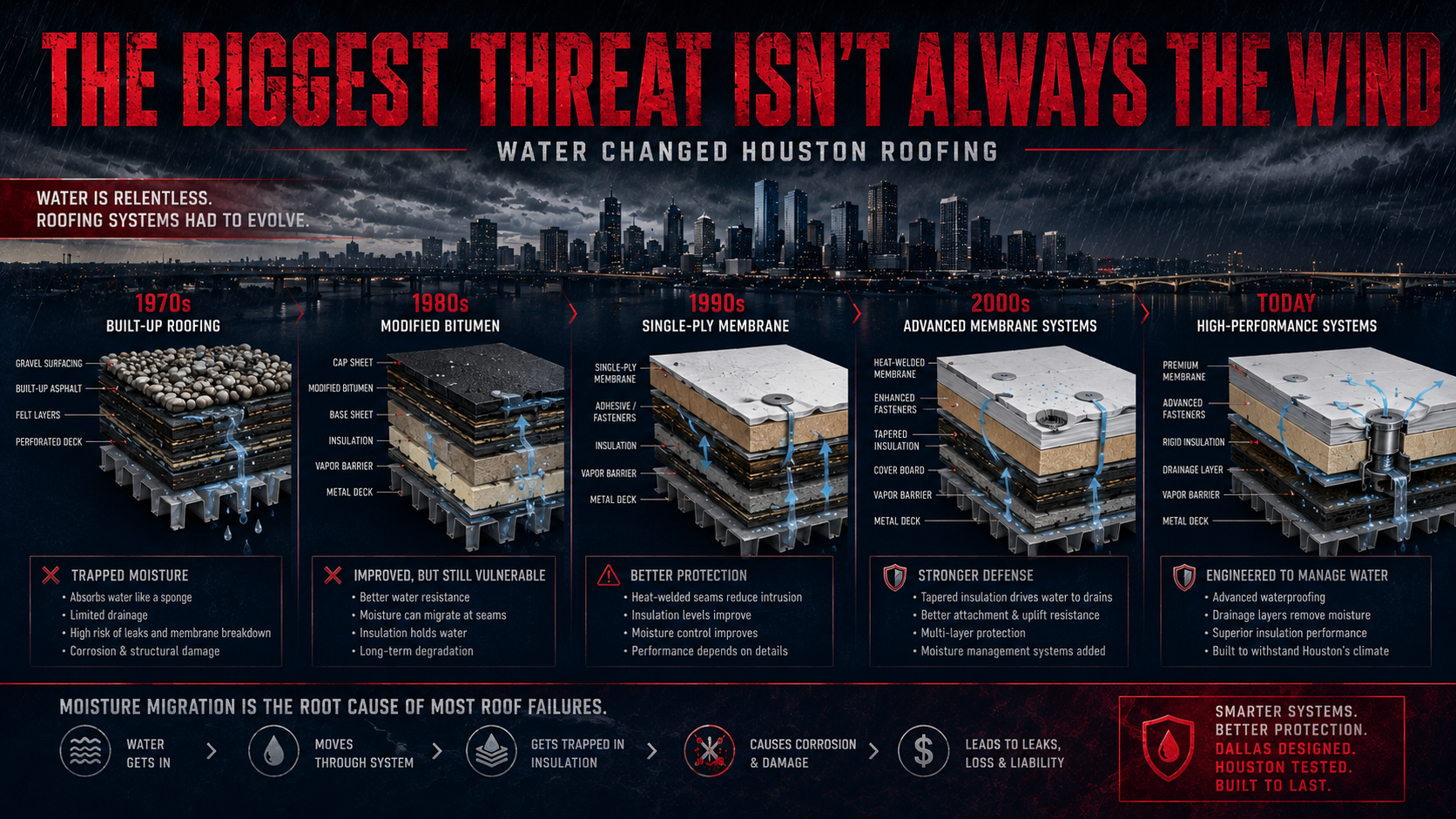
Technology Districts Depend On Roofing Reliability
Data infrastructure requires protection.
Office operations depend on stable environments.
Research facilities cannot tolerate moisture intrusion.
Professional service firms rely on uninterrupted business activity.
Across Richardson, technology-oriented office campuses remain a defining feature of the commercial landscape.
Telecommunications firms helped shape the market.
Corporate investment encouraged expansion.
Professional office inventory continues supporting business activity.
Throughout Sugar Land, healthcare organizations, financial services firms, energy-related businesses, and corporate users occupy large portions of the commercial base.
Business continuity remains important in both regions.
Roofing systems serve as critical infrastructure.
Failures can affect operations far beyond the roof itself.

Quarter 2: Weather Exposure And Aging Commercial Assets
Spring weather creates additional pressure on aging roofing systems.
North Texas hail activity regularly affects Richardson.
Impact damage often accelerates deterioration.
Older roofs frequently become more vulnerable.
Protective surfacing gradually weakens.
Storm exposure compounds existing wear.
Sugar Land experiences a different weather profile.
Heavy rainfall occurs regularly.
Humidity remains elevated.
Moisture exposure often creates long-term waterproofing challenges.
Drainage systems become increasingly important as roofing systems age.
One market commonly experiences impact-related deterioration.
Another market frequently manages moisture-related aging.
Environmental conditions influence how replacement cycles unfold.
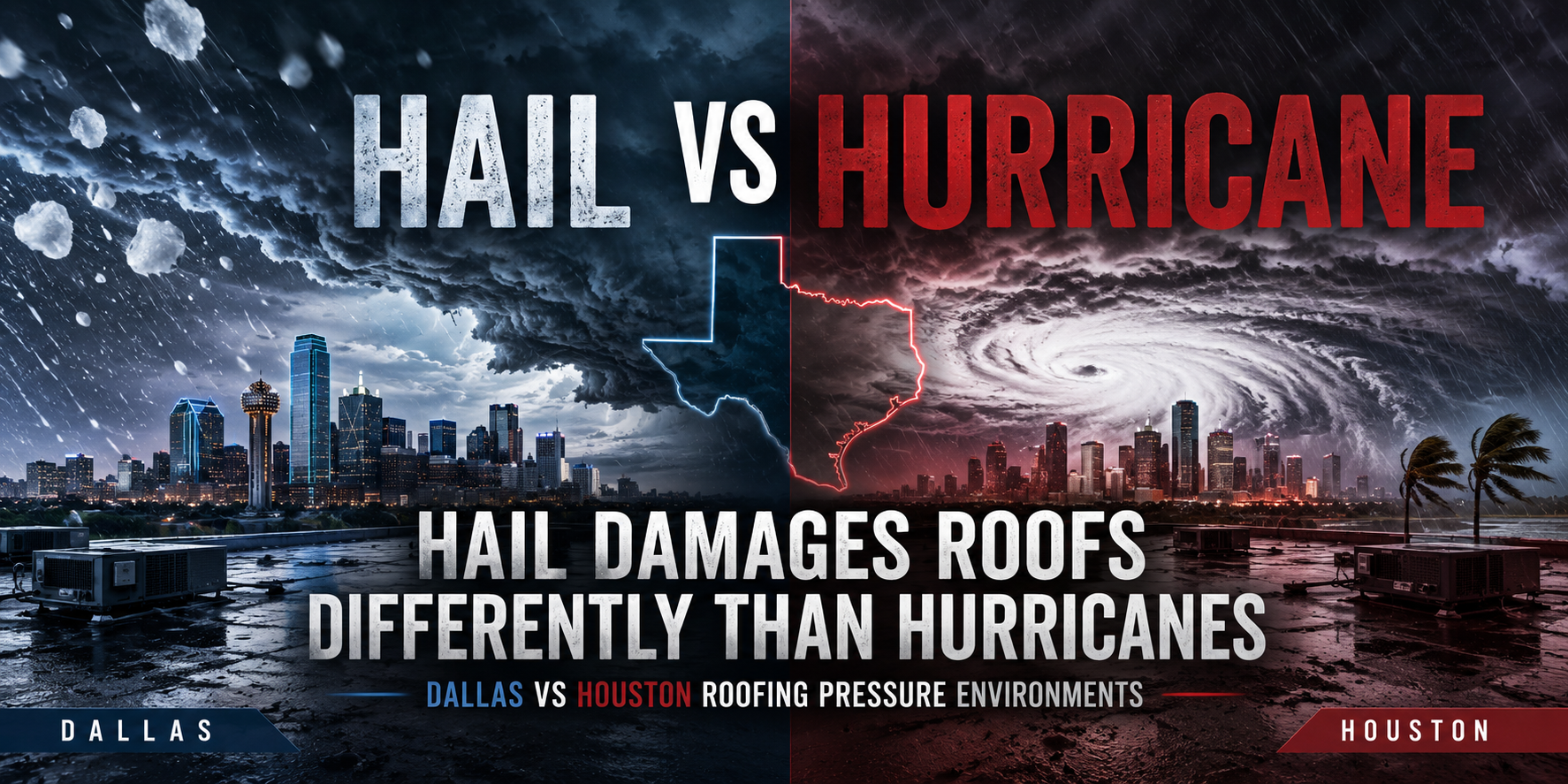
Hail Damage Versus Moisture Aging
Roof aging rarely occurs the same way in every region.
Property managers in Richardson often focus heavily on storm durability.
Impact resistance becomes an important consideration during replacement planning.
Weather exposure frequently influences lifecycle expectations.
Inspection programs often prioritize hail-related deterioration.
Waterproofing performance receives greater attention in Sugar Land.
Drainage capacity remains essential.
Moisture management becomes increasingly important over time.
Extended humidity can accelerate certain forms of deterioration.
Long-term exposure gradually affects roofing assemblies.
Replacement strategies often reflect those regional realities.
Successful planning begins with understanding local conditions.

Quarter 3: Heat And Long-Term Roofing Fatigue
Summer introduces another source of pressure.
Solar exposure accelerates aging.
Protective coatings gradually degrade.
Thermal movement affects roofing materials continuously.
Expansion and contraction create stress throughout large commercial assemblies.
Humidity changes how roofing systems perform in Sugar Land.
Drying cycles become slower.
Moisture remains present for longer periods.
Water retention creates additional challenges.
Drainage performance becomes increasingly valuable.
Conversely, Richardson frequently experiences greater thermal cycling.
Temperature fluctuations create ongoing movement.
Material fatigue accumulates gradually.
Environmental stress compounds existing age-related deterioration.
Wealth Concentration And Asset Preservation
Commercial property values remain strong throughout both markets.
Institutional ownership plays a major role.
Long-term investment strategies influence roofing decisions.
Capital planning becomes increasingly important.
Richardson continues benefiting from its established technology and telecommunications legacy.
Corporate users frequently prioritize proactive maintenance.
Portfolio managers often focus on asset preservation.
Sugar Land attracts significant investment from healthcare, professional services, financial institutions, and corporate office users.
Property owners frequently evaluate roofing projects through a long-term risk-management lens.
Building value often supports preventative replacement strategies.
Asset protection becomes a priority.
Quarter 4: Capital Planning And Replacement Cycles
Year-end budgeting frequently determines future roofing activity.
Inspection reports identify emerging concerns.
Ownership groups evaluate replacement schedules.
Storm-related deterioration often influences planning discussions in Richardson.
Accumulated weather exposure may accelerate project timelines.
Moisture-related deficiencies frequently receive greater attention in Sugar Land.
Waterproofing concerns often move higher on maintenance priority lists.
Preventative replacement becomes attractive as systems continue aging.
Many organizations schedule roofing projects around operational requirements.
Timing frequently influences costs.
Preparation often extends asset life.
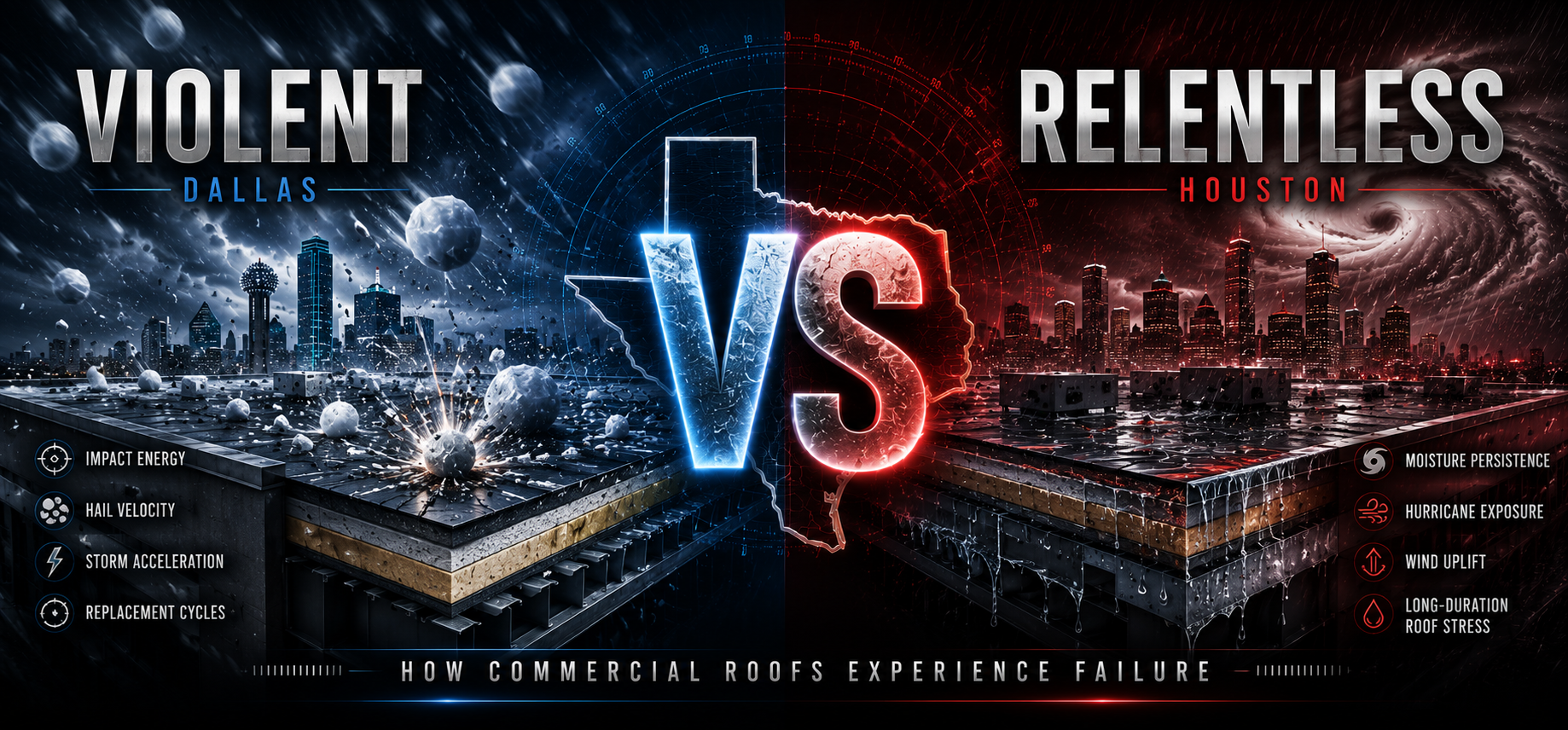
Richardson Versus Sugar Land: Two Mature Commercial Roofing Markets
Richardson commercial roofing systems operate within an aging technology-district environment shaped by hail exposure, thermal movement, and long-term commercial asset maturity.
Sugar Land commercial roofing systems function within an established business environment influenced by humidity, rainfall, waterproofing performance, and gradual moisture-related aging.
Both communities contain valuable commercial real estate.
Each market supports significant corporate activity.
Roof replacement demand increases as commercial districts mature.
Environmental conditions determine how that aging process develops.
Successful roofing strategies begin by understanding building age, regional exposure, and long-term lifecycle pressures before visible failures begin appearing.
Technology districts depend on reliability.
Roofing systems help deliver it every day.