
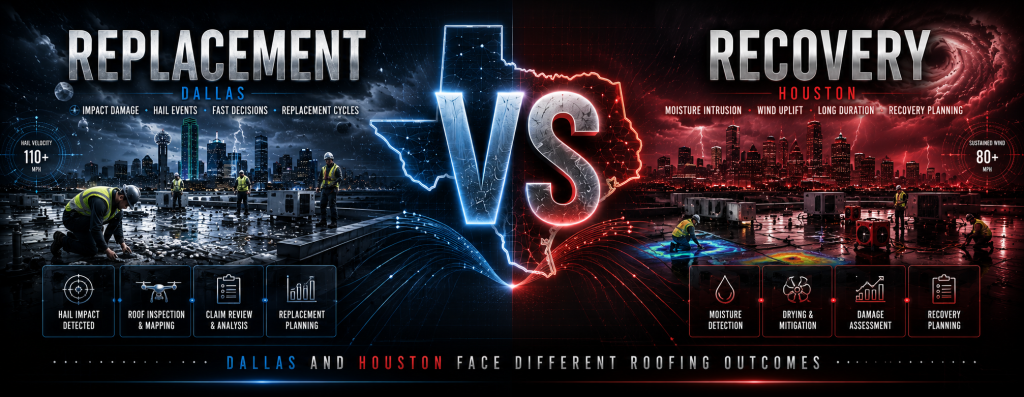

Irving vs Energy Corridor Roofing — Office Campus Roofing Environments
Office campuses create unique roofing demands.
Large building footprints require extensive planning.
Mechanical systems consume significant rooftop space.
Operational continuity becomes a major concern.
Irving and Houston’s Energy Corridor represent two of the largest concentrations of corporate office environments in Texas. Both markets contain headquarters facilities, professional service firms, financial institutions, engineering companies, technology operations, and major employment centers.
Business activity drives development in both regions.
Corporate investment supports long-term growth.
Large commercial properties dominate the landscape.
Despite those similarities, the environmental pressures acting on those roofing systems differ considerably.
Regional conditions influence performance.
Weather exposure affects replacement cycles.
Building portfolios develop distinct roofing priorities over time.
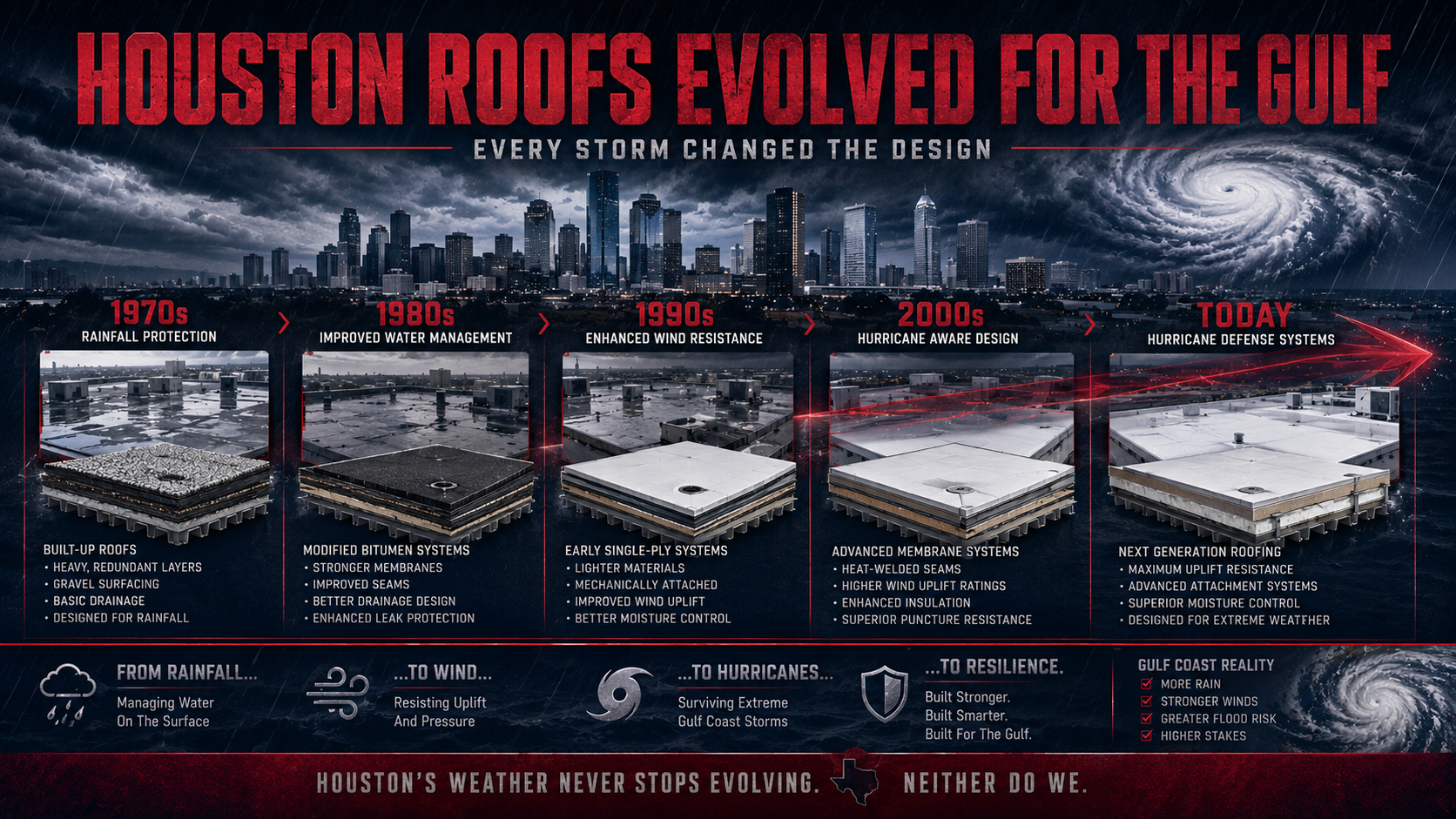
Quarter 1: Winter Conditions Across Corporate Office Campuses
Temperature fluctuations play a major role throughout Irving.
Cold fronts regularly move through North Texas.
Warm afternoons often follow freezing mornings.
Thermal movement develops across large roofing assemblies.
Expansion joints absorb repeated stress.
Flashing systems experience continuous movement.
Mechanical penetrations remain vulnerable to fatigue.
Humidity creates a different challenge in the Energy Corridor.
Moisture remains present throughout much of the winter season.
Waterproofing performance becomes increasingly important.
Drainage systems receive greater attention.
Roof assemblies frequently remain exposed to damp conditions for extended periods.
One market primarily manages expansion.
Another market focuses heavily on moisture control.
Both conditions influence long-term roofing durability.
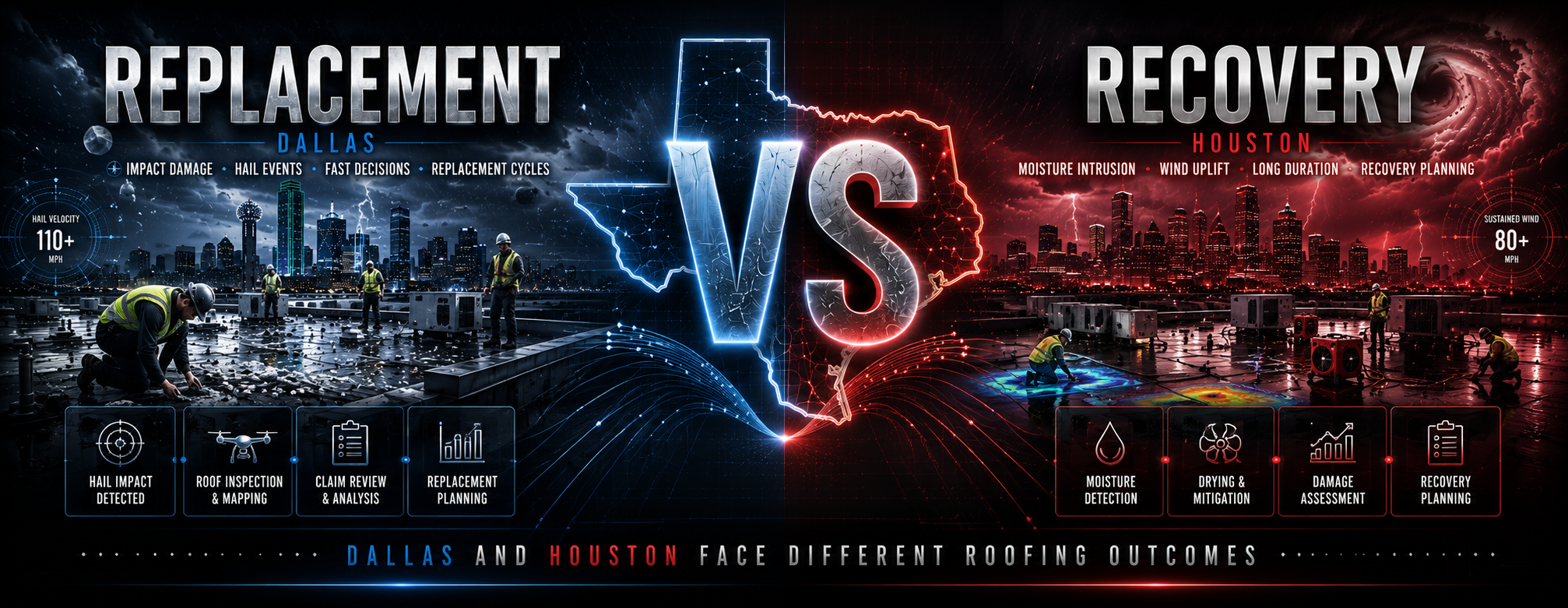
Corporate Headquarters Create Complex Roofing Systems
Office campuses rarely operate like warehouses.
Technology infrastructure occupies substantial rooftop space.
Cooling equipment often covers large portions of the roof.
Backup power systems create additional penetrations.
Communication systems add complexity.
Throughout Irving, many corporate campuses support finance, technology, telecommunications, and professional services.
Property appearance often plays a significant role.
Executive facilities prioritize long-term asset preservation.
Within the Energy Corridor, energy-sector headquarters and engineering firms dominate much of the commercial landscape.
Operational reliability frequently becomes the primary objective.
Business continuity remains critical.
Roofing failures can affect thousands of employees.
Consequences often extend far beyond repair costs.

Quarter 2: Spring Weather And Roofing Exposure
Severe weather becomes a major factor during the spring.
North Texas hail activity regularly affects Irving.
Large storm systems move across the region.
Impact damage frequently accelerates roof replacement timelines.
Protective membranes experience repeated stress.
Mechanical equipment remains vulnerable.
Insurance claims often influence budgeting decisions.
Meanwhile, Houston’s Energy Corridor experiences a different weather profile.
Heavy rainfall events occur regularly.
Wind-driven storms challenge waterproofing systems.
Drainage performance becomes increasingly important.
Water intrusion risks often develop around rooftop equipment and penetrations.
Hail creates sudden damage.
Moisture creates cumulative deterioration.
The resulting replacement strategies often differ significantly.
Hail Resistance Versus Water Management
Material selection depends heavily on environmental exposure.
Owners in Irving frequently prioritize impact resistance.
Storm durability becomes a key specification.
Protective surfacing often receives additional consideration.
Facility managers routinely monitor hail-related damage following major weather events.
Waterproofing systems receive greater attention throughout the Energy Corridor.
Drainage capacity becomes essential.
Moisture management influences long-term performance.
Extended exposure can gradually weaken roofing assemblies.
Environmental threats therefore shape investment priorities.
Successful replacement planning requires understanding local risk patterns.
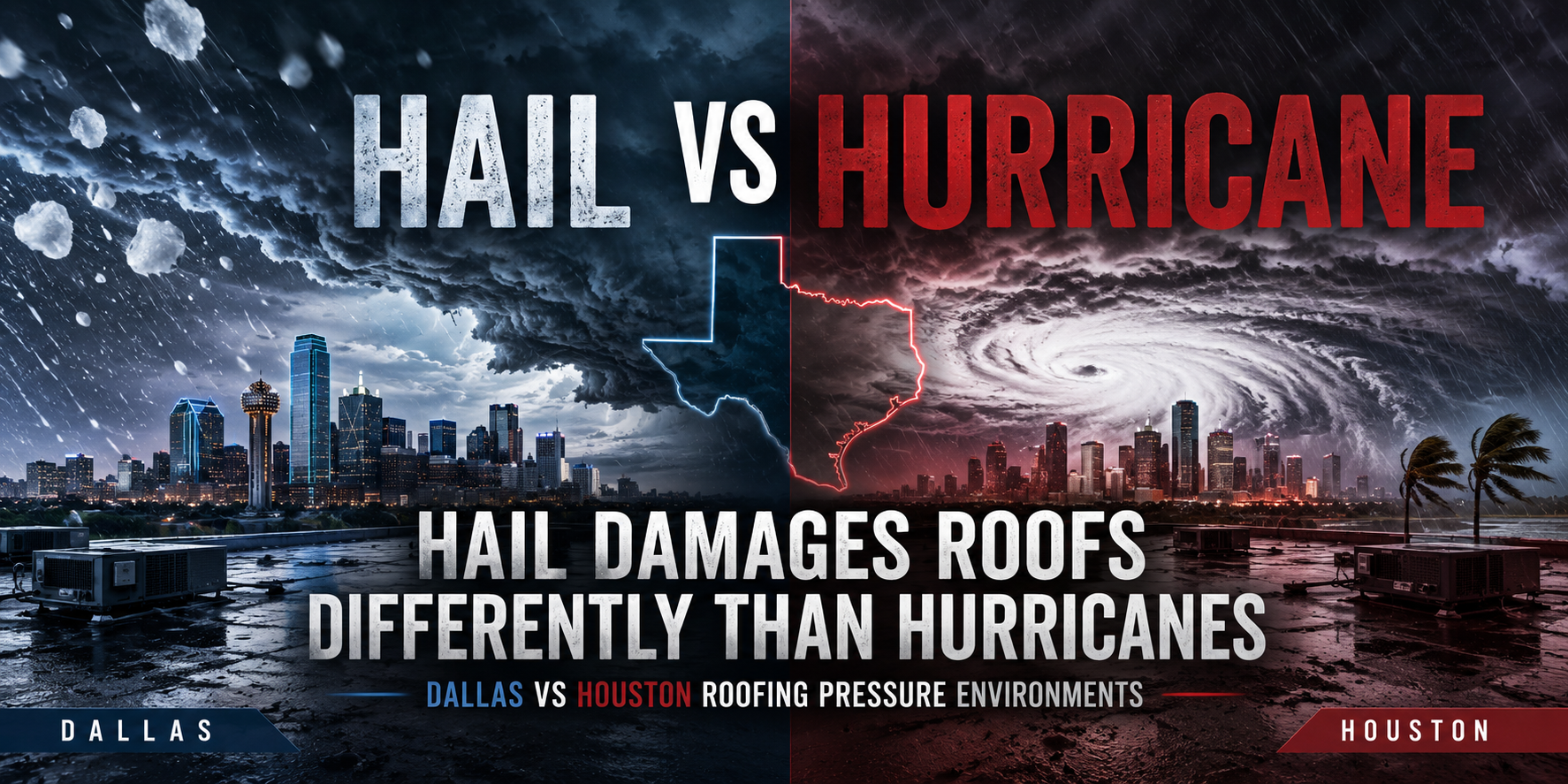
Quarter 3: Summer Heat Across Major Employment Centers
Intense summer temperatures affect both office markets.
Solar exposure accelerates material aging.
Roof surfaces absorb significant heat.
Thermal stress develops throughout large commercial assemblies.
Repeated expansion and contraction gradually increase fatigue.
Humidity changes how roofing systems perform in the Energy Corridor.
Drying cycles often take longer.
Moisture remains trapped more easily.
Drainage performance becomes increasingly important.
Organic growth develops more readily in persistently damp environments.
Across Irving, thermal movement remains the dominant concern.
Throughout Houston, heat and moisture frequently combine to accelerate deterioration.
Different environmental pressures create different maintenance priorities.
Corporate Wealth And Roofing Investment Strategies
Significant commercial wealth exists in both regions.
Large ownership groups manage many office portfolios.
Institutional investors often control substantial assets.
Capital planning therefore plays a major role.
Irving benefits from continued corporate relocations and business expansion throughout the Dallas-Fort Worth Metroplex.
Property values remain strong.
Premium office campuses often prioritize proactive maintenance.
Energy-sector investment continues driving development within Houston’s Energy Corridor.
Long-term operational reliability frequently becomes the primary objective.
Many organizations evaluate roofing decisions through the lens of risk management rather than short-term cost reduction.
Asset protection remains a central concern.
Quarter 4: Budget Cycles And Replacement Planning
Year-end planning often determines future roofing activity.
Inspection reports become increasingly valuable.
Capital improvement schedules take shape.
Storm-related damage frequently influences replacement decisions throughout Irving.
Accumulated weather exposure may justify larger projects.
Moisture-related concerns often receive greater attention in the Energy Corridor.
Waterproofing deficiencies identified during inspections frequently move higher on priority lists.
Many organizations schedule roofing projects around operational needs.
Timing often becomes a strategic advantage.
Preparation frequently reduces long-term costs.
Irving Versus Energy Corridor: Two Corporate Roofing Environments
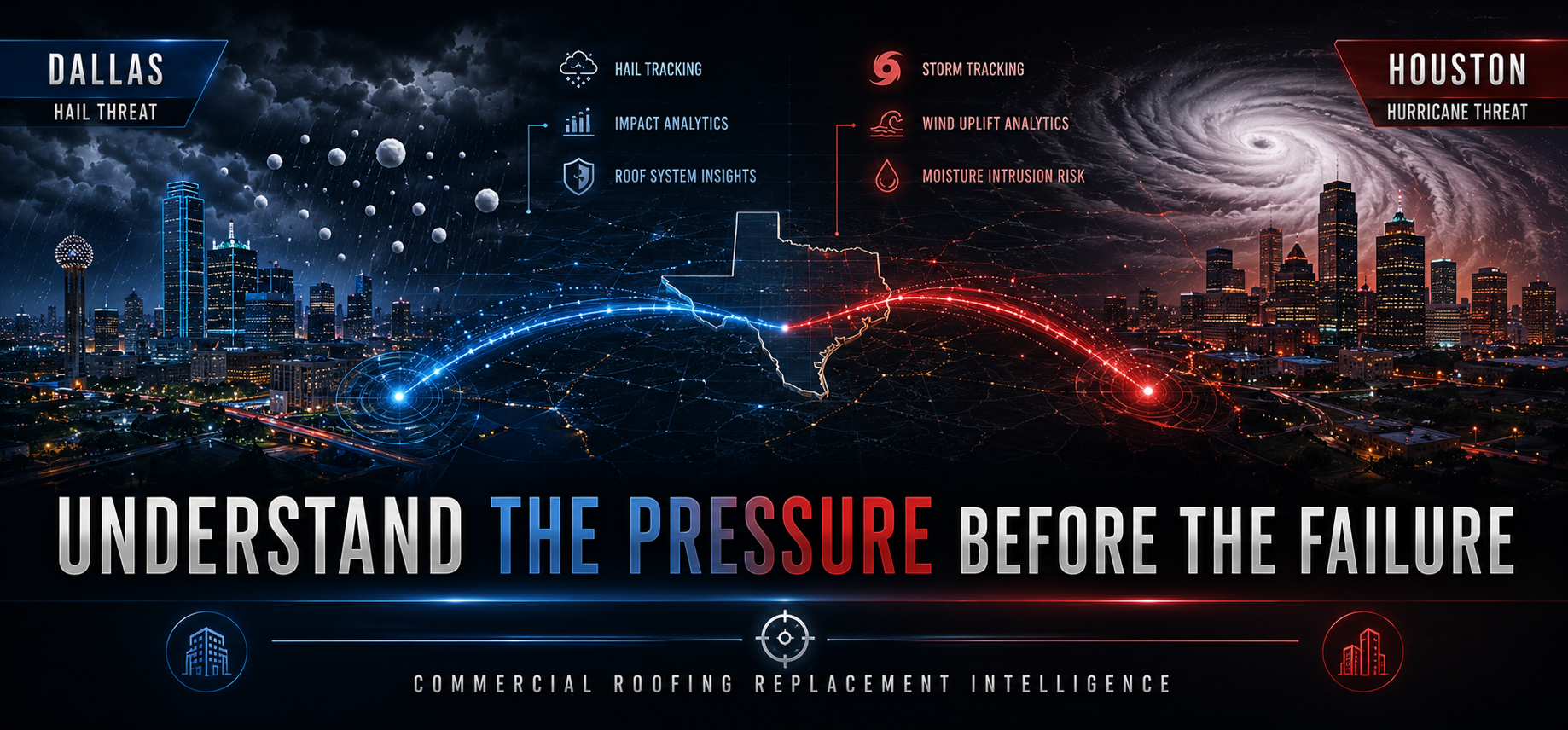
Irving office campuses operate within a hail-driven environment where thermal movement, severe weather exposure, and impact resistance heavily influence roofing performance.
Houston’s Energy Corridor operates within a moisture-driven environment where waterproofing, drainage management, wind exposure, and long-term weather resilience often receive greater attention.
Both markets contain valuable corporate assets.
Each region supports major employment centers.
Commercial roofing systems remain essential infrastructure.
Local conditions determine how those systems age.
Successful roof replacement planning begins with understanding those environmental differences long before visible failures appear.
Corporate campuses depend on reliability.
Regional roofing pressures determine how that reliability is maintained.