
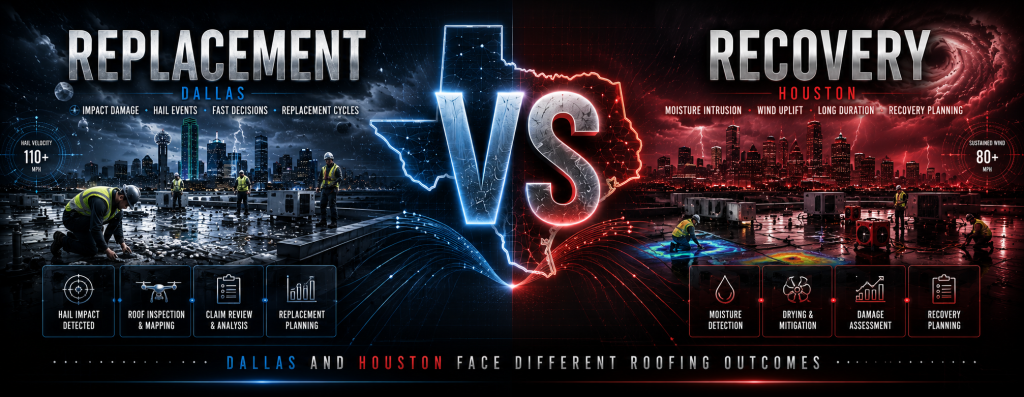

North Fort Worth vs Northwest Houston Roofing — Distribution Center Roofing Expansion
Distribution centers have become one of the fastest-growing property types in America.
E-commerce accelerated demand.
Supply chains expanded rapidly.
Warehouse footprints grew dramatically.
Massive roofing systems now cover millions of square feet across Texas.
North Fort Worth and Northwest Houston sit at the center of that expansion. Both regions continue attracting logistics operators, fulfillment companies, transportation providers, distribution networks, and industrial developers seeking access to major population centers.
Commercial growth remains aggressive.
New facilities enter the market every year.
Roofing inventory continues expanding.
Environmental conditions ultimately determine how those assets perform over time.
Understanding those differences helps owners prepare for future replacement cycles before problems begin affecting operations.
Quarter 1: Expansion Creates Future Roofing Demand
Every new distribution center creates future maintenance responsibilities.
Construction activity remains strong throughout North Fort Worth.
Large warehouse developments continue appearing along major transportation corridors.
Regional logistics growth supports ongoing investment.
Population expansion creates additional demand for fulfillment infrastructure.
Northwest Houston follows a similar trajectory.
Industrial development remains active.
Port-related commerce contributes significant growth.
Shipping activity supports warehouse expansion.
Transportation access encourages continued investment.
Growth creates roofing inventory.
Time eventually creates replacement demand.
Building age therefore becomes an important factor in long-term planning.
Distribution Centers Depend On Roofing Reliability
Modern logistics facilities rarely operate on a traditional schedule.
Inventory moves continuously.
Transportation networks remain active around the clock.
Loading operations often occur twenty-four hours a day.
Business interruption creates significant consequences.
North Fort Worth contains some of the largest fulfillment facilities in Texas.
National distribution networks rely heavily on the region.
Transportation infrastructure supports continued expansion.
Large ownership groups manage extensive warehouse portfolios.
Northwest Houston benefits from access to maritime shipping, industrial operations, manufacturing activity, and international trade routes.
Operational reliability remains essential.
Roofing systems protect inventory, equipment, personnel, and supply-chain continuity.
Failures can quickly affect productivity.
Quarter 2: Severe Weather Across Distribution Networks
Spring weather creates substantial roofing exposure.
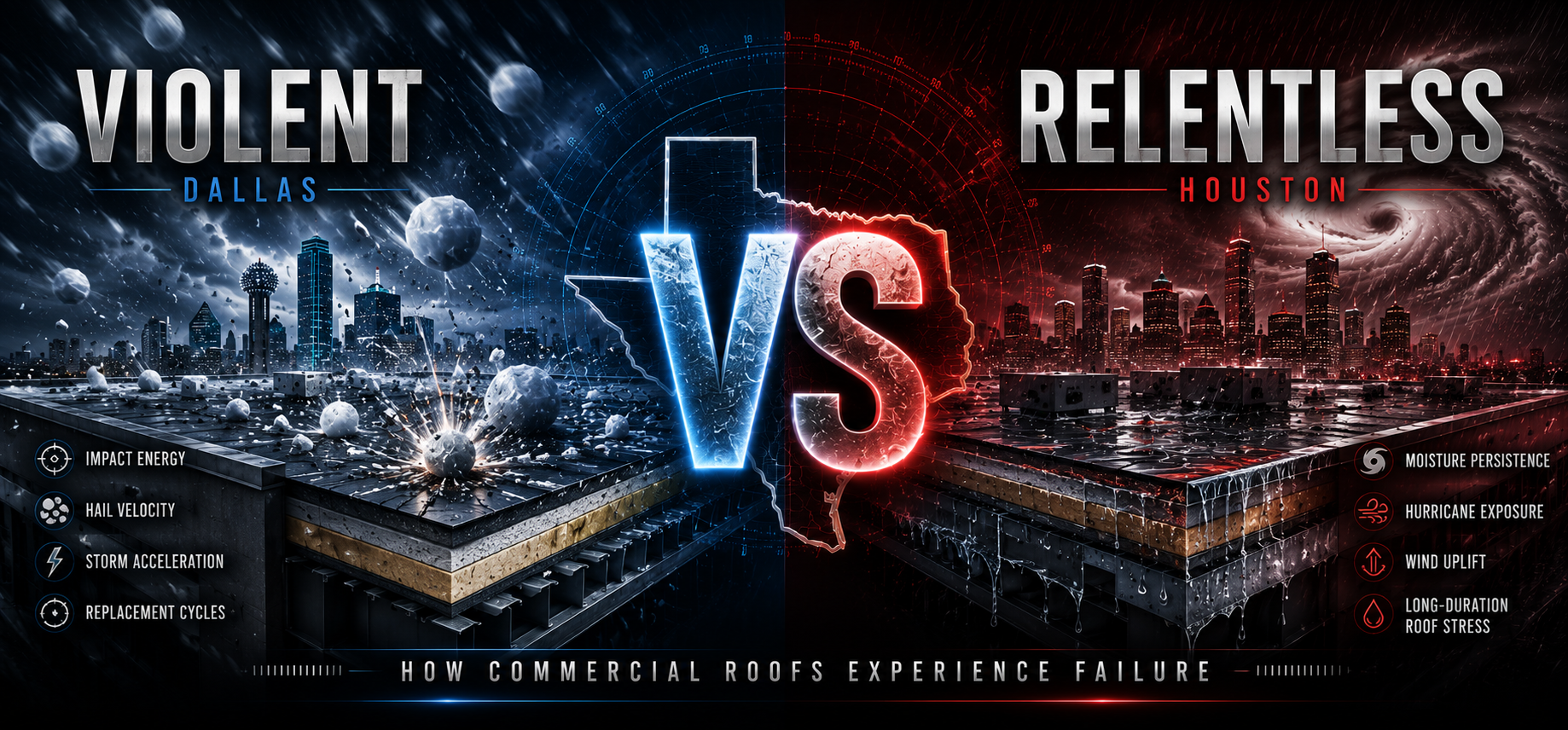
North Texas hail activity regularly affects North Fort Worth.
Large roof surfaces absorb repeated impacts.
Storm damage frequently accelerates replacement timelines.
Protective membranes remain vulnerable.
Skylights experience additional exposure.
Rooftop equipment often requires inspection following severe weather events.
Northwest Houston faces a different environmental challenge.
Heavy rainfall becomes increasingly important.
Wind-driven storms place pressure on waterproofing systems.
Drainage performance receives greater attention.
Water intrusion risks often develop across expansive roof surfaces.
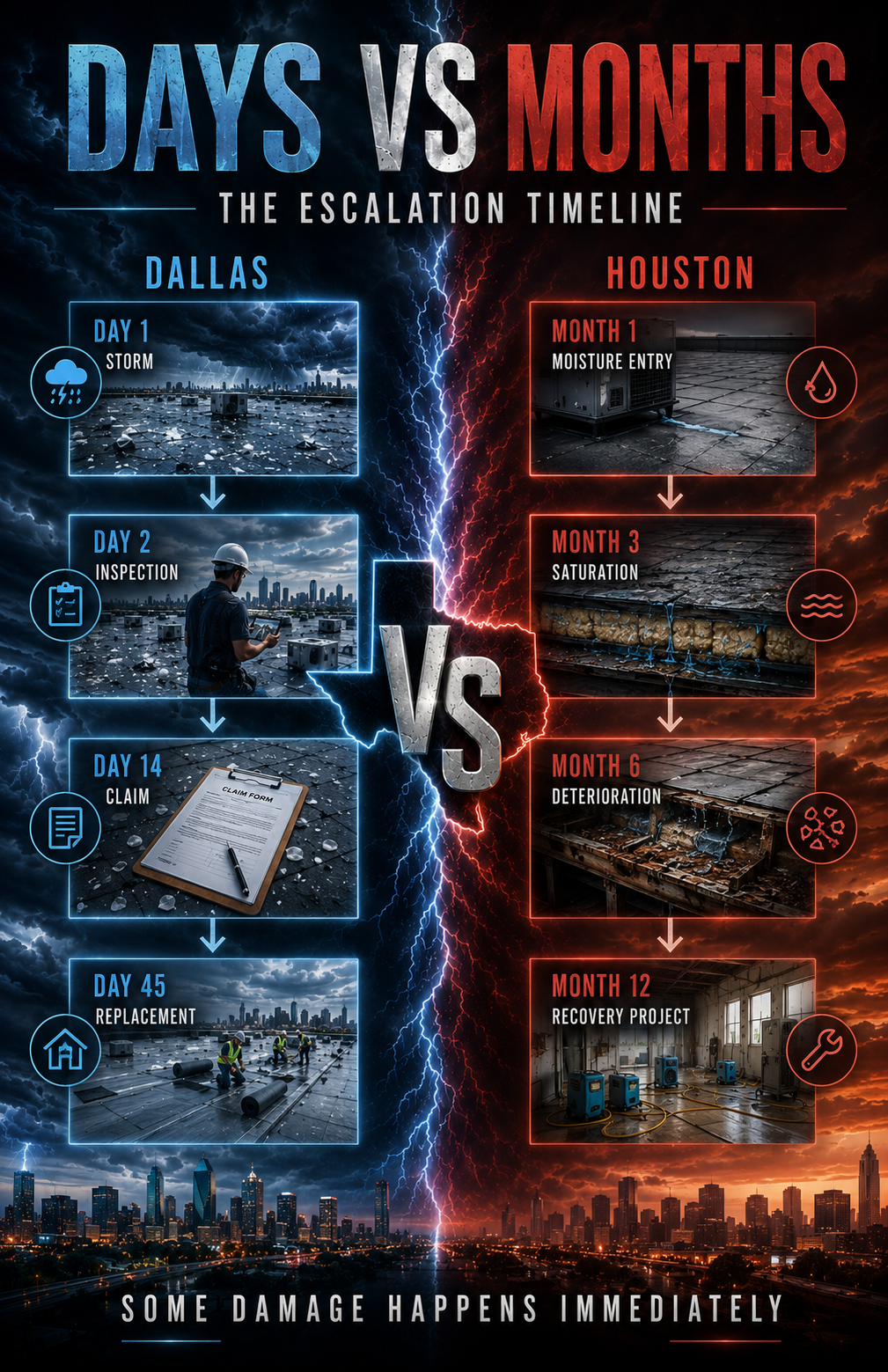
Hail commonly creates immediate damage.
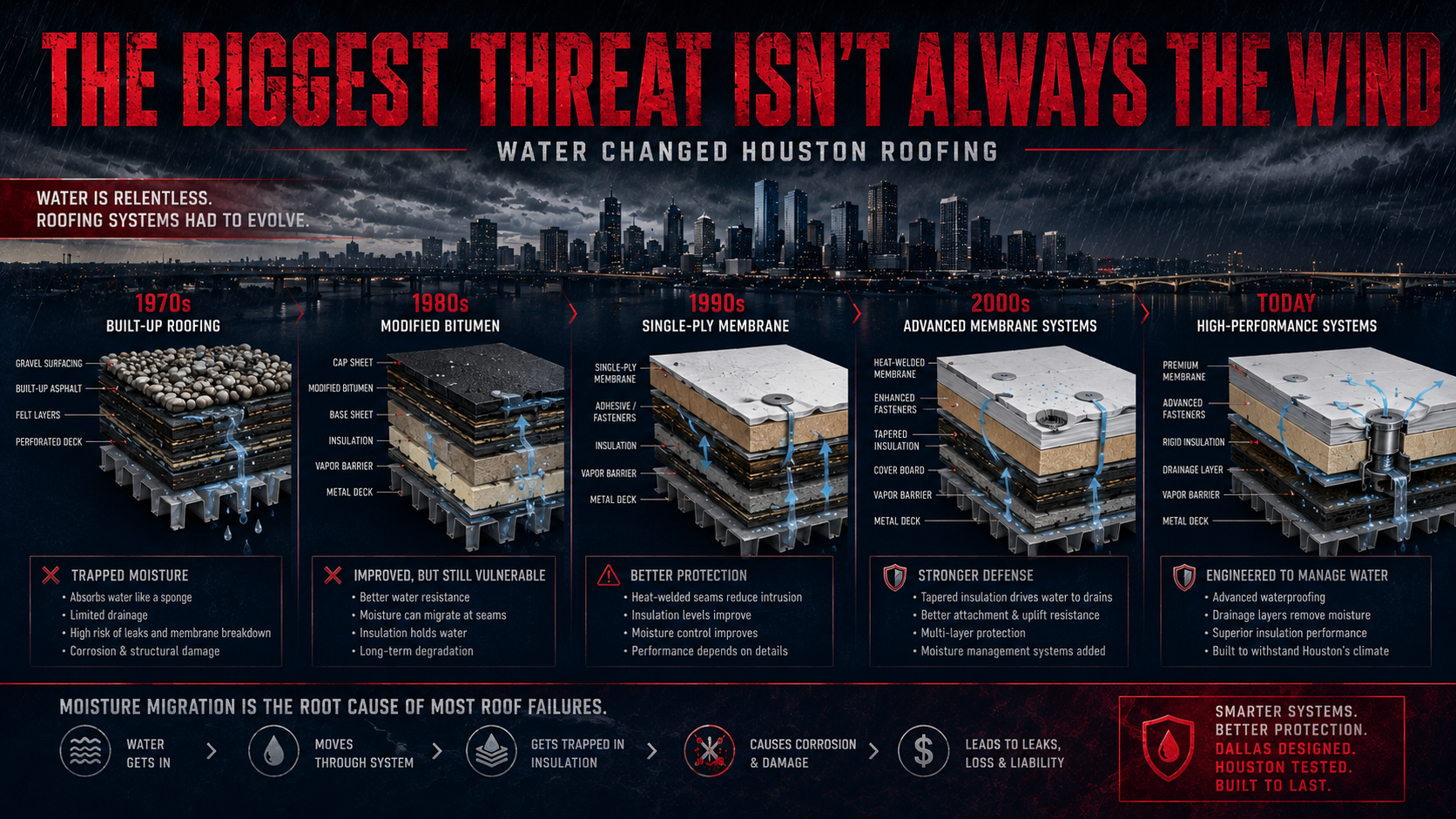
Moisture frequently creates cumulative deterioration.
Replacement decisions often reflect those different risk profiles.
Impact Resistance Versus Water Management
Environmental threats influence roofing priorities.
Facility managers in North Fort Worth frequently evaluate storm durability.
Impact-resistant systems often receive significant attention.
Weather recovery planning becomes part of asset management.
Protective surfacing may play a larger role during replacement projects.
Drainage systems become a major focus throughout Northwest Houston.
Waterproofing performance remains critical.
Moisture management influences long-term durability.
Standing water creates ongoing concerns.
Humidity slows drying cycles.
Different environmental pressures require different roofing strategies.
Successful planning begins with understanding local conditions.
Quarter 3: Heat, Scale, And Roofing Fatigue
Summer creates significant stress across both distribution markets.
Solar exposure affects enormous roof surfaces.
Thermal expansion increases throughout roofing assemblies.
Protective coatings gradually age.
Material fatigue accumulates over time.
Large facilities magnify those effects.
Humidity introduces additional complexity in Northwest Houston.
Moisture remains present longer after rainfall events.
Water retention increases risk.
Drainage systems work continuously.
Organic growth becomes more common.
Meanwhile, North Fort Worth frequently experiences greater thermal cycling.
Expansion and contraction create additional movement across extensive roof areas.
Environmental exposure compounds aging.
Performance gradually declines without proactive maintenance.
Capital Investment And Logistics Infrastructure
Significant investment continues flowing into both regions.
National logistics companies remain active throughout North Fort Worth.
Distribution operators continue expanding capacity.
Industrial real estate demand supports ongoing development.
Large portfolios often prioritize long-term asset preservation.
International commerce influences growth throughout Northwest Houston.
Port-related activity creates additional warehouse demand.
Supply-chain infrastructure supports continued expansion.
Operational continuity frequently becomes the primary objective.
Many ownership groups evaluate roofing systems through the lens of risk management.
Protecting revenue-generating facilities remains essential.

Quarter 4: Budget Cycles And Portfolio Planning
Capital planning becomes increasingly important during the final quarter.
Inspection programs identify emerging issues.
Ownership groups review replacement schedules.
Storm-related deterioration frequently influences decisions throughout North Fort Worth.
Accumulated weather exposure may justify larger projects.
Waterproofing concerns often receive greater attention in Northwest Houston.
Drainage deficiencies frequently rise higher on maintenance priority lists.
Preventative replacement becomes attractive when operational risk increases.
Large warehouse portfolios require long-term forecasting.
Preparation often reduces future disruptions.
Timing frequently influences project success.

North Fort Worth Versus Northwest Houston: Distribution Roofing At Scale
North Fort Worth distribution center roofing systems operate within a hail-driven environment where impact resistance, thermal movement, and severe weather exposure frequently shape replacement cycles.
Northwest Houston distribution center roofing systems function within a moisture-driven environment where drainage performance, waterproofing reliability, humidity, and wind-driven storms create long-term roofing pressure.
Both markets continue expanding rapidly.
Each region supports critical logistics infrastructure.
Large roof systems protect essential supply-chain operations.
Environmental conditions determine how those systems age.
Successful roof replacement planning begins with understanding regional exposure patterns long before visible failures develop.
Growth creates the facilities.
Weather determines the pressure.
Roofing systems must withstand both.