

South Dallas vs East Houston Roofing — Industrial Roofing Replacement Pressure
Industrial roofing systems operate under different rules than office buildings.
Size changes the equation.
Operational demands increase complexity.
Downtime becomes expensive.
Replacement planning often affects entire business operations.
South Dallas and East Houston contain two of the most important industrial corridors in Texas. Warehouses, manufacturing facilities, distribution centers, processing plants, transportation infrastructure, and logistics operations occupy millions of square feet across both markets.
Large roof systems dominate the landscape.
Heavy equipment operates beneath those roofs.
Business continuity remains critical.
Environmental conditions determine how those roofing systems age.
Understanding those differences helps industrial property owners make better long-term replacement decisions.
Quarter 1: Aging Industrial Assets And Roofing Lifecycles
Building age plays a major role in industrial roofing performance.
Many facilities throughout South Dallas were constructed during earlier manufacturing and logistics expansion periods.
Roofing systems often span enormous footprints.
Maintenance requirements increase as those systems age.
Expansion joints become increasingly important.
Penetrations require closer monitoring.
Drainage systems demand regular attention.
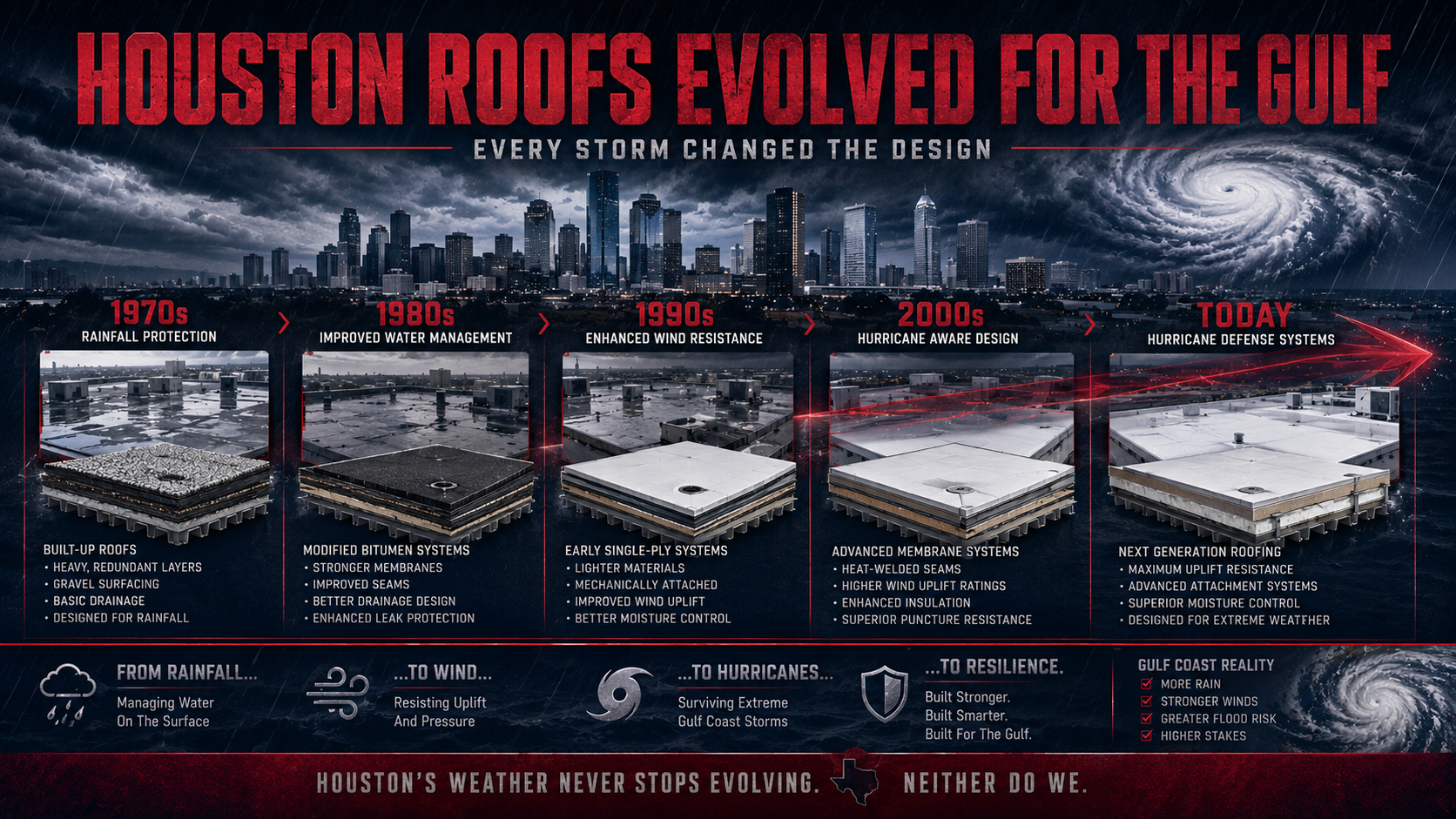
Across East Houston, industrial development follows a different pattern.
Port-related infrastructure influences growth.
Energy-sector operations support much of the region’s industrial activity.
Processing facilities and manufacturing properties contribute significant roofing inventory.
Moisture exposure frequently accelerates aging.
Environmental conditions influence lifecycle expectations.
Replacement planning often begins long before visible failures appear.
Industrial Facilities Create Unique Roofing Challenges
Few commercial properties place greater demands on roofing systems than industrial facilities.
Production schedules often operate continuously.
Equipment generates heat.
Mechanical penetrations remain extensive.
Access can be difficult.
Large roof surfaces create additional maintenance challenges.
South Dallas contains major logistics corridors supporting regional distribution activity.
Transportation networks drive industrial growth.
Warehouse development continues expanding.
Freight movement supports ongoing investment.
East Houston benefits from shipping, refining, manufacturing, chemical processing, and port-related operations.
Operational intensity frequently exceeds that of traditional commercial buildings.
Roofing failures can affect production schedules, inventory protection, and employee safety.
The consequences often extend far beyond repair costs.
Quarter 2: Storm Exposure And Industrial Roof Damage
Spring weather introduces significant roofing pressure.
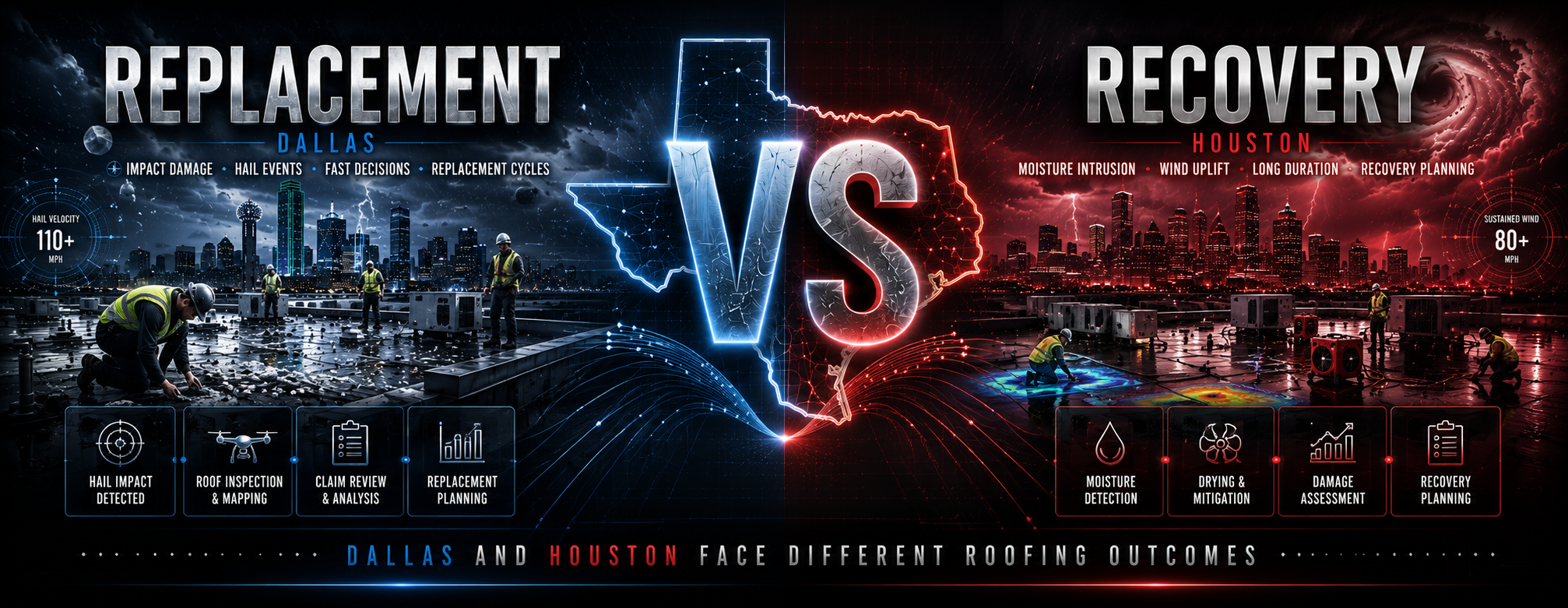
Hail activity becomes a major concern throughout South Dallas.
Large industrial roofs often absorb repeated storm exposure.
Impact damage may affect membranes, coatings, skylights, rooftop equipment, and drainage systems.
Insurance claims frequently follow major weather events.
Budgeting decisions often change after severe storms.
East Houston experiences a different threat profile.
Heavy rainfall becomes increasingly important.
Wind-driven storms create additional pressure.
Moisture intrusion often develops around penetrations and equipment supports.
Extended exposure can gradually weaken roofing assemblies.
Industrial operations frequently discover water-related issues before structural concerns become visible.
Damage arrives differently.
Replacement cycles respond accordingly.

Hail Exposure Versus Moisture Pressure
Environmental threats vary considerably between the two markets.
Impact resistance often becomes a priority in South Dallas.
Property managers frequently evaluate roofing systems through the lens of storm durability.
Protective surfacing receives additional attention.
Weather recovery planning becomes part of asset management.
Waterproofing systems frequently receive greater emphasis throughout East Houston.
Drainage performance remains critical.
Standing water creates ongoing concerns.
Humidity extends drying cycles.
Moisture-related deterioration often develops gradually across large industrial roof assemblies.
Different threats require different replacement strategies.
Successful planning begins with understanding local risk conditions.
Quarter 3: Heat, Production Demands, And Roofing Stress
Summer intensifies pressure across both industrial markets.
Solar exposure accelerates roofing fatigue.
Large roof surfaces absorb substantial heat.
Thermal expansion affects seams, flashings, and transitions.
Material aging becomes increasingly visible.
Humidity changes how East Houston roofing systems perform.
Moisture remains trapped longer.
Drainage systems work harder.
Organic growth develops more easily.
Waterproofing assemblies experience continuous environmental pressure.
Conversely, South Dallas frequently encounters greater thermal cycling.
Expansion and contraction create additional stress throughout large facilities.
Environmental exposure accumulates year after year.
Industrial roofs rarely receive relief from those conditions.
Industrial Investment And Asset Protection
Significant capital flows through both markets.
Distribution infrastructure continues expanding throughout South Dallas.
Logistics facilities remain in high demand.
Industrial real estate attracts substantial investment.
Many ownership groups prioritize long-term asset preservation.
Port activity continues driving development throughout East Houston.
Energy infrastructure supports additional growth.
Manufacturing operations create ongoing demand for industrial space.
Operational reliability often becomes the primary objective.
Roof replacement decisions frequently center on risk reduction rather than aesthetics.
Business interruption can become far more expensive than the roofing project itself.
Quarter 4: Capital Planning And Replacement Pressure
Year-end planning frequently determines future roofing activity.
Inspection reports help identify emerging concerns.
Ownership groups evaluate replacement priorities.
Storm-related damage often influences budgeting decisions throughout South Dallas.
Accumulated weather exposure may accelerate project schedules.
Moisture-related deterioration frequently drives planning activity throughout East Houston.
Drainage deficiencies often move higher on maintenance lists.
Preventative replacement becomes increasingly attractive as risks increase.
Many industrial operators schedule major roofing work around production requirements.
Timing becomes part of the strategy.
Preparation often reduces future operational disruption.
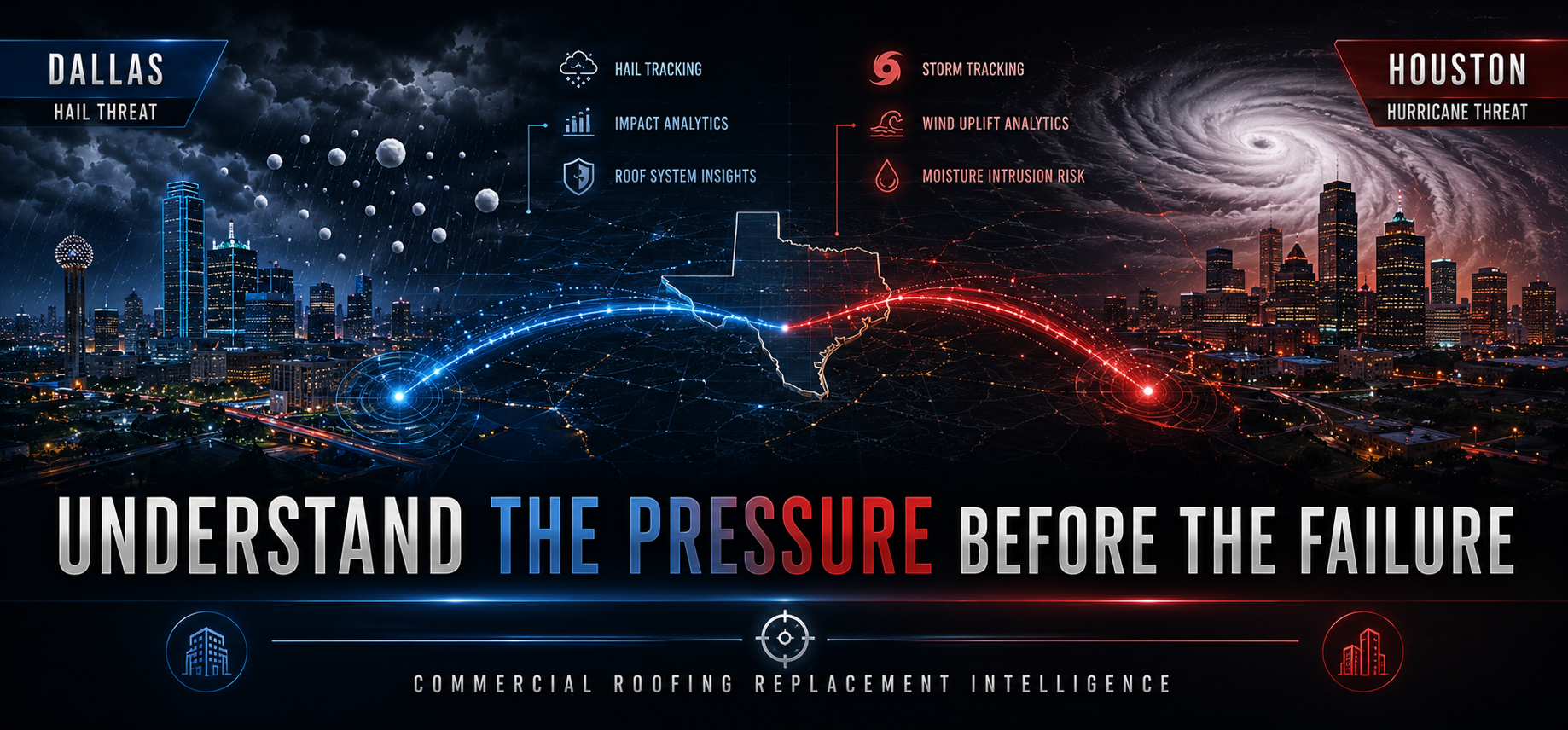
South Dallas Versus East Houston: Two Industrial Roofing Environments
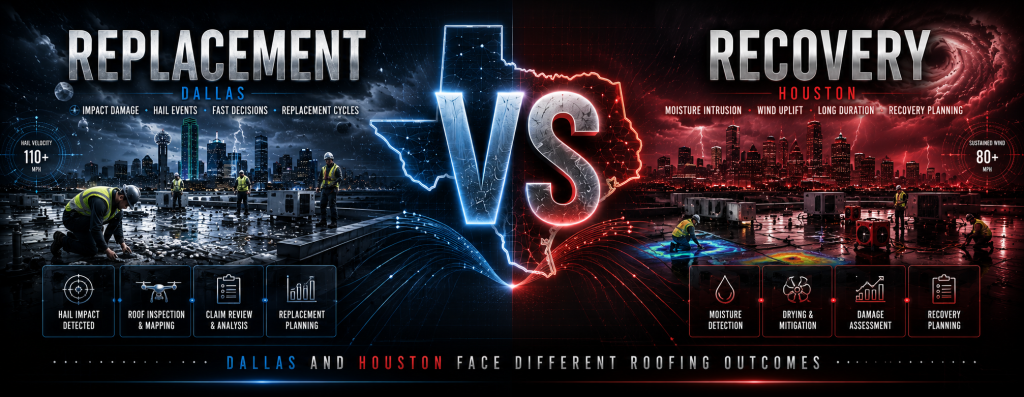
South Dallas industrial roofing systems operate within a hail-driven environment where thermal movement, impact resistance, and severe weather exposure frequently determine replacement timelines.
East Houston industrial roofing systems function within a moisture-driven environment where waterproofing performance, drainage management, humidity, and wind-driven weather create long-term roofing pressure.
Both markets contain critical industrial infrastructure.
Each region supports major economic activity.
Large roof systems protect valuable operations.
Environmental conditions determine how those systems age.
Successful industrial roof replacement planning begins by understanding those local realities long before leaks, shutdowns, or operational disruptions occur.
Industrial growth may look similar from the highway.
Roofing pressure develops very differently once conditions are examined more closely.