
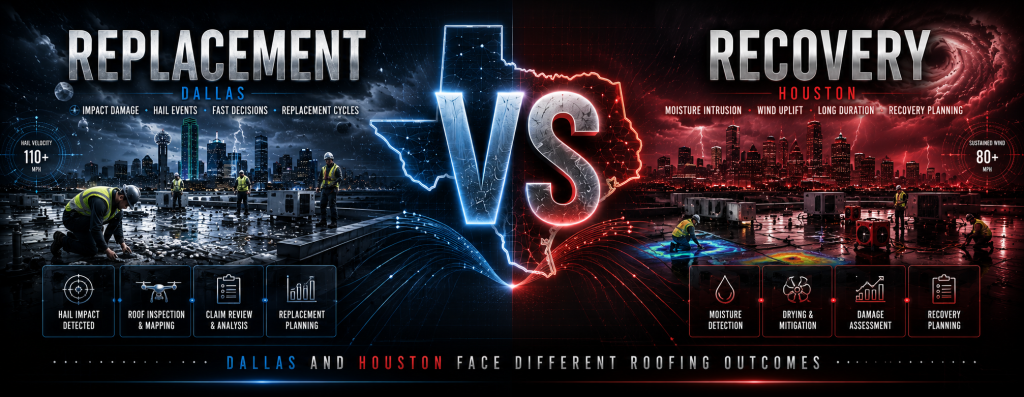

Fort Worth Logistics Corridor vs Southeast Houston Roofing — Warehouse Roofing At Scale
Scale changes commercial roofing.
A 20,000-square-foot building presents one set of challenges.
A one-million-square-foot distribution center creates another.
Warehouse operators throughout Fort Worth’s logistics corridor and Southeast Houston manage some of the largest roofing assets in Texas. Massive fulfillment centers, distribution hubs, freight facilities, manufacturing properties, and supply-chain infrastructure depend on roofing systems that must perform reliably across enormous footprints.
Every additional square foot increases risk.
Every rooftop penetration increases complexity.
And every weather event increases exposure.
Environmental conditions determine how those risks develop over time.
Understanding those differences helps owners make better long-term roofing decisions.
Quarter 1: Large Roof Systems Create Large Responsibilities
Warehouse roofing systems age differently than office buildings.
Size alone changes maintenance requirements.
Inspection programs become more difficult.
Drainage systems become more important.
Minor issues can spread across large areas before becoming visible.
Fort Worth’s logistics corridor continues expanding as distribution companies seek access to major transportation routes throughout North Texas.
New warehouse inventory enters the market every year.
Industrial growth remains strong.
Supply-chain investment continues driving development.
Southeast Houston operates within a different industrial environment.
Port activity influences growth patterns.
Shipping infrastructure creates demand.
Manufacturing facilities support additional expansion.
Energy-related logistics operations contribute substantial industrial inventory.
Scale remains a defining characteristic in both markets.
Environmental pressures create the distinction.
Warehouse Roofing At Scale Requires Different Thinking
Many commercial roofs support employees.
Large warehouse roofs support entire supply chains.
Inventory protection becomes critical.
Distribution schedules depend on operational continuity.
Equipment remains vulnerable to water intrusion.
Storage environments require stable conditions.
Throughout Fort Worth, fulfillment centers and logistics operators occupy some of the largest industrial buildings in Texas.
Freight movement drives demand.
Regional distribution networks support growth.
Transportation infrastructure encourages continued expansion.
Across Southeast Houston, warehouse facilities connect directly to maritime commerce, industrial operations, and international shipping activity.
Business interruption can create significant operational consequences.
Roofing reliability therefore becomes a strategic concern.
Quarter 2: Severe Weather And Warehouse Exposure
Spring weather introduces substantial roofing pressure.
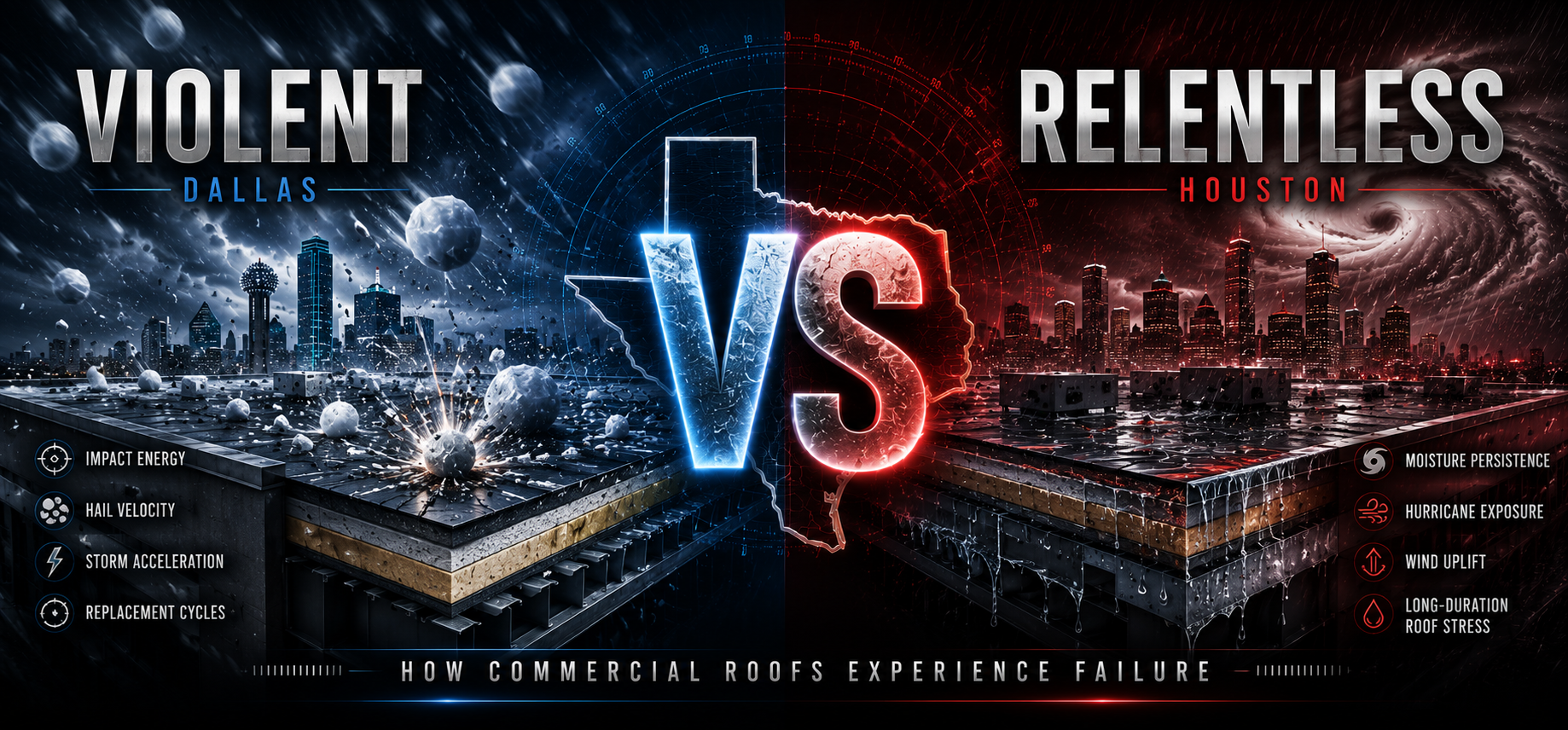
North Texas hail activity frequently affects the Fort Worth corridor.
Large roof surfaces absorb repeated storm exposure.
Impact damage can affect membranes, skylights, drainage systems, rooftop equipment, and protective coatings.
Insurance claims often follow major weather events.
Replacement planning frequently accelerates after severe storms.
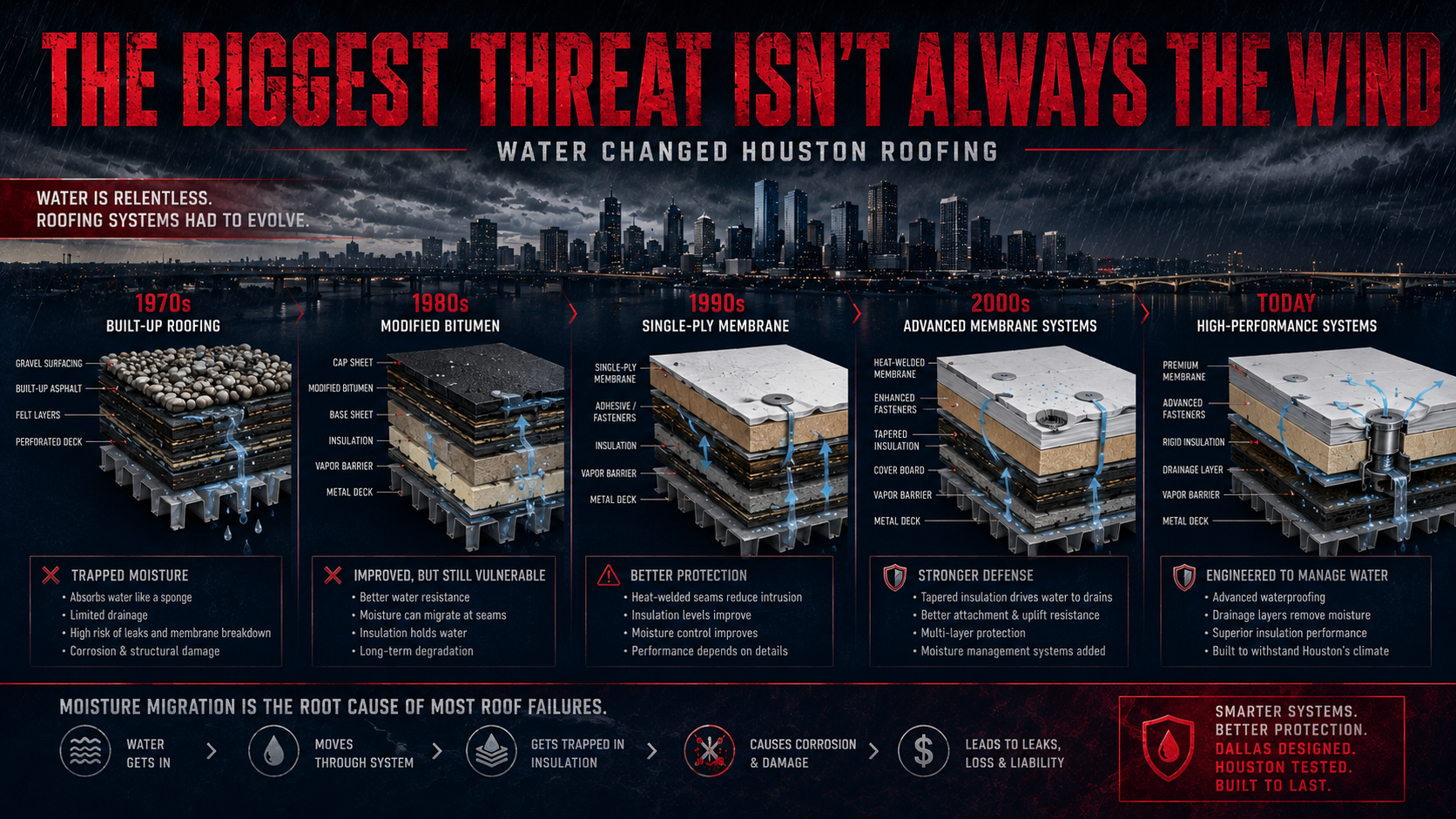
Heavy rainfall becomes a larger concern throughout Southeast Houston.
Moisture exposure accumulates differently.
Wind-driven weather systems challenge waterproofing assemblies.
Drainage performance becomes increasingly important.
Water intrusion may spread significant distances before becoming visible inside large warehouse environments.
Hail often creates immediate damage.
Moisture frequently creates cumulative deterioration.
Both conditions influence replacement timelines.

Impact Resistance Versus Water Management
Environmental threats shape roofing priorities.
Facility managers in Fort Worth often focus heavily on storm durability.
Impact-resistant roofing systems receive significant attention.
Weather recovery becomes part of asset management planning.
Protective surfacing frequently plays a larger role.
Drainage performance receives greater emphasis throughout Southeast Houston.
Water management systems become critical.
Roof slope design becomes increasingly important.
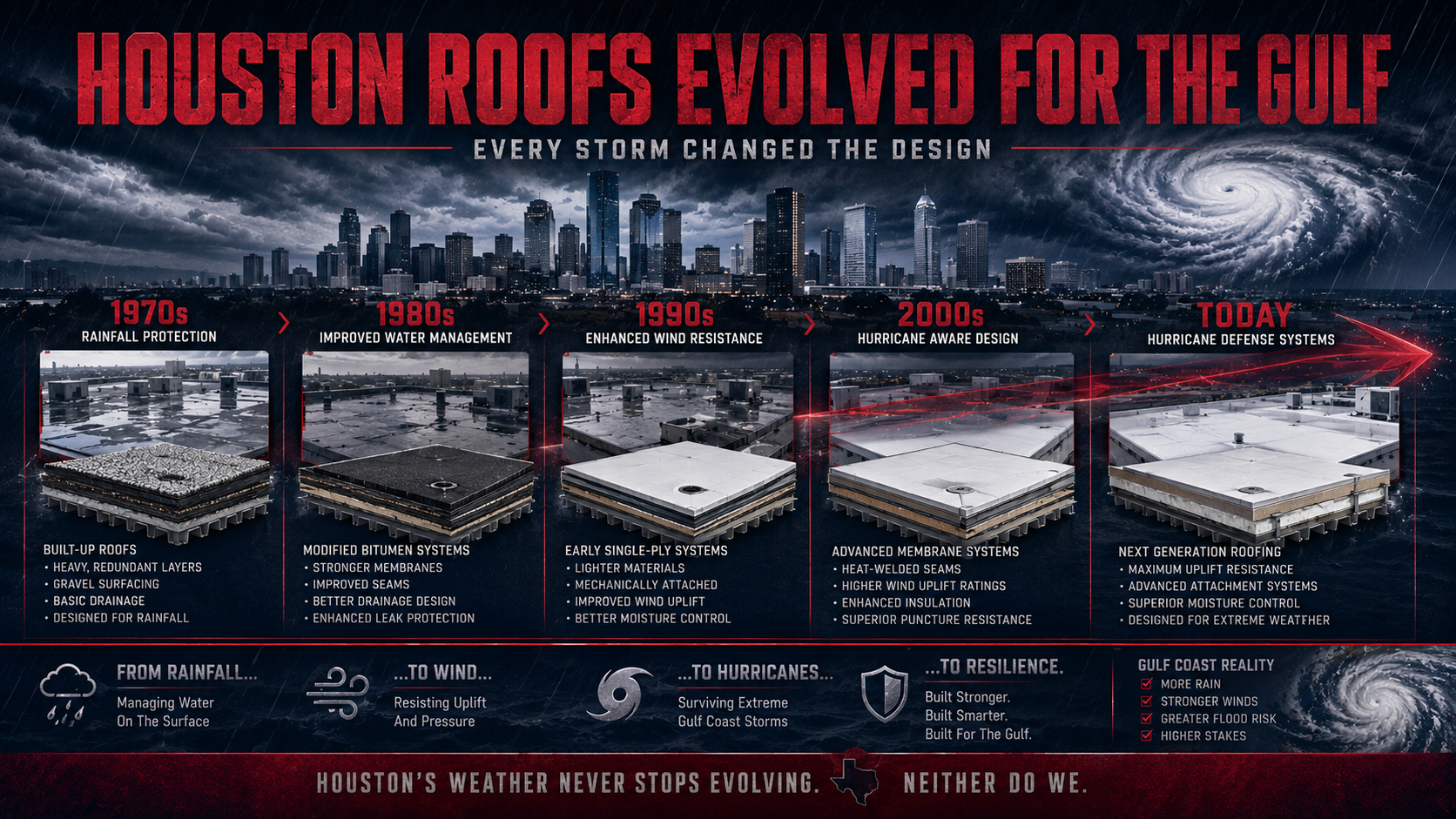
Moisture-related deterioration often develops slowly but continuously.
Different environmental conditions produce different failure patterns.
Successful replacement strategies account for those realities.
Understanding local risks remains essential.
Quarter 3: Heat, Expansion, And Warehouse Fatigue
Summer intensifies stress across both markets.
Solar exposure affects millions of square feet of roofing inventory.
Thermal movement accelerates material aging.
Expansion and contraction place pressure on seams, flashings, transitions, and penetrations.
Large buildings magnify those effects.
Humidity creates additional challenges in Southeast Houston.
Moisture remains present for longer periods.
Drying cycles become slower.
Water retention increases risk.
Drainage systems face continuous pressure.
Meanwhile, Fort Worth warehouse roofs frequently experience greater thermal cycling.
Temperature swings create additional movement.
Long-term fatigue accumulates year after year.
Environmental stress never fully stops.
Supply Chains Depend On Roofing Reliability
Warehouse facilities exist to move products efficiently.
Distribution networks depend on uninterrupted operations.
Inventory protection remains essential.
Business continuity often becomes the primary objective.
Fort Worth continues benefiting from strategic positioning within national logistics networks.
Population growth supports additional development.
Transportation infrastructure drives expansion.
Large ownership groups continue investing in industrial assets.
Port-driven commerce supports growth throughout Southeast Houston.
Shipping activity creates ongoing demand for warehouse space.
Industrial operators frequently evaluate roofing systems through the lens of operational risk.
Replacement decisions often center on preventing disruption rather than responding to visible failures.
Quarter 4: Capital Planning Across Massive Roof Portfolios
Budgeting becomes increasingly important during the final quarter.
Inspection reports help identify future priorities.
Ownership groups evaluate replacement schedules.
Storm-related damage frequently influences planning activity throughout Fort Worth.
Accumulated weather exposure often accelerates roofing investments.
Waterproofing concerns commonly drive project discussions in Southeast Houston.
Drainage deficiencies frequently rise higher on maintenance lists.
Preventative replacement becomes attractive when risk exceeds acceptable thresholds.
Large roof portfolios require long-term planning.
Execution often occurs years after the first warning signs appear.
Preparation reduces operational uncertainty.
Fort Worth Logistics Corridor Versus Southeast Houston: Warehouse Roofing At Scale
Fort Worth warehouse roofing systems operate within a hail-driven environment where impact resistance, thermal movement, and severe weather exposure frequently shape replacement cycles.
Southeast Houston warehouse roofing systems function within a moisture-driven environment where drainage performance, waterproofing reliability, humidity, and wind-driven weather create ongoing roofing pressure.
Both regions support critical supply-chain infrastructure.
Each market contains enormous industrial assets.
Warehouse roofing systems protect billions of dollars in inventory and operations.
Environmental conditions determine how those systems age.
Successful roof replacement planning begins by understanding local threats long before leaks become operational problems.
The buildings may share similar dimensions.
The roofing challenges develop in very different ways.