

Major Metro City Roofing Matchups
Every major metropolitan area presents its own commercial roofing challenges. Climate, building age, construction practices, weather patterns, local building codes, labor markets, and development trends all influence how commercial roofs are designed, maintained, repaired, restored, and replaced. Understanding these regional differences helps property owners make better long-term decisions while giving facility managers, property managers, architects, engineers, and general contractors valuable insight into how roofing strategies vary across the country.
From coastal cities exposed to hurricanes and salt air to northern markets dealing with snow loads and freeze-thaw cycles, every region requires a different approach to commercial roofing. While the roofing systems may be similar, the factors that influence performance are often very different.
Why Compare Major Metro Areas?
Comparing commercial roofing markets helps identify the challenges unique to each region.
Major comparisons often evaluate:
✓ Local climate
✓ Building age
✓ Weather exposure
✓ Roofing materials
✓ Building codes
✓ Energy efficiency goals
✓ Maintenance requirements
✓ Replacement cycles
✓ Labor availability
✓ Construction trends
Each metro market develops roofing priorities based on its environment and commercial building stock.
Climate Shapes Roofing Performance
Weather is one of the biggest factors affecting roof lifespan.
Regional conditions may include:
- Extreme heat
- Heavy snowfall
- Hurricanes
- Tornadoes
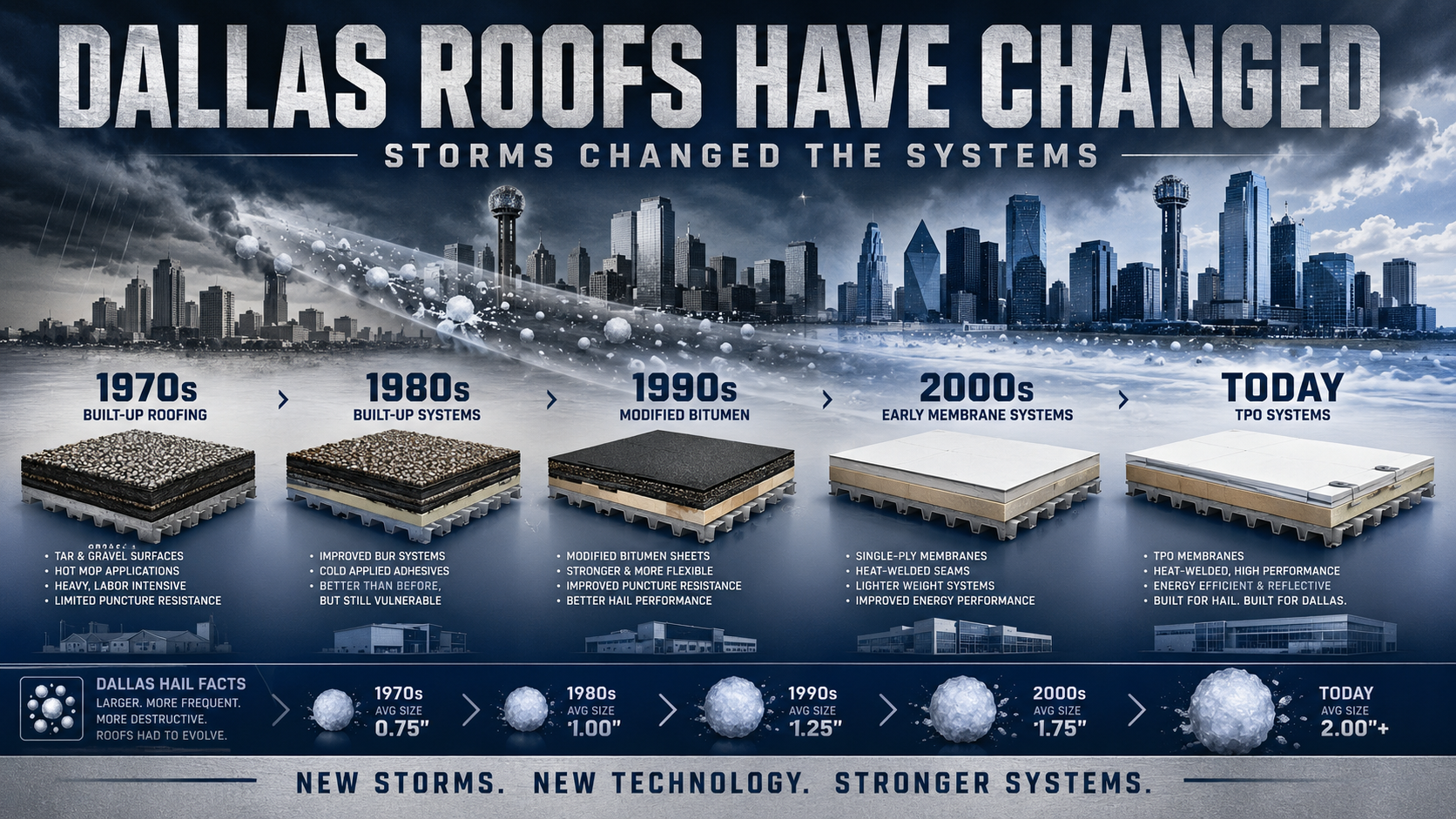
- Hail storms
- High winds
- Salt-air exposure
- Freeze-thaw cycles
- Heavy rainfall
- Intense UV exposure
✓ Roofing systems should match local environmental conditions.
✕ Assuming one roofing solution works equally well in every market.
Building Age Creates Different Priorities
Older cities often face different roofing challenges than rapidly growing markets.
Established metros frequently focus on:
✓ Roof replacement
✓ Historic building renovations
✓ Waterproofing improvements
✓ Deferred maintenance
✓ Building modernization
Growing metros often prioritize:
- New construction
- Commercial developments
- Distribution facilities
- Mixed-use projects
- Industrial expansion
- Tenant improvements
Each market requires a different long-term roofing strategy.
Commercial Property Types Vary by City
Different metro areas are dominated by different types of commercial buildings.
Common commercial projects include:
- Office buildings
- Warehouses
- Distribution centers
- Manufacturing facilities
- Hospitals
- Medical offices
- Retail centers
- Shopping malls
- Hotels
- Apartment communities
- Government facilities
- Airports
- Data centers
- Educational campuses
Understanding local building inventory helps guide roofing priorities.
Repair, Restoration, or Replacement?
Every market balances maintenance and replacement differently.
Building owners commonly evaluate:
✓ Preventive maintenance
✓ Roof inspections
✓ Roof repairs
✓ Roof restoration
✓ Roof coatings
✓ Complete roof replacement
✓ Emergency roofing
✕ Waiting until roof failures interrupt operations
The best approach depends on building condition, ownership goals, and regional conditions.

Regional Building Standards
Building codes and roofing requirements vary significantly between metropolitan areas.
Projects often consider:
- Wind uplift requirements
- Fire ratings
- Energy codes
- Drainage standards
- Snow load requirements
- Hurricane resistance
- Seismic considerations
- Insulation requirements
- Local permitting
- Inspection procedures
Regional standards directly influence roofing design and replacement planning.
Capital Planning Across Markets
Organizations managing multiple facilities often compare metro markets when planning investments.
Capital planning may include:
✓ Portfolio-wide roof inspections
✓ Multi-year replacement schedules
✓ Budget forecasting
✓ Lifecycle planning
✓ Warranty management
✓ Maintenance tracking
✓ Regional contractor coordination
✓ Risk management
✓ Asset preservation
✓ Long-term investment planning
Managing multiple markets requires balancing local conditions with portfolio-wide objectives.
Popular Metro-to-Metro Comparisons
Commercial roofing comparisons often include:
- New York vs. Boston
- Chicago vs. Minneapolis
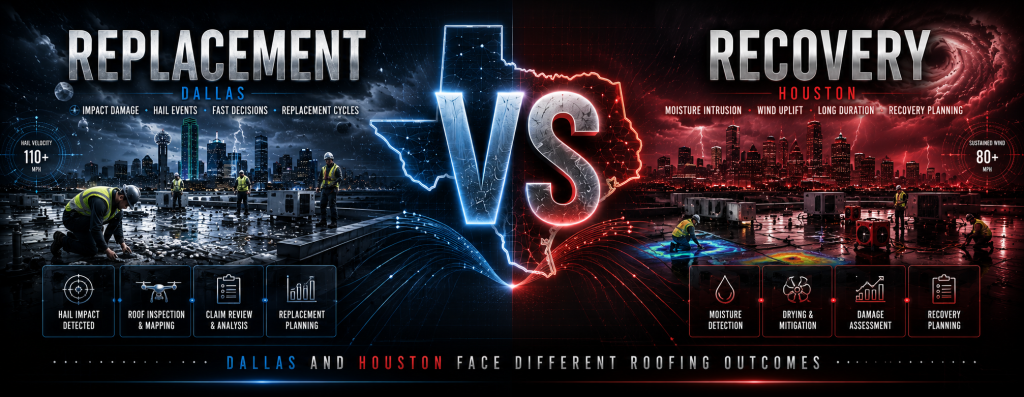
- Dallas vs. Houston
- Phoenix vs. Las Vegas
- Los Angeles vs. San Diego
- San Francisco vs. Seattle
- Denver vs. Salt Lake City
- Atlanta vs. Charlotte
- Miami vs. Tampa
- Nashville vs. St. Louis
- Kansas City vs. Denver
- Austin vs. Dallas
Each comparison highlights differences in climate, construction practices, commercial development, and long-term roofing performance.

Choosing the Right Roofing Strategy
Successful commercial roofing decisions are based on local conditions—not national averages.
Building owners often prioritize:
✓ Long-term durability
✓ Energy efficiency
✓ Weather protection
✓ Maintenance planning
✓ Operational reliability
✓ Occupant safety
✓ Budget stability
✓ Property value
✓ Regulatory compliance
✓ Lifecycle performance
A regional approach helps maximize roof performance while reducing long-term ownership costs.
Understanding Commercial Roofing Across America’s Major Markets
Every metropolitan area presents unique opportunities and challenges for commercial roofing. Climate, construction trends, building age, regulatory requirements, and property types all influence how roofs are inspected, maintained, repaired, restored, and replaced. Whether comparing Dallas and Houston, Phoenix and Las Vegas, Chicago and Minneapolis, or New York and Boston, understanding regional differences helps property owners make smarter roofing decisions, improve long-term building performance, and protect the value of their commercial investments.