Commercial Roof Replacement
Commercial roof replacement is one of the most significant investments a building owner will make during the life of a commercial property. Every roofing system eventually reaches a point where ongoing repairs become less practical than replacing the roof with a modern system designed to improve durability, energy efficiency, weather protection, and long-term building performance.
Office buildings, warehouses, manufacturing facilities, retail centers, healthcare campuses, schools, apartment communities, hotels, government buildings, and industrial facilities all depend on reliable roofing systems to protect occupants, equipment, inventory, and business operations. Property owners, facility managers, property managers, architects, engineers, insurance professionals, and general contractors routinely evaluate roof conditions to determine the right time for replacement while balancing maintenance costs, operational needs, and capital improvement planning.
A properly planned commercial roof replacement extends beyond installing new roofing materials. It provides an opportunity to upgrade insulation, improve drainage, enhance energy performance, address code requirements, reduce future maintenance, and strengthen the overall building envelope.
Understanding When Roof Replacement Is the Right Solution
Every commercial roof experiences years of exposure to sun, rain, wind, temperature fluctuations, and normal building movement. While routine maintenance can extend service life, replacement often becomes the most cost-effective long-term solution once deterioration reaches a certain point.
Replacement is commonly recommended when:
- Leaks become frequent
- Multiple repair areas continue expanding
- Roofing materials reach the end of their expected lifespan
- Moisture enters insulation systems
- Flashing failures become widespread
- Drainage problems continue recurring
- Storm damage affects large roof sections
- Energy performance declines
- Maintenance costs continue increasing
- Roof warranties have expired
Replacing the roofing system before widespread failure helps reduce operational disruptions while protecting the building’s long-term value.
Commercial Roofing Systems
Modern replacement projects may involve many different roofing assemblies depending on the building’s design and operational requirements.
Common commercial roofing systems include:
- TPO roofing
- PVC roofing
- EPDM roofing
- Modified bitumen
- Built-up roofing
- Standing seam metal roofing
- Structural metal roofing
- Low-slope roofing
- Flat roofing
- Insulated roof assemblies
- Roof coating systems where appropriate
- Specialty roofing systems for unique facilities
Each roofing system offers different advantages based on climate, occupancy, maintenance expectations, energy goals, and budget considerations.
Evaluating the Existing Roof
Before recommending replacement, commercial roofing professionals typically perform a comprehensive evaluation of the existing system.
An assessment may include:
- Roof age
- Membrane condition
- Flashing inspections
- Drainage performance
- Structural observations
- Moisture detection
- Insulation condition
- Roof penetrations
- Rooftop equipment
- Previous repair history
- Warranty status
- Overall remaining service life
A thorough inspection helps determine whether replacement offers the greatest long-term value compared to continued repairs or restoration.
Roof Replacement and Building Performance
A commercial roof influences far more than weather protection.
Modern roofing systems help improve:
- Energy efficiency
- Indoor comfort
- Moisture protection
- Building durability
- HVAC performance
- Insulation effectiveness
- Utility costs
- Roof drainage
- Structural protection
- Long-term maintenance planning
Replacing an aging roof often improves overall facility performance while reducing unexpected maintenance expenses.
Building Codes and Roofing Standards
Commercial roof replacement projects must comply with current construction requirements.
Projects commonly address:
- Local building codes
- Fire resistance requirements
- Wind uplift standards
- Energy code compliance
- Insulation requirements
- Structural loading
- Drainage design
- Manufacturer installation standards
- Safety regulations
- Permit requirements
- Inspection procedures
Meeting current standards helps improve long-term reliability while supporting safe building operation.
Replacing Roofs on Occupied Buildings
Many commercial buildings remain fully operational throughout roof replacement projects.
Careful planning often includes:
- Tenant communication
- Facility coordination
- Safe building access
- Temporary weather protection
- Construction phasing
- Material staging
- Noise management
- Parking coordination
- Daily safety planning
- Emergency access routes
Effective project coordination helps minimize disruptions while maintaining normal business operations.
Insurance and Roof Replacement
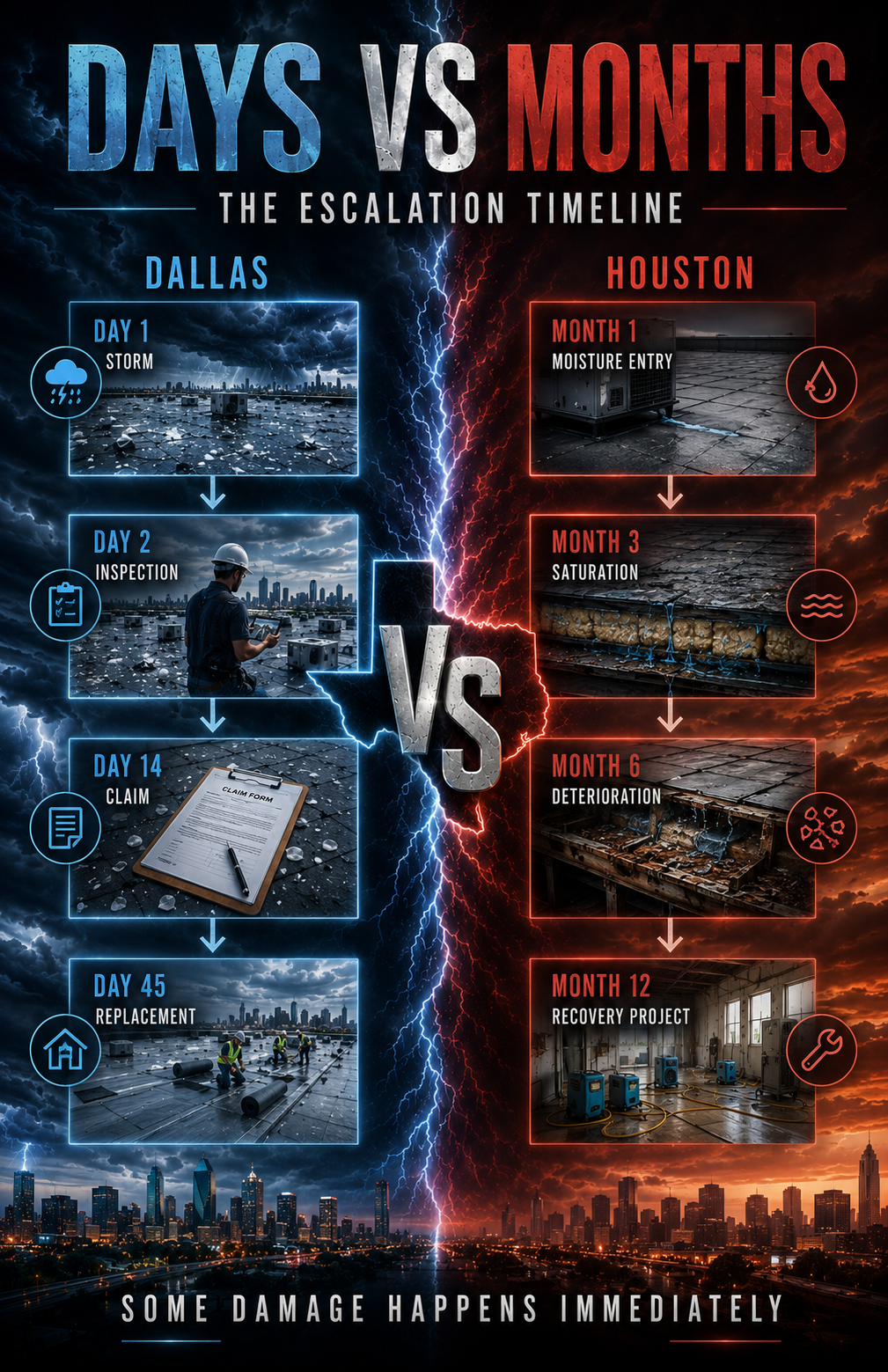
Commercial roof replacement is often associated with insurance claims following major weather events or unexpected damage.
Insurance-related projects may involve:
- Wind damage
- Hail damage
- Fire damage
- Falling debris
- Water intrusion
- Storm-related structural damage
- Emergency temporary protection
- Claim documentation
- Inspection reports
- Repair versus replacement evaluations
Proper documentation and thorough inspections help support informed insurance decisions.
Emergency Roof Replacement
Unexpected roof failures sometimes require immediate action to protect the building.
Emergency situations may include:
- Severe storm damage
- Major roof leaks
- Structural failures
- Membrane blow-offs
- Falling trees
- Fire damage
- Equipment impacts
- Significant water intrusion
Temporary stabilization measures often protect the property until permanent replacement work can begin safely.
Roof Replacement as Part of the Building Envelope
The roof works together with every component of the building envelope.
Replacement projects frequently evaluate:
- Flashing systems
- Coping caps
- Expansion joints
- Parapet walls
- Skylights
- Roof hatches
- HVAC curbs
- Mechanical penetrations
- Drainage systems
- Waterproofing transitions
Considering the complete building envelope helps improve long-term performance and reduce future maintenance.
Commercial Properties Served
Commercial roof replacement supports virtually every type of commercial facility.
Common projects include:
- Office buildings
- Medical offices
- Hospitals
- Retail centers
- Shopping malls
- Industrial facilities
- Warehouses
- Manufacturing plants
- Distribution centers
- Schools
- Universities
- Hotels
- Apartment communities
- Government buildings
- Churches
- Airports
- Data centers
- Logistics facilities
Each property type presents unique operational requirements, replacement schedules, and roofing challenges.
Long-Term Capital Planning
Roof replacement is often part of a broader facility management strategy.
Building owners commonly evaluate:
- Capital improvement planning
- Roof lifecycle management
- Preventive maintenance
- Future expansion
- Energy improvements
- Tenant improvements
- Asset preservation
- Reserve budgeting
- Maintenance forecasting
- Property modernization
Planning roof replacement proactively helps maximize service life while reducing unexpected capital expenditures.
Supporting Long-Term Building Performance
Commercial roof replacement is more than replacing roofing materials—it’s an investment in the future performance of the building. A properly designed roofing system helps protect occupants, equipment, inventory, and daily operations while improving energy efficiency, weather resistance, safety, and long-term reliability. Whether replacing the roof on an office building, warehouse, retail center, healthcare campus, industrial facility, or multi-building commercial property, thoughtful planning and quality installation help strengthen the entire building envelope and support the long-term value of the property.