Commercial Roof Repair
Commercial roof repair plays an essential role in protecting commercial buildings from water intrusion, structural deterioration, and costly operational disruptions. Even well-maintained roofing systems experience wear from weather exposure, aging materials, rooftop equipment, foot traffic, and normal building movement. Addressing roofing issues promptly helps extend the life of the existing roof while reducing the likelihood of more extensive damage.
Office buildings, warehouses, manufacturing facilities, retail centers, healthcare campuses, schools, apartment communities, hotels, industrial properties, and government buildings all depend on reliable roofing systems to protect occupants, equipment, inventory, and business operations. Property owners, facility managers, property managers, architects, engineers, and general contractors regularly evaluate roof conditions to determine whether repairs can restore performance or whether more comprehensive solutions should be considered.
A well-executed commercial roof repair program focuses on preserving the roofing system, improving building performance, reducing maintenance costs, and extending the roof’s remaining service life.
Understanding When Roof Repair Is the Right Solution
Not every roofing issue requires a complete replacement. Many problems can be addressed successfully when identified early through routine inspections and preventive maintenance.
Roof repair is commonly appropriate when:
- Isolated leaks develop
- Flashing becomes damaged
- Roof penetrations begin leaking
- Membranes experience localized damage
- Wind lifts roofing materials
- Drainage issues affect limited areas
- Sealants deteriorate
- Mechanical equipment damages roofing surfaces
- Minor storm damage occurs
- Small punctures or tears develop
Prompt repairs help prevent relatively minor issues from becoming larger and more expensive building envelope failures.
Common Commercial Roof Repairs
Repair methods vary depending on the roofing system and the source of the problem.
Typical repair services include:
- Leak repairs
- Flashing replacement
- Membrane patching
- Seam repairs
- Roof coating touch-ups
- Drain repairs
- Penetration sealing
- Coping repairs
- Edge metal repairs
- Roof curb repairs
- Expansion joint repairs
- Temporary emergency protection
Each repair is intended to restore roof performance while preserving as much of the existing roofing system as possible.
Identifying Roofing Problems Early
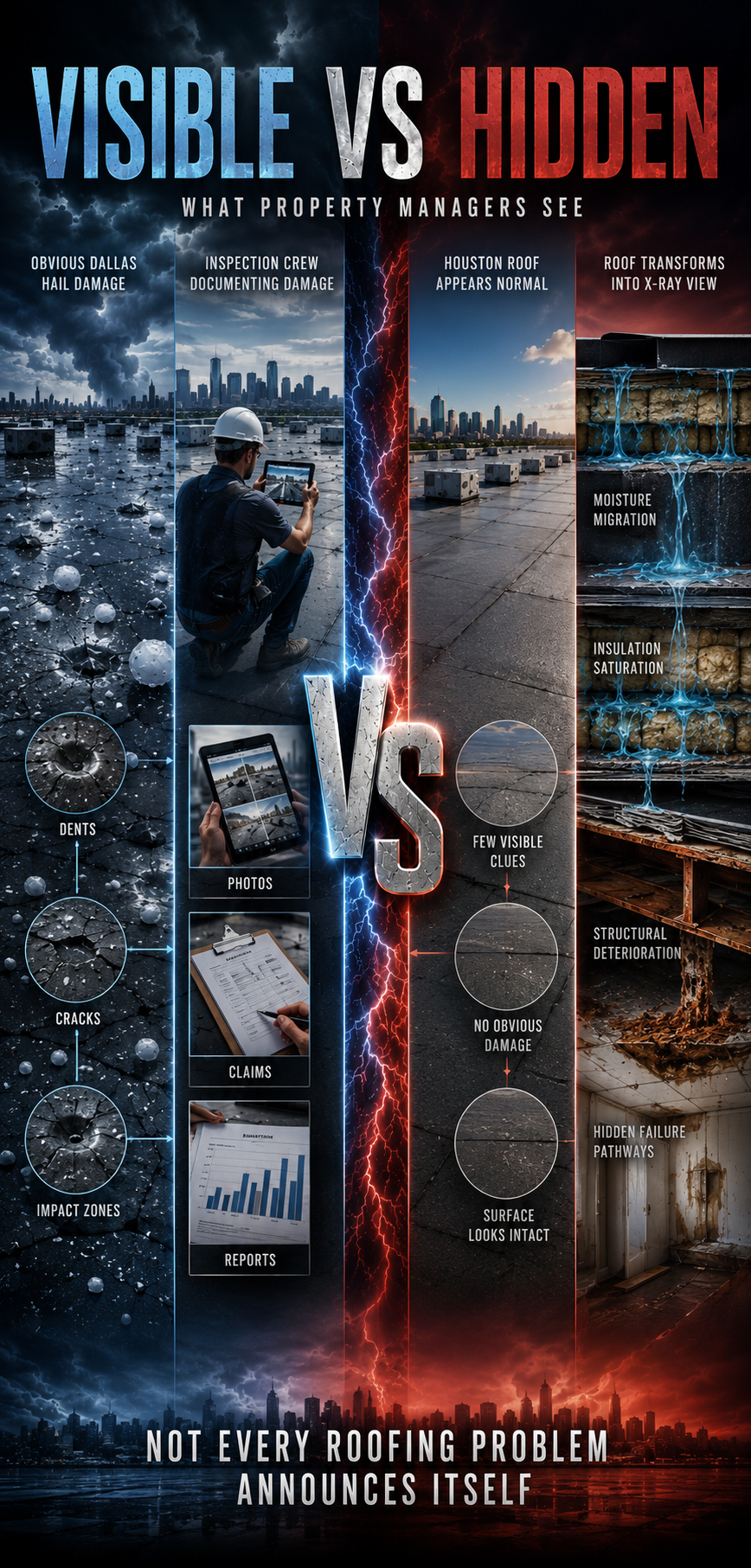
Routine inspections often reveal developing issues before they result in interior damage.
Common warning signs include:
- Ceiling stains
- Water infiltration
- Ponding water
- Loose roofing materials
- Open seams
- Cracked flashing
- Blistering membranes
- Mold or mildew
- Interior moisture
- Damaged insulation
- Visible storm damage
- Increased maintenance calls
Early detection allows repairs to be completed before deterioration spreads throughout the roofing system.
Roof Repair and Preventive Maintenance
Preventive maintenance remains one of the most effective ways to maximize roof life.
Maintenance programs commonly include:
- Scheduled roof inspections
- Debris removal
- Drain cleaning
- Flashing inspections
- Sealant maintenance
- Rooftop equipment inspections
- Minor repairs
- Documentation of roof conditions
- Storm assessments
- Maintenance planning
Consistent maintenance often reduces emergency repairs while extending the roof’s service life.
Weather-Related Roof Damage
Commercial roofs are exposed to changing environmental conditions throughout the year.
Repairs frequently address damage caused by:
- High winds
- Heavy rain
- Hail
- Snow and ice
- UV exposure
- Temperature fluctuations
- Standing water
- Falling debris
- Tree impacts
- Severe storms
Understanding how weather affects roofing systems helps prioritize timely repairs and ongoing maintenance.
Roof Repair on Occupied Buildings
Many repair projects are completed while businesses remain fully operational.
Project planning often includes:
- Tenant communication
- Safe building access
- Temporary weather protection
- Rooftop safety procedures
- Equipment coordination
- Limited work-area disruptions
- Emergency access planning
- Noise management
- Daily scheduling
- Protection of building occupants
Proper coordination allows repairs to proceed safely with minimal impact on daily operations.
Insurance and Roof Repairs
Some commercial roof repairs are associated with insurance claims following unexpected damage.
Insurance-related repairs may involve:
- Storm damage
- Wind damage
- Hail impacts
- Fire damage
- Falling objects
- Water intrusion
- Emergency stabilization
- Temporary repairs
- Damage documentation
- Professional inspections
Detailed inspections and documentation help property owners better understand the condition of the roofing system and the scope of necessary repairs.

Roof Repair as Part of the Building Envelope
Roofing systems function together with other building envelope components.
Repair projects often evaluate:
- Flashing
- Coping systems
- Expansion joints
- Skylights
- Roof hatches
- HVAC penetrations
- Mechanical curbs
- Drainage systems
- Waterproofing transitions
- Parapet walls
Addressing these interconnected components helps improve overall building performance and reduce recurring maintenance issues.
Commercial Properties Served
Commercial roof repair supports a wide variety of building types.
Common projects include:
- Office buildings
- Retail centers
- Shopping malls
- Warehouses
- Distribution centers
- Manufacturing facilities
- Medical offices
- Hospitals
- Schools
- Universities
- Hotels
- Apartment communities
- Government buildings
- Industrial facilities
- Data centers
- Airports
- Religious facilities
- Mixed-use developments
Each property type presents unique maintenance priorities and operational considerations.
Planning for Long-Term Roof Performance
Repair is often one component of a larger facility management strategy.
Building owners commonly evaluate:
- Roof condition
- Remaining service life
- Maintenance history
- Budget planning
- Capital improvement schedules
- Future restoration opportunities
- Replacement timelines
- Energy performance
- Risk management
- Asset preservation
A proactive repair strategy helps extend roof life while supporting long-term financial planning.
Protecting Commercial Buildings Through Timely Roof Repairs
Commercial roof repair helps preserve one of the most important components of any commercial building. Addressing roofing problems early can reduce water intrusion, minimize operational disruptions, protect valuable assets, and extend the useful life of the existing roofing system. Whether repairing a warehouse, office building, healthcare facility, retail center, manufacturing plant, apartment community, or industrial property, timely repairs combined with preventive maintenance support safer buildings, improved performance, and long-term property value.