

Commercial Roof Inspection
Commercial roof inspections are one of the most effective ways to protect a building from unexpected leaks, structural deterioration, and costly repairs. Routine inspections help identify developing problems before they become major failures, allowing property owners and facility managers to make informed decisions about maintenance, repairs, restoration, or roof replacement.
Office buildings, warehouses, manufacturing facilities, retail centers, healthcare campuses, schools, apartment communities, hotels, industrial properties, and government buildings all benefit from scheduled roof inspections. Property owners, facility managers, property managers, insurance professionals, architects, engineers, and general contractors rely on detailed roof evaluations to assess existing conditions, prioritize maintenance, and support long-term capital planning.
A comprehensive commercial roof inspection provides valuable insight into the condition of the roofing system while helping extend its service life and improve the performance of the entire building envelope.
Why Commercial Roof Inspections Matter
Every commercial roof is exposed to weather, temperature changes, rooftop equipment, and daily wear throughout its lifespan.
Regular inspections help identify:
- Developing roof leaks
- Membrane deterioration
- Damaged flashing
- Drainage problems
- Ponding water
- Open seams
- Roof punctures
- Storm damage
- Moisture intrusion
- Insulation concerns
Finding problems early often reduces repair costs while preventing more significant building damage.
When Roof Inspections Should Be Performed
Routine inspections are recommended throughout the life of every commercial roofing system.
Inspections are commonly scheduled:
- After severe storms
- Before purchasing a commercial property
- Following major roof repairs
- Prior to roof replacement
- During warranty periods
- Before lease renewals
- As part of annual maintenance
- During capital planning
- Before insurance renewals
- After rooftop equipment installations
Regular evaluations help building owners stay ahead of unexpected roofing issues.
What a Commercial Roof Inspection Includes
A thorough inspection evaluates the overall condition of the roofing system and related building envelope components.
Areas commonly inspected include:
- Roof membrane
- Flashing systems
- Roof penetrations
- Drainage systems
- Roof drains
- Expansion joints
- Coping caps
- Skylights
- Roof hatches
- HVAC curbs
- Rooftop equipment
- Sealants
Each component is evaluated for signs of wear, damage, or conditions that may require maintenance or repair.
Identifying Common Roofing Problems
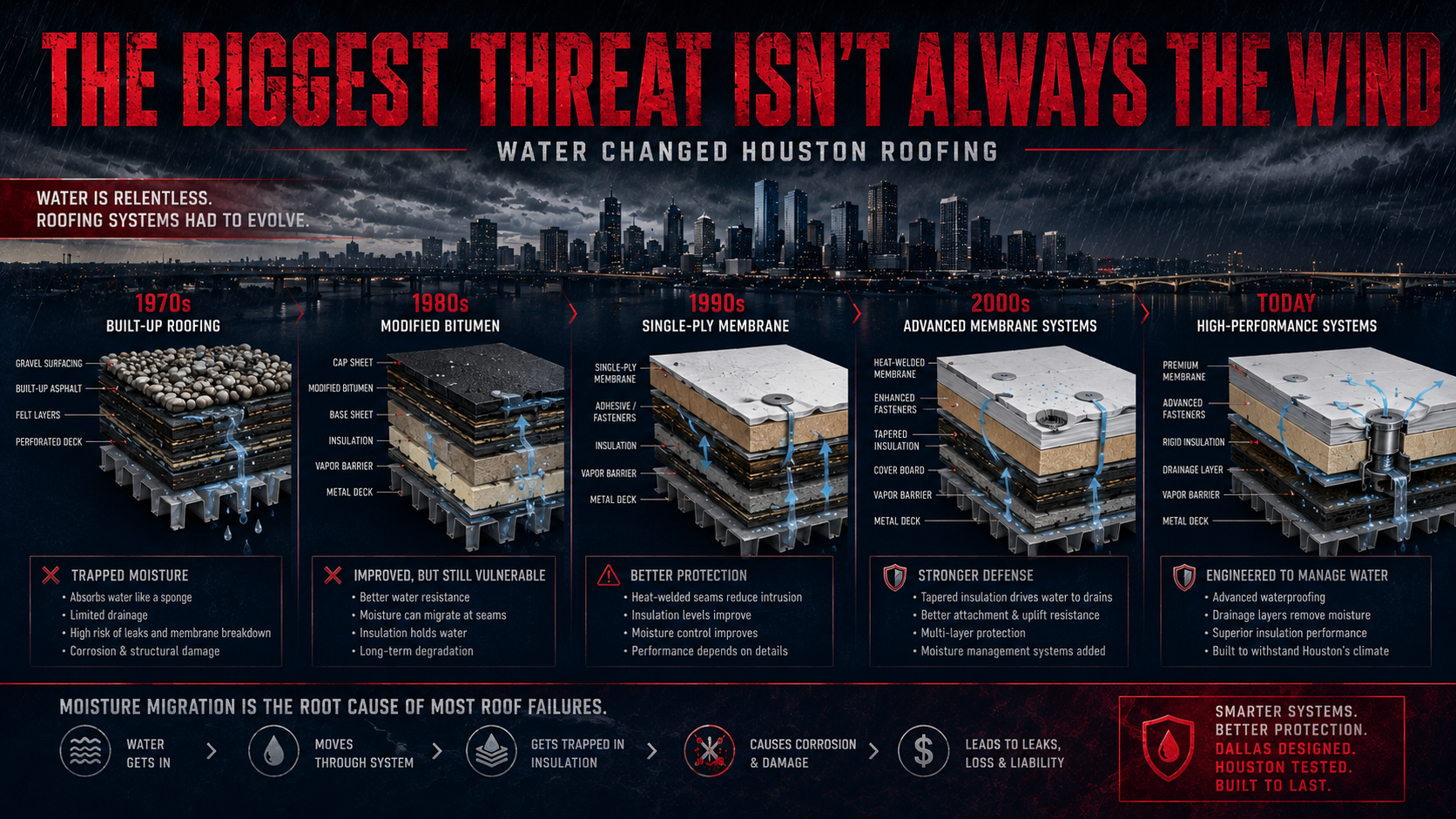
Commercial roof inspections often reveal issues that are not visible from inside the building.
Common findings include:
- Loose roofing materials
- Cracked flashing
- Membrane shrinkage
- Open seams
- Blistering
- Surface deterioration
- Standing water
- Clogged drains
- Damaged edge metal
- UV deterioration
- Mechanical damage
- Previous repair failures
Documenting these conditions helps prioritize future maintenance and repairs.
Roof Inspections Support Preventive Maintenance
Preventive maintenance begins with understanding the current condition of the roof.
Inspection programs help support:
- Scheduled maintenance
- Leak prevention
- Minor repairs
- Drain cleaning
- Sealant replacement
- Flashing maintenance
- Roof cleaning
- Documentation updates
- Maintenance budgeting
- Lifecycle planning
Routine inspections often extend roof life while reducing emergency repair costs.
Roof Inspections After Storm Damage
Severe weather can damage commercial roofs even when problems are not immediately visible.
Post-storm inspections commonly evaluate:
- Wind damage
- Hail impacts
- Water intrusion
- Membrane displacement
- Flashing damage
- Falling debris
- Roof punctures
- Drainage performance
- Structural concerns
- Emergency stabilization needs
Prompt inspections help determine whether repairs or additional protective measures are necessary.
Insurance and Roof Inspections
Roof inspections frequently play an important role in insurance documentation and claims.
Inspection reports may assist with:
- Storm damage documentation
- Insurance claims
- Claim support
- Property condition records
- Maintenance history
- Repair recommendations
- Replacement evaluations
- Risk assessments
- Asset management
- Long-term planning
Accurate documentation helps property owners make informed decisions following roof damage.
Supporting the Entire Building Envelope
The roof works together with many other building components.
Inspections often evaluate:
- Flashing systems
- Parapet walls
- Expansion joints
- Waterproofing transitions
- Roof penetrations
- Mechanical equipment
- Drainage systems
- Skylights
- Roof access points
- Adjacent exterior materials
Evaluating the complete building envelope helps identify conditions that could contribute to future water intrusion or structural deterioration.

Commercial Properties That Benefit from Roof Inspections
Routine inspections are valuable across virtually every commercial property type.
Common facilities include:
- Office buildings
- Retail centers
- Shopping malls
- Warehouses
- Distribution centers
- Manufacturing facilities
- Medical offices
- Hospitals
- Schools
- Universities
- Hotels
- Apartment communities
- Government buildings
- Industrial facilities
- Data centers
- Airports
- Religious facilities
- Mixed-use developments
Each building has unique roofing conditions, maintenance requirements, and inspection priorities.
Roof Inspections and Long-Term Capital Planning
Inspection reports help building owners plan for future roofing investments.
Long-term planning often includes:
- Remaining roof life
- Maintenance scheduling
- Repair prioritization
- Restoration opportunities
- Replacement planning
- Budget forecasting
- Reserve studies
- Energy improvements
- Warranty management
- Asset preservation
Understanding current roof conditions supports smarter financial decisions while reducing unexpected capital expenses.
Protecting Commercial Buildings Through Routine Roof Inspections
Commercial roof inspections provide the information needed to protect buildings, reduce maintenance costs, and extend the life of commercial roofing systems. Regular evaluations help identify developing problems before they become major failures, allowing property owners to plan repairs, maintenance, restoration, or replacement with greater confidence. Whether inspecting an office building, warehouse, retail center, healthcare facility, manufacturing plant, apartment community, or industrial property, proactive roof inspections support safer buildings, improved performance, and long-term property value.