
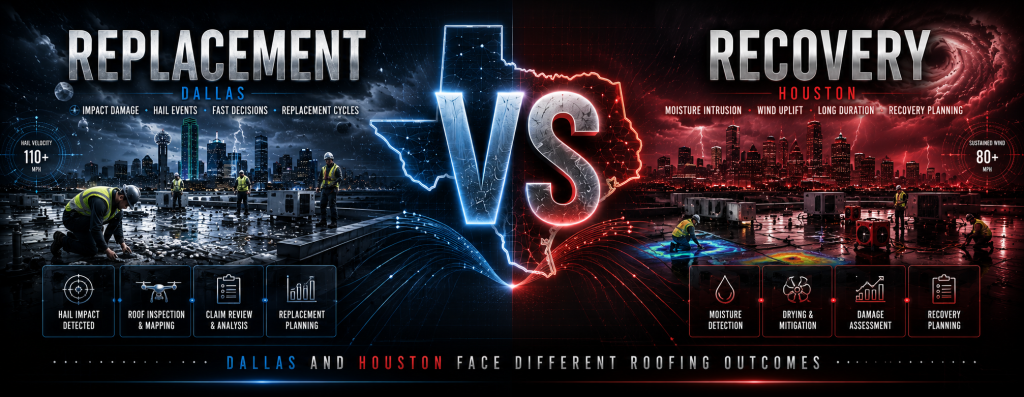

North Carolina Commercial Roofing
North Carolina has become one of the fastest-growing commercial construction markets in the Southeast, driven by finance, healthcare, biotechnology, manufacturing, logistics, higher education, technology, and population growth. From Charlotte and Raleigh to Durham, Greensboro, Winston-Salem, and Wilmington, commercial roofing systems protect office buildings, healthcare campuses, industrial facilities, distribution centers, universities, retail centers, hotels, and mixed-use developments against a wide range of weather conditions.
Property owners, facility managers, property managers, developers, architects, engineers, insurance professionals, and general contractors throughout North Carolina regularly evaluate commercial roofing systems to improve energy efficiency, reduce maintenance costs, extend roof life, and support long-term capital planning.
A proactive commercial roofing strategy helps strengthen the building envelope while protecting valuable commercial investments.
North Carolina Roofing Challenges
North Carolina’s diverse climate creates year-round demands on commercial roofing systems.
Property owners commonly prepare for:
✓ Hurricanes and tropical storms
✓ Heavy rainfall
✓ High humidity
✓ Strong wind events
✓ Intense summer heat
✓ Seasonal temperature changes
✓ Occasional snow and ice
✓ Rooftop mechanical equipment
✓ Energy efficiency improvements
✓ Preventive maintenance
✕ Ignoring storm damage after severe weather
✕ Delaying roof inspections before hurricane season
✕ Waiting until small leaks become major building problems
Routine inspections and preventive maintenance help commercial roofs perform reliably throughout every season.
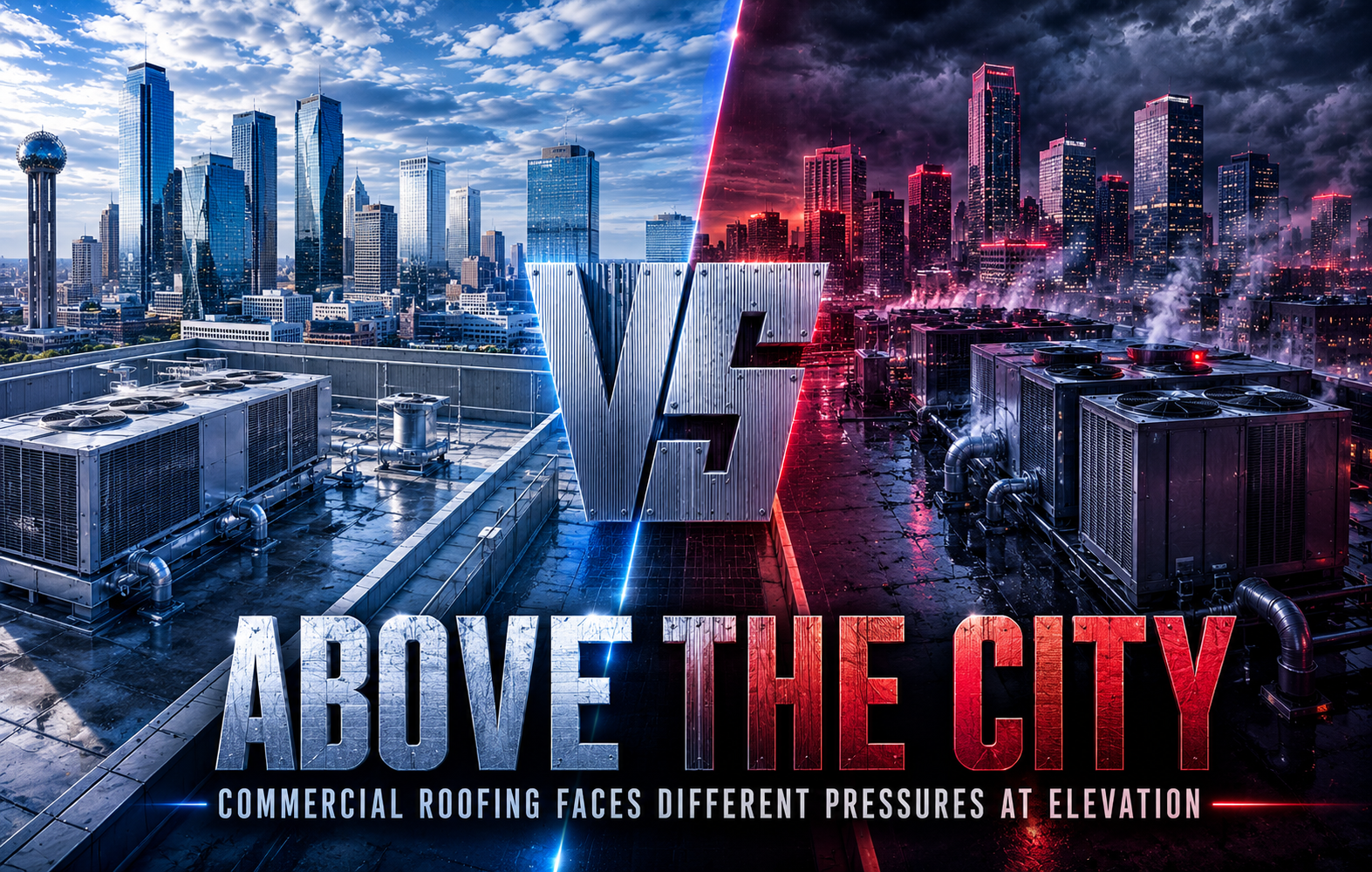
Commercial Roofing Services
Commercial roofing requires continuous management throughout the building lifecycle.
Common services include:
- Commercial roof inspections
- Roof repairs
- Emergency roofing
- Roof replacement
- Roof restoration
- Roof coatings
- Leak investigations
- Preventive maintenance
- Storm damage assessments
- Capital planning
Each service supports long-term roof performance while protecting commercial operations.
Commercial Roofing Systems
North Carolina commercial buildings utilize roofing systems engineered for changing weather conditions.
Common roofing systems include:
✓ TPO roofing
✓ PVC roofing
✓ EPDM roofing
✓ Modified bitumen
✓ Built-up roofing
✓ Standing seam metal roofing
✓ Low-slope roofing
✓ Reflective cool roof systems
✓ High-performance insulated roof assemblies
✓ Roof coating systems
Roof selection depends on building design, regional climate, energy goals, maintenance expectations, and long-term ownership strategy.
Commercial Properties Served
Commercial roofing supports nearly every major industry throughout North Carolina.
Common projects include:
- Corporate headquarters
- Office buildings
- Healthcare facilities
- Hospitals
- Manufacturing plants
- Warehouses
- Distribution centers
- Retail centers
- Shopping plazas
- Hotels
- Educational campuses
- Government buildings
- Biotechnology facilities
- Industrial parks
- Financial institutions
- Mixed-use developments
Each property type requires a roofing strategy based on occupancy, weather exposure, and long-term investment objectives.
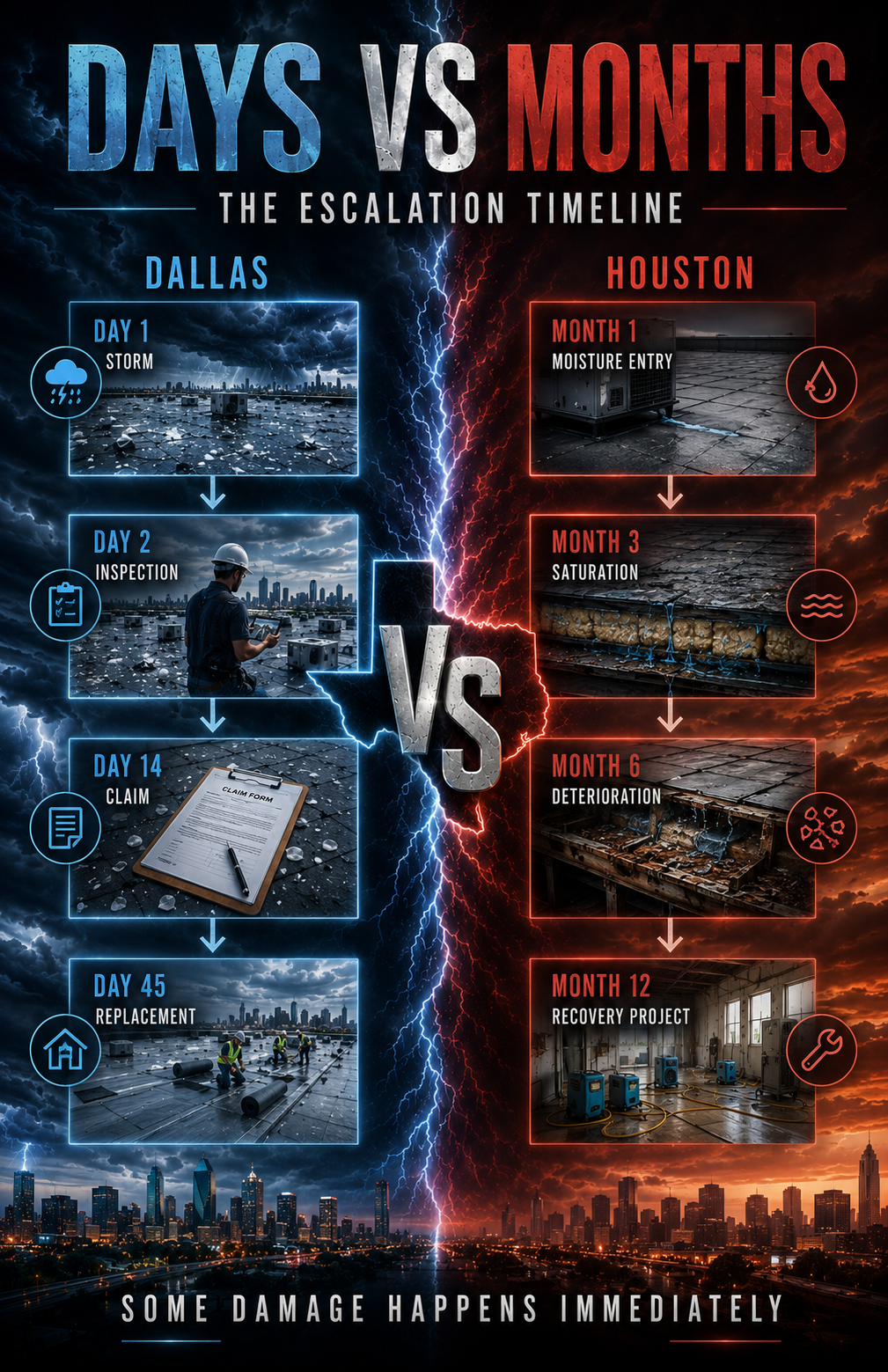
Roof Maintenance Across North Carolina
Routine maintenance helps commercial roofs withstand North Carolina’s changing weather.
Maintenance programs often include:
✓ Annual roof inspections
✓ Storm damage evaluations
✓ Hurricane preparedness inspections
✓ Roof drain cleaning
✓ Flashing inspections
✓ Sealant maintenance
✓ Roof cleaning
✓ Minor repairs
✓ Warranty tracking
✓ Lifecycle planning
Preventive maintenance helps extend roof life while reducing unexpected repair costs.
Planning for Roof Replacement
Every commercial roof eventually reaches the end of its useful service life.
Property owners commonly evaluate:
✓ Roof age
✓ Maintenance history
✓ Storm damage history
✓ Repair frequency
✓ Energy performance
✓ Remaining service life
✓ Budget forecasting
✓ Construction scheduling
✓ Capital improvement planning
✓ Long-term ownership goals
Planning replacement projects before major failures occur helps reduce disruptions while improving financial planning.
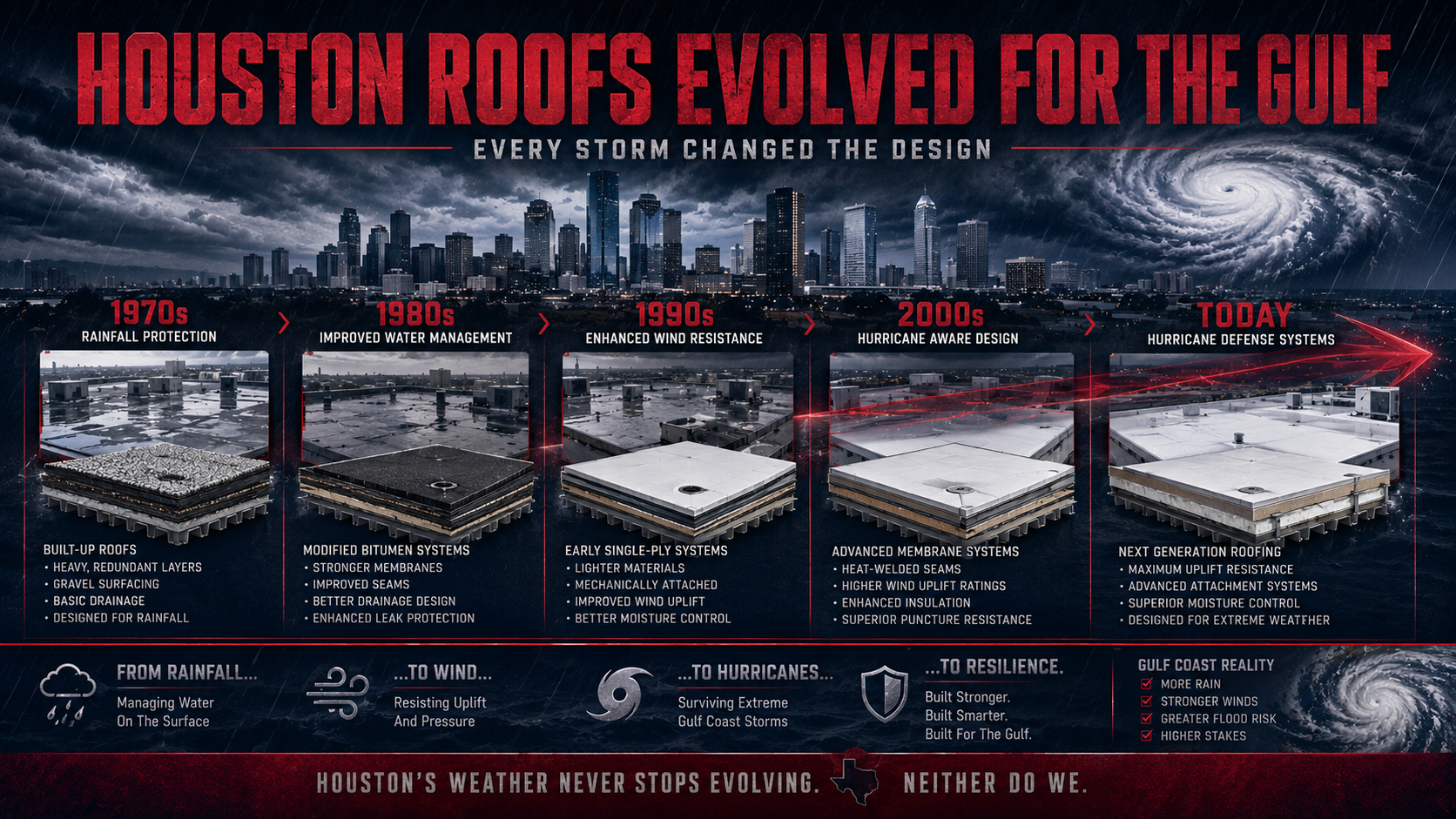
Emergency Roofing Response
North Carolina’s weather can create unexpected roofing emergencies throughout the year.
Emergency roofing services may include:
- Hurricane damage repairs
- Wind damage repairs
- Emergency roof tarping
- Leak containment
- Temporary waterproofing
- Debris removal
- Insurance documentation
- Water intrusion mitigation
- Temporary stabilization
- Permanent recovery planning
Rapid response helps protect commercial buildings while minimizing business interruptions.
Supporting the Entire Building Envelope
Commercial roofing performs best when integrated with the complete building envelope.
Projects often evaluate:
✓ Roof drainage
✓ Flashing systems
✓ Expansion joints
✓ Skylights
✓ HVAC penetrations
✓ Parapet walls
✓ Waterproofing systems
✓ Rooftop equipment
✓ Insulation performance
✓ Wind-resistant attachment systems
Managing these systems together improves durability, weather resistance, and long-term building performance.
Commercial Roofing Throughout North Carolina
Commercial roofing services support businesses across North Carolina, including:
- Charlotte
- Raleigh
- Durham
- Greensboro
- Winston-Salem
- Cary
- Wilmington
- Asheville
- High Point
- Concord
- Greenville
- Chapel Hill
- Gastonia
- Mooresville
- Hickory
Each market features a unique combination of finance, healthcare, manufacturing, biotechnology, education, logistics, hospitality, retail, industrial, and mixed-use development that influences roofing inspections, maintenance, repairs, restoration, and replacement planning.
Protecting North Carolina Commercial Buildings
Commercial roofing is one of the most important long-term investments for property owners throughout North Carolina. Through regular inspections, preventive maintenance, timely repairs, strategic roof coatings, emergency response, and planned roof replacement, commercial buildings remain protected against hurricanes, heavy rainfall, seasonal storms, and changing temperatures while supporting business continuity and long-term property performance. Whether managing a financial office in Charlotte, a biotechnology facility in the Research Triangle, a manufacturing plant in Greensboro, a healthcare campus in Raleigh, or a distribution center in Wilmington, proactive commercial roofing helps reduce lifecycle costs, improve operational reliability, and preserve long-term property value.