
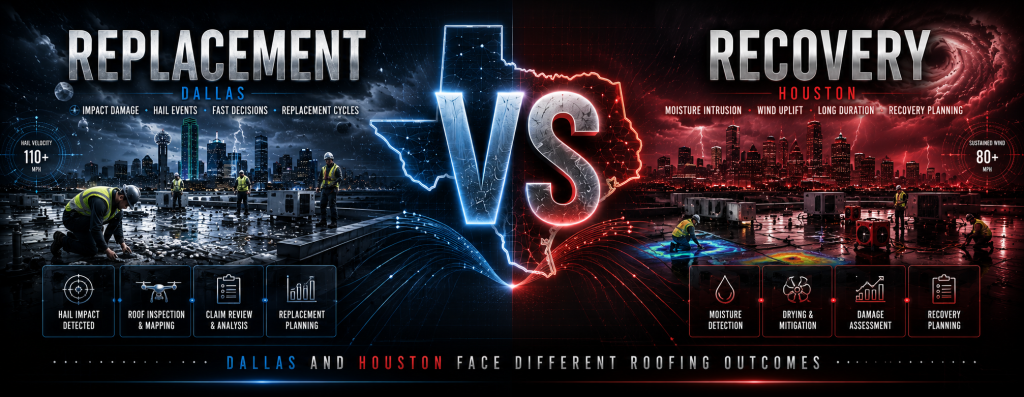

Commercial Emergency Roofing
Commercial emergency roofing services help protect buildings when unexpected roof damage threatens occupants, business operations, equipment, or valuable assets. High winds, hail, heavy rain, falling debris, fire, and sudden roof failures can quickly expose a commercial property to water intrusion and structural damage. Rapid emergency response helps stabilize the building, reduce additional losses, and create a clear path toward permanent repairs or roof replacement.
Office buildings, warehouses, manufacturing facilities, retail centers, healthcare campuses, schools, apartment communities, hotels, industrial facilities, and government properties all rely on emergency roofing services to restore safety and protect daily operations. Property owners, facility managers, property managers, insurance adjusters, architects, engineers, restoration companies, and general contractors often coordinate together during emergency roofing situations.
Signs You May Need Emergency Roofing
Some roofing problems simply cannot wait until the next scheduled inspection.
✓ Active roof leaks during rainfall
✓ Wind damage exposing roofing materials
✓ Falling trees or debris
✓ Large punctures in the roofing system
✓ Flashing pulled loose by storms
✓ Interior ceiling leaks
✓ Standing water following severe weather
✓ Fire-related roof damage
✓ Structural concerns after major storms
✕ Waiting for damage to spread
✕ Ignoring small leaks that continue growing
✕ Delaying temporary protection
Early action often prevents significantly more expensive repairs.
Immediate Emergency Response Priorities
The first goal is protecting people and limiting additional property damage.
Emergency response may include:
✓ Emergency roof tarping
✓ Temporary waterproofing
✓ Leak containment
✓ Interior protection
✓ Debris removal
✓ Roof safety inspections
✓ Temporary weather barriers
✓ Drainage management
✓ Securing loose roofing materials
✓ Protecting sensitive equipment
—
Avoid during the emergency:
✕ Walking on unstable roofing
✕ Ignoring electrical hazards
✕ Leaving exposed roof openings
✕ Delaying temporary stabilization
Quick stabilization helps reduce business interruptions while protecting the building envelope.
Common Causes of Commercial Roof Emergencies
Commercial roofs experience many unexpected events throughout their service life.
Frequent causes include:
- Wind storms
- Hail damage
- Heavy rainfall
- Flying debris
- Fallen trees
- Fire damage
- Mechanical equipment failures
- Roof punctures
- Aging roofing materials
- Flashing failures
- Clogged roof drains
- Structural movement
Each emergency requires a thorough evaluation before determining the most appropriate long-term solution.
Emergency Roof Inspections
Following stabilization, a comprehensive inspection helps identify both visible and hidden damage.
Inspections commonly evaluate:
✓ Roof membranes
✓ Flashing systems
✓ Roof penetrations
✓ Drainage systems
✓ Roof insulation
✓ Rooftop equipment
✓ Structural concerns
✓ Water intrusion
✓ Expansion joints
✓ Roof edge conditions
Inspection reports often guide repair recommendations, insurance documentation, and replacement planning.
Emergency Repairs vs. Roof Replacement
Not every roofing emergency requires complete replacement.
Emergency repairs are often appropriate when:
✓ Damage is localized
✓ Roof structure remains sound
✓ Membranes can be repaired
✓ Water intrusion is limited
✓ Flashing failures are isolated
Replacement may become the better long-term solution when:
- Large roof sections fail
- Structural damage is discovered
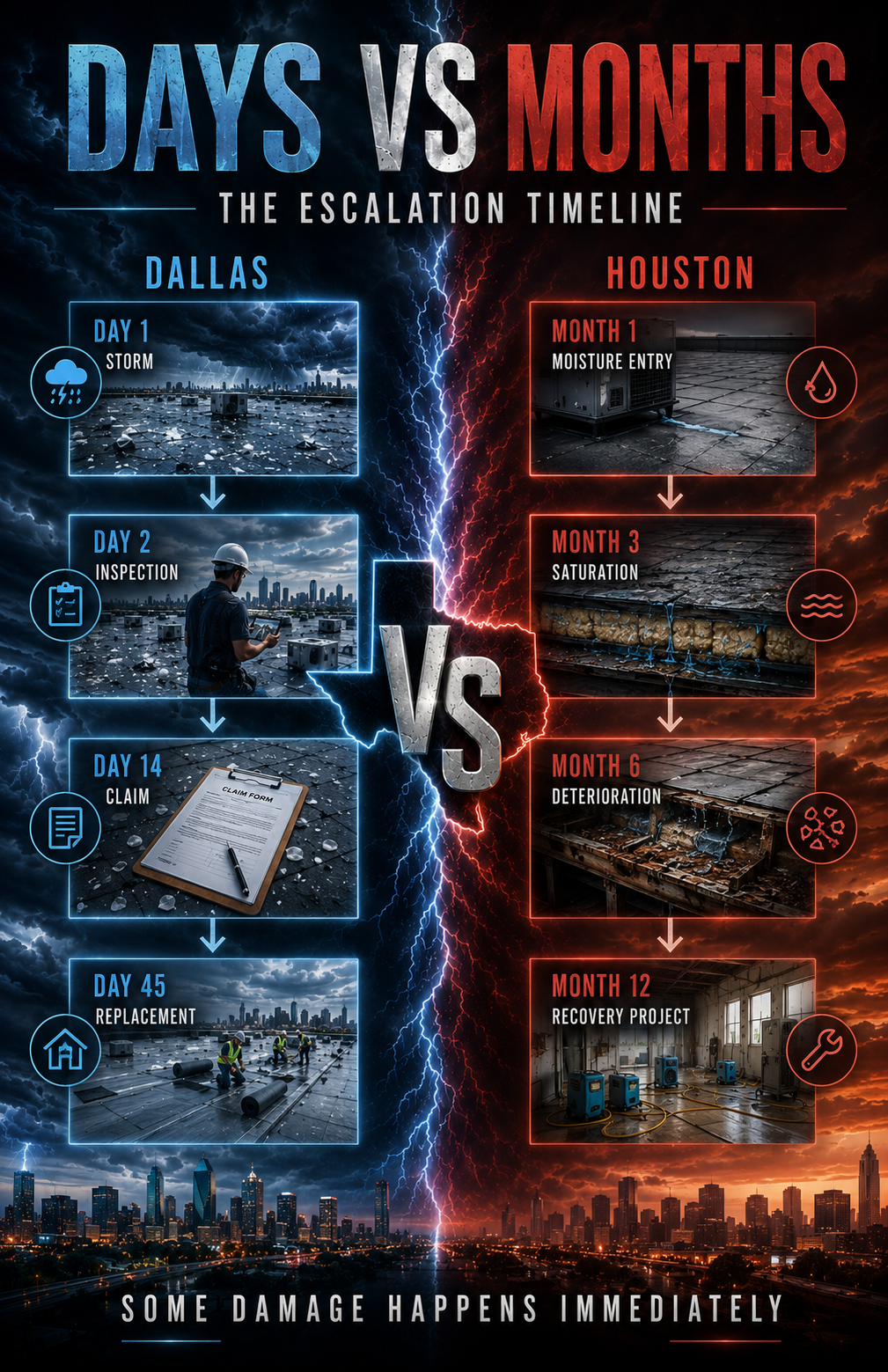
- Moisture has spread throughout insulation
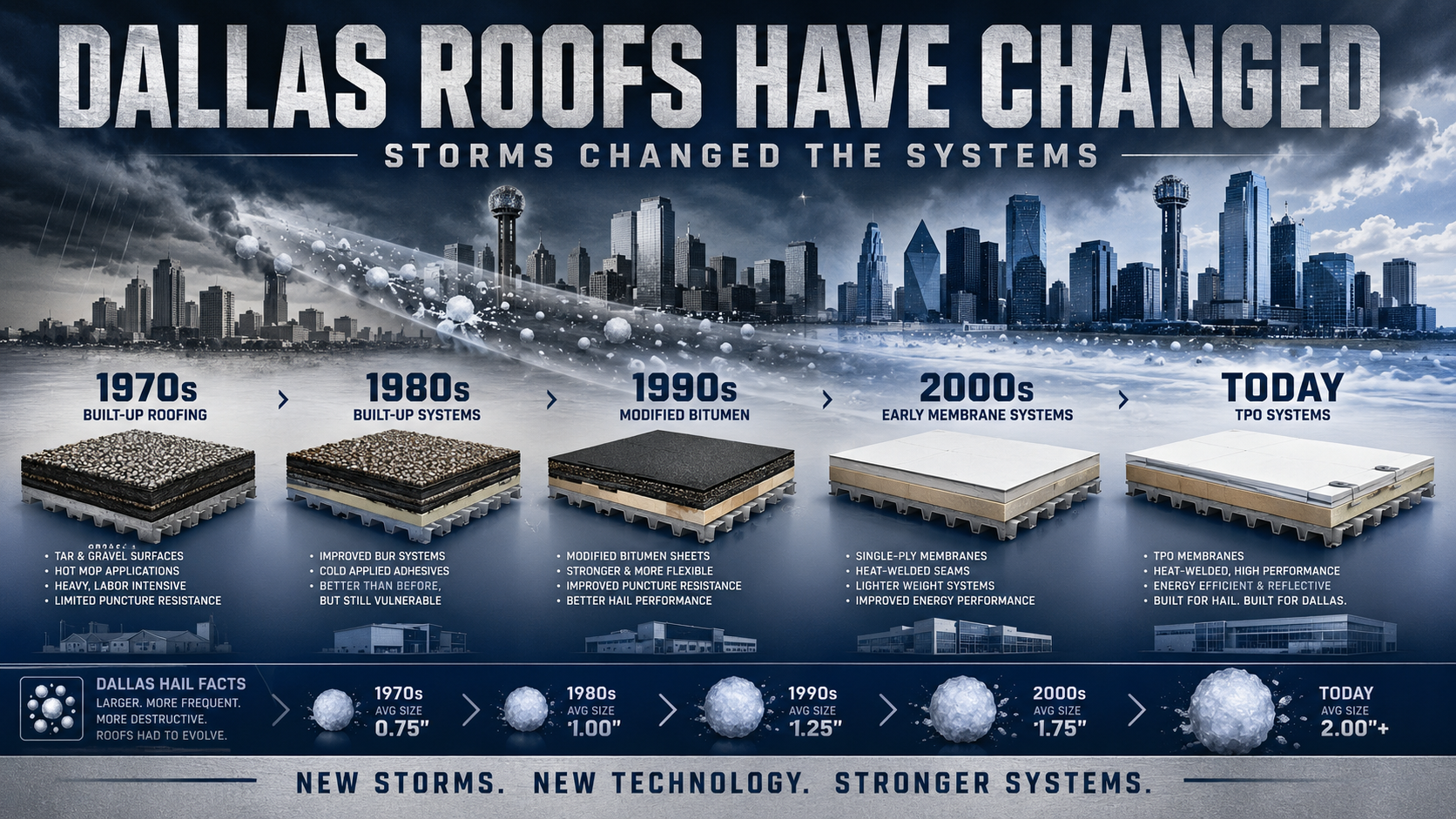
- Roofing materials have reached the end of their service life
- Storm damage affects multiple building areas
- Repair costs continue increasing
Every emergency should be evaluated based on overall roof condition rather than a single area of damage.
Insurance and Emergency Roofing
Emergency roofing projects frequently involve insurance documentation and claims support.
The process often includes:
✓ Emergency mitigation
✓ Damage documentation
✓ Photographs
✓ Roof inspections
✓ Temporary protection
✓ Scope development
✓ Repair recommendations
✓ Replacement evaluations
✓ Coordination with restoration teams
✓ Long-term recovery planning
Accurate documentation helps property owners better understand the condition of the roof and supports informed insurance decisions.
Protecting Occupied Buildings During Emergencies
Many emergency roofing projects occur while businesses remain open.
Successful coordination includes:
✓ Safe building access
✓ Tenant communication
✓ Interior protection
✓ Temporary entrances
✓ Noise management
✓ Construction safety
✓ Emergency access routes
✓ Equipment protection
✓ Daily scheduling
✓ Business continuity planning
The objective is protecting both the building and the people inside it while repairs are underway.

Commercial Properties Served
Emergency roofing services support virtually every commercial property.
Common facilities include:
- Office buildings
- Retail centers
- Shopping centers
- Warehouses
- Distribution facilities
- Manufacturing plants
- Medical offices
- Hospitals
- Schools
- Universities
- Hotels
- Apartment communities
- Government buildings
- Industrial facilities
- Data centers
- Airports
- Mixed-use developments
Each property requires an emergency response strategy based on occupancy, building design, and operational priorities.
Planning Beyond the Emergency
Once the immediate situation has been stabilized, long-term planning becomes the priority.
Property owners commonly evaluate:
✓ Permanent roof repairs
✓ Roof restoration
✓ Complete roof replacement
✓ Preventive maintenance
✓ Annual inspections
✓ Capital improvement planning
✓ Energy efficiency upgrades
✓ Warranty options
✓ Lifecycle planning
✕ Waiting until the next major storm
✕ Relying on repeated temporary repairs
✕ Ignoring recurring leak patterns
Proactive planning helps reduce future emergencies while extending the life of the roofing system.
Protecting Commercial Buildings When Every Minute Counts
Commercial emergency roofing is about more than stopping a leak—it is about protecting people, preserving business operations, and minimizing long-term building damage. Fast emergency response, temporary stabilization, thorough inspections, and strategic recovery planning help property owners restore safe operations while preparing for permanent repairs or roof replacement. Whether responding to storm damage at a warehouse, water intrusion at an office building, roof failure at a healthcare facility, or emergency repairs at an industrial property, a coordinated emergency roofing plan helps strengthen the building envelope and protect the long-term value of the property.