

Reno–Sparks Commercial Roofing
The Reno–Sparks region has become one of the fastest-growing commercial and industrial markets in the West. Distribution centers, manufacturing facilities, technology campuses, healthcare buildings, retail centers, office developments, and logistics hubs all depend on durable commercial roofing systems capable of performing through Northern Nevada’s changing seasons. Unlike Southern Nevada, commercial roofs in Reno and Sparks must withstand snow, ice, freezing temperatures, hail, high winds, intense summer sun, and significant temperature swings throughout the year.
Property owners, facility managers, property managers, developers, architects, engineers, insurance professionals, and general contractors throughout the Truckee Meadows regularly evaluate roofing systems to improve energy efficiency, reduce maintenance costs, extend roof life, and support long-term capital planning.
A proactive roofing strategy helps commercial buildings remain protected while reducing lifecycle costs and unexpected repairs.
Northern Nevada Roofing Challenges
Reno and Sparks experience a much different climate than Southern Nevada.
Commercial property owners commonly prepare for:
✓ Heavy snow loads
✓ Ice accumulation
✓ Freeze-thaw cycles
✓ High wind events
✓ Hail storms
✓ Summer heat
✓ Intense UV exposure
✓ Drainage management
✓ Energy efficiency improvements
✓ Preventive maintenance
✕ Ignoring winter roof damage
✕ Allowing drainage systems to become blocked
✕ Delaying inspections after major storms
Seasonal inspections help commercial roofs adapt to Northern Nevada’s changing weather conditions.
Commercial Roofing Services
Commercial roofing requires ongoing management throughout the life of the building.
Common services include:
- Commercial roof inspections
- Roof repairs
- Emergency roofing
- Roof replacement
- Roof restoration
- Roof coatings
- Leak investigations
- Preventive maintenance
- Storm damage assessments
- Capital planning
Each service supports long-term roof performance while protecting business operations.
Commercial Roofing Systems
Commercial properties throughout Reno and Sparks utilize a variety of roofing systems.
Common roofing systems include:
✓ TPO roofing
✓ PVC roofing
✓ EPDM roofing
✓ Modified bitumen
✓ Built-up roofing
✓ Standing seam metal roofing
✓ Low-slope roofing
✓ Insulated roof assemblies
✓ Reflective roofing systems
✓ Roof coating systems
Roof selection depends on building type, snow loads, insulation requirements, maintenance goals, and long-term ownership plans.
Commercial Properties Served
Commercial roofing supports nearly every industry throughout the Reno–Sparks region.
Common projects include:
- Office buildings
- Technology campuses
- Warehouses
- Distribution centers
- Manufacturing facilities
- Industrial buildings
- Retail centers
- Shopping plazas
- Medical offices
- Hospitals
- Hotels
- Apartment communities
- Government buildings
- Schools
- Universities
- Data centers
Each property type presents different operational priorities and roofing requirements.
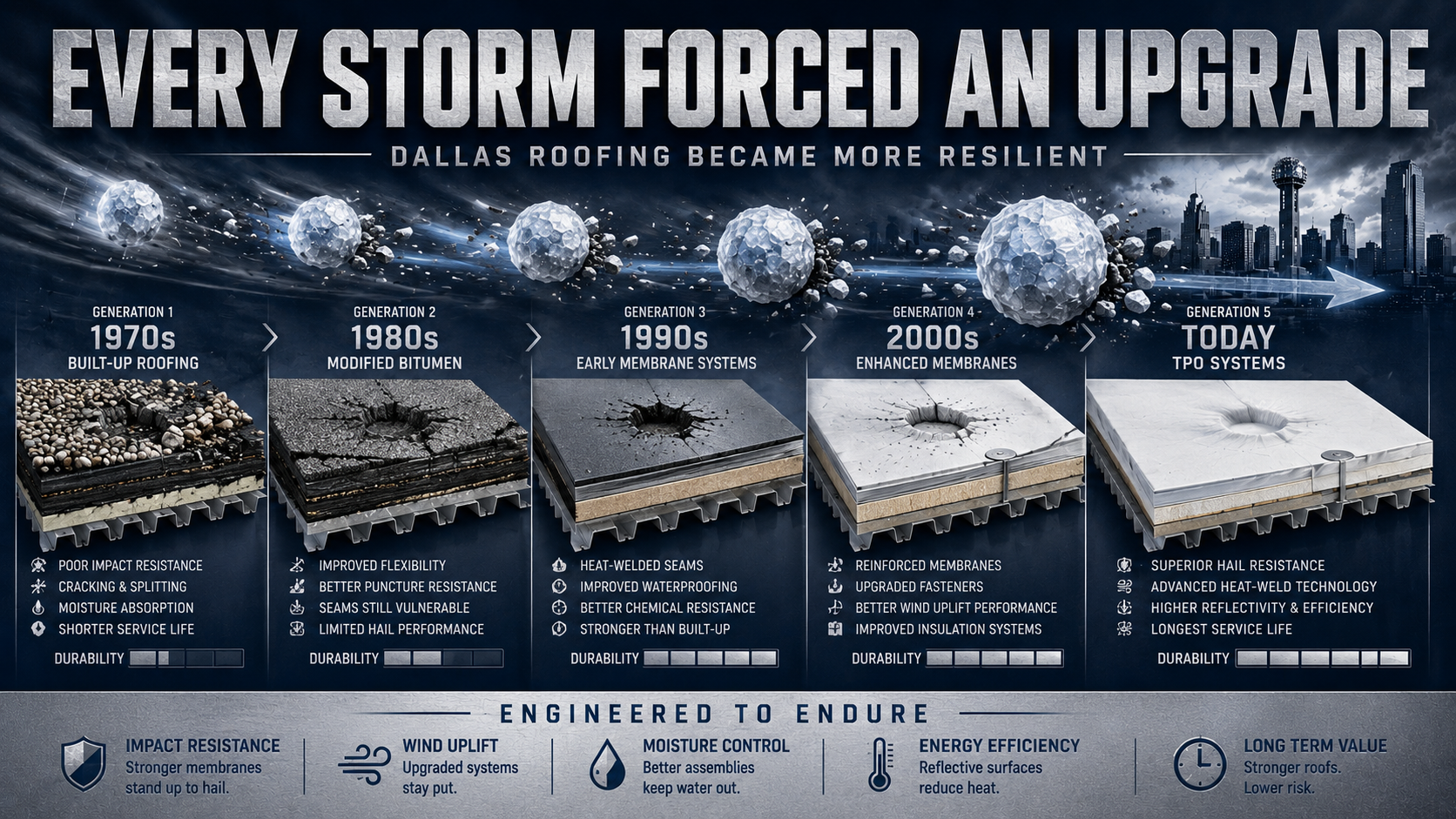
Roof Maintenance Through Every Season
Northern Nevada’s changing weather makes routine maintenance especially important.
Maintenance programs often include:
✓ Spring roof inspections
✓ Winter storm evaluations
✓ Snow and ice damage assessments
✓ Drain cleaning
✓ Flashing inspections
✓ Sealant maintenance
✓ Roof cleaning
✓ Minor repairs
✓ Warranty tracking
✓ Lifecycle planning
Preventive maintenance helps reduce weather-related repairs while extending roof life.
Planning for Roof Replacement
Every commercial roof eventually requires replacement as materials age.
Property owners commonly evaluate:
✓ Roof age
✓ Maintenance history
✓ Winter weather exposure
✓ Repair frequency
✓ Energy performance
✓ Remaining service life
✓ Budget forecasting
✓ Construction scheduling
✓ Capital improvement planning
✓ Long-term ownership goals
Planning ahead helps minimize disruptions while improving financial forecasting.
Emergency Roofing Response
Northern Nevada weather can create unexpected roofing emergencies throughout the year.
Emergency services may include:
- Wind damage repairs
- Snow and ice damage repairs
- Temporary roof tarping
- Leak containment
- Storm damage inspections
- Emergency waterproofing
- Debris removal
- Insurance documentation
- Water intrusion mitigation
- Permanent recovery planning
Rapid response helps reduce additional damage while protecting business operations.
Supporting the Entire Building Envelope
Commercial roofing performs best when managed with the entire building envelope.
Projects often evaluate:
✓ Roof drainage
✓ Flashing systems
✓ Expansion joints
✓ Skylights
✓ HVAC penetrations
✓ Snow retention systems
✓ Parapet walls
✓ Waterproofing systems
✓ Rooftop equipment
✓ Insulation performance
Coordinating these systems improves long-term durability, weather protection, and energy efficiency.
Commercial Roofing Throughout Reno and Sparks
Commercial roofing services support businesses across the Truckee Meadows, including:
- Reno
- Sparks
- Spanish Springs
- Lemmon Valley
- Stead
- Verdi
- Damonte Ranch
- South Reno
- Midtown Reno
- Downtown Reno
- Tahoe Reno Industrial Center
- Hidden Valley
- Panther Valley
- Golden Valley
- USA Parkway Corridor
Each area features a unique mix of industrial, logistics, technology, healthcare, office, and retail development that influences roofing inspections, maintenance, repairs, restoration, and replacement planning.
Protecting Commercial Buildings Across the Truckee Meadows
Commercial roofing is one of the most important long-term investments for businesses throughout Reno and Sparks. Regular inspections, preventive maintenance, timely repairs, strategic roof coatings, emergency response, and planned roof replacement help buildings perform through Northern Nevada’s changing seasons while protecting occupants and business operations. Whether managing a warehouse at the Tahoe Reno Industrial Center, an office building in Downtown Reno, a manufacturing facility in Sparks, or a healthcare campus in South Reno, proactive commercial roofing helps reduce lifecycle costs, improve building performance, and preserve long-term property value.