
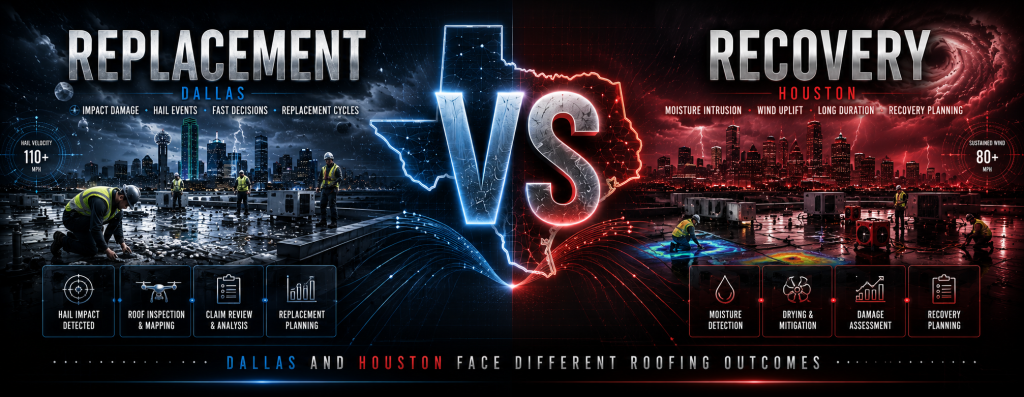

Las Vegas Commercial Roofing
Las Vegas is one of the fastest-growing commercial markets in the Southwest, with a wide variety of office buildings, resorts, casinos, retail centers, industrial parks, distribution facilities, healthcare campuses, apartment communities, and mixed-use developments. Protecting these properties requires commercial roofing systems that can withstand intense desert heat, prolonged UV exposure, high winds, sudden monsoon storms, and year-round temperature fluctuations.
Property owners, facility managers, property managers, asset managers, architects, engineers, insurance professionals, and general contractors throughout the Las Vegas Valley regularly evaluate commercial roofing systems to improve energy efficiency, reduce maintenance costs, protect tenants, and support long-term capital planning.
A proactive roofing strategy helps extend roof life, minimize unexpected repairs, and improve the overall performance of the building envelope.
Las Vegas Roofing Challenges
Southern Nevada presents unique environmental conditions that affect every commercial roof.
Property owners commonly prepare for:
✓ Extreme summer temperatures
✓ Intense UV exposure
✓ Desert wind events
✓ Monsoon storms
✓ Flash flooding
✓ Dust and debris buildup
✓ Thermal expansion and contraction
✓ Energy efficiency improvements
✓ Preventive maintenance
✓ Long-term asset protection
✕ Ignoring UV-related roof deterioration
✕ Waiting for minor leaks to become major repairs
✕ Delaying inspections after severe weather
Routine maintenance is often the best defense against Nevada’s demanding climate.
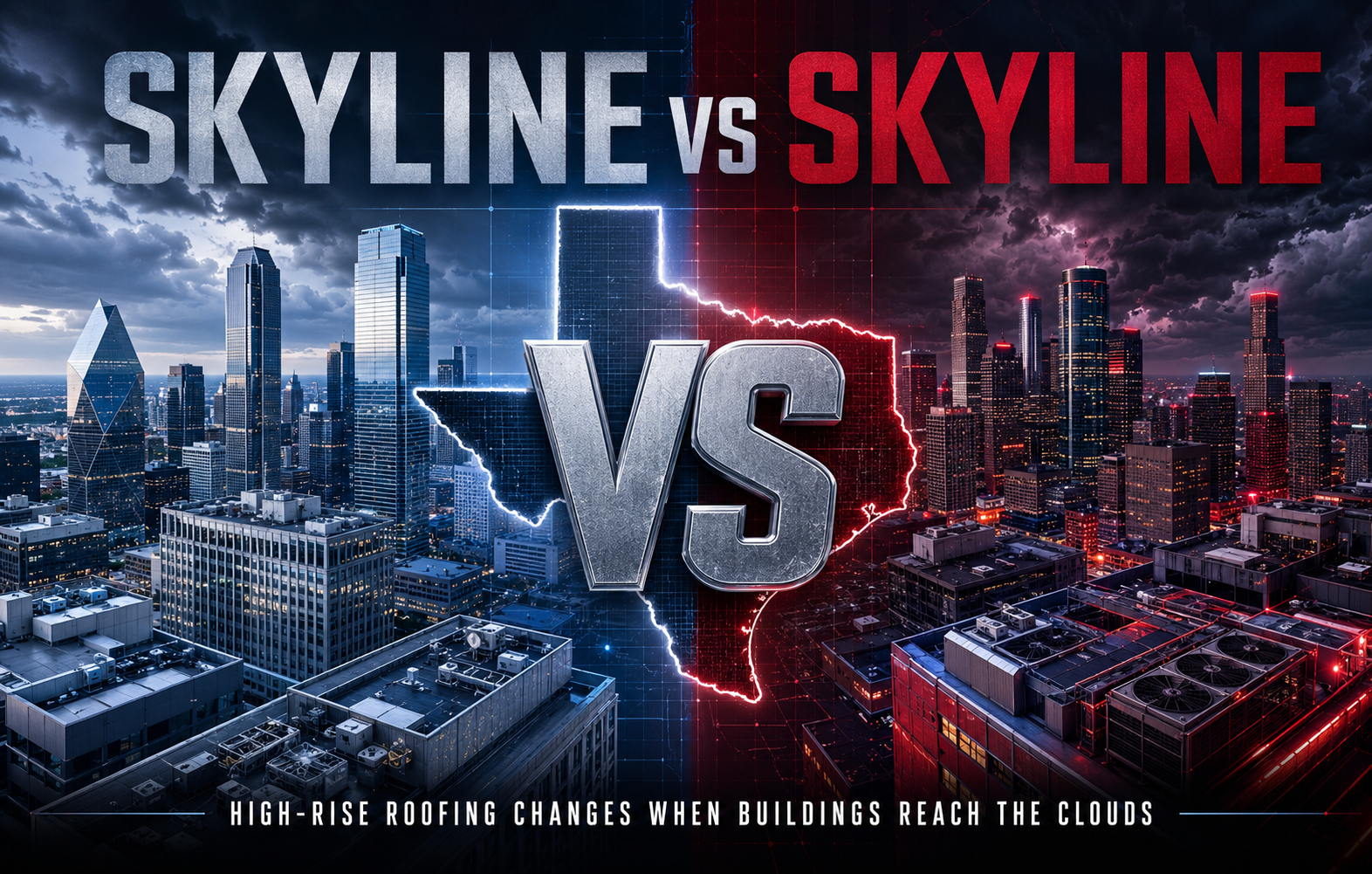
Commercial Roofing Services
Commercial roofing involves much more than replacing an aging roof.
Common services include:
- Commercial roof inspections
- Roof repairs
- Emergency roofing
- Roof replacement
- Roof restoration
- Roof coatings
- Leak detection
- Preventive maintenance
- Storm damage assessments
- Capital planning
Each service plays an important role throughout the life of a commercial roofing system.
Commercial Roofing Systems
Las Vegas commercial buildings utilize a variety of roofing systems depending on building type and operational requirements.
Common roofing systems include:
✓ TPO roofing
✓ PVC roofing
✓ EPDM roofing
✓ Modified bitumen
✓ Built-up roofing
✓ Standing seam metal roofing
✓ Low-slope roofing
✓ Reflective roofing systems
✓ Insulated roof assemblies
✓ Roof coating systems
Selecting the right roofing system depends on building use, energy goals, maintenance expectations, and long-term ownership plans.
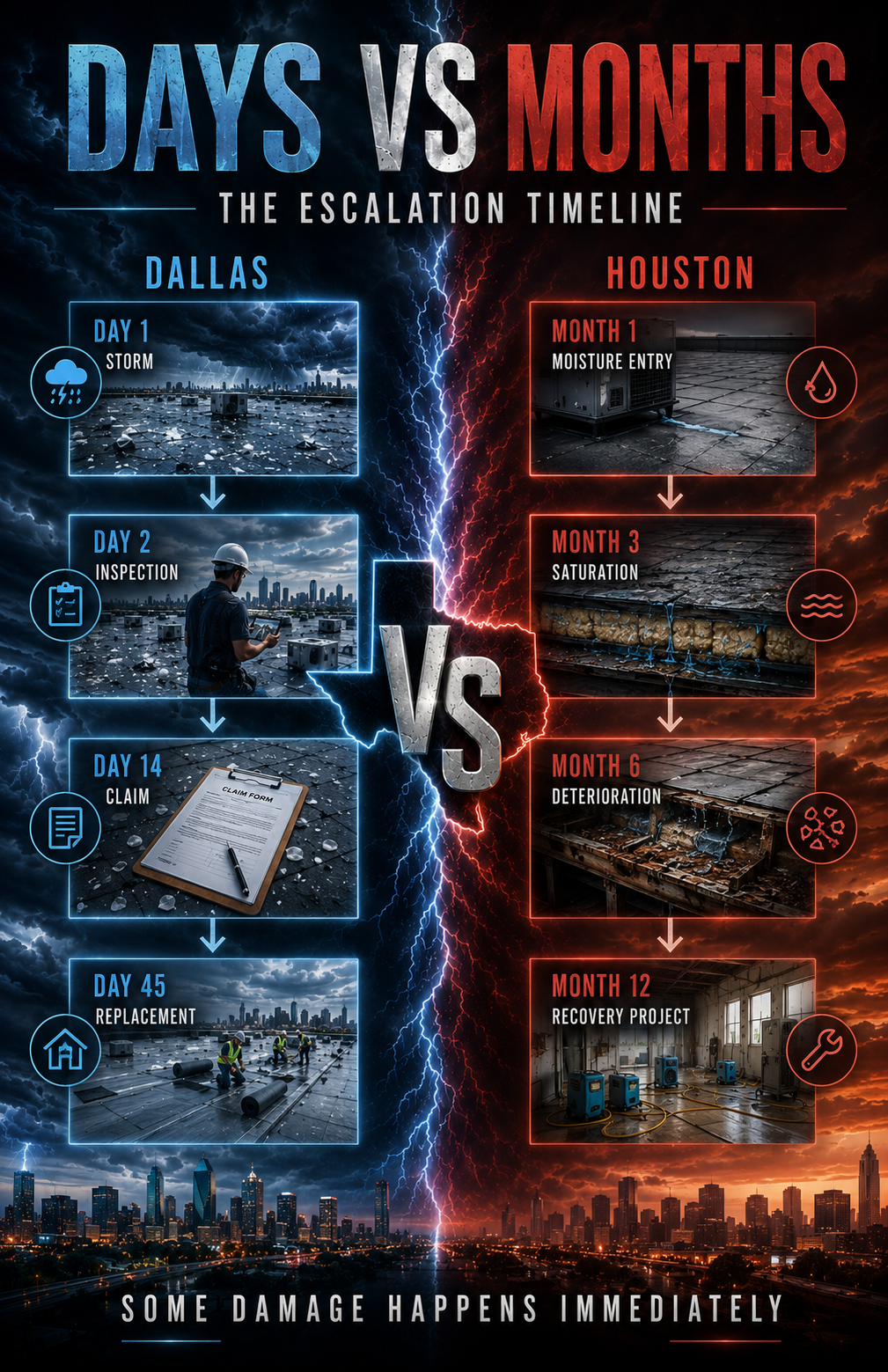
Commercial Properties Served
Commercial roofing supports nearly every type of commercial property throughout the Las Vegas Valley.
Common projects include:
- Office buildings
- Retail centers
- Shopping malls
- Casinos
- Hotels and resorts
- Restaurants
- Warehouses
- Distribution centers
- Manufacturing facilities
- Medical offices
- Hospitals
- Apartment communities
- Schools
- Government buildings
- Industrial facilities
- Data centers
- Mixed-use developments
Each property has unique operational requirements that influence maintenance, repair, and replacement decisions.
Roof Maintenance in Las Vegas
Routine maintenance helps commercial roofs perform more reliably in the desert climate.
Maintenance programs often include:
✓ Annual roof inspections
✓ UV damage monitoring
✓ Storm inspections
✓ Drain cleaning
✓ Flashing inspections
✓ Sealant maintenance
✓ Roof cleaning
✓ Minor repairs
✓ Warranty tracking
✓ Lifecycle planning
Preventive maintenance often extends roof life while reducing unexpected repair costs.
Planning for Roof Replacement
Every commercial roof eventually reaches the end of its useful life.
Replacement planning often includes:
✓ Roof age evaluations
✓ Maintenance history
✓ Repair frequency
✓ Energy performance
✓ Budget forecasting
✓ Construction scheduling
✓ Occupied building planning
✓ Warranty reviews
✓ Long-term ownership goals
✓ Capital improvement planning
Planning replacement projects before major failures occur helps reduce disruptions and improve budgeting.

Emergency Roofing Response
Although Las Vegas is known for its dry climate, roofing emergencies still occur.
Emergency services may include:
- Wind damage repairs
- Temporary roof tarping
- Leak containment
- Monsoon damage inspections
- Debris removal
- Insurance documentation
- Water intrusion mitigation
- Emergency roof repairs
- Temporary weather protection
- Recovery planning
Rapid response helps minimize property damage while protecting business operations.
Supporting the Entire Building Envelope
Commercial roofing performs best when managed as part of the complete building envelope.
Projects often evaluate:
✓ Roof drainage
✓ Flashing systems
✓ Expansion joints
✓ Skylights
✓ HVAC penetrations
✓ Parapet walls
✓ Waterproofing systems
✓ Rooftop equipment
✓ Exterior wall transitions
✓ Insulation performance
Coordinating these systems improves durability, energy efficiency, and long-term building performance.
Commercial Roofing Throughout the Las Vegas Valley
Commercial roofing projects are completed throughout the region, including:
- Las Vegas
- Henderson
- North Las Vegas
- Summerlin
- Enterprise
- Spring Valley
- Paradise
- Green Valley
- Centennial Hills
- Southern Highlands
- Mountains Edge
- Sunrise Manor
- Whitney
- Winchester
- Boulder City
Each area features a unique mix of commercial properties, development patterns, and roofing priorities that influence inspection schedules, maintenance strategies, repairs, restoration, and roof replacement.
Protecting Las Vegas Commercial Properties
Commercial roofing is one of the most important long-term investments for any commercial property in Las Vegas. Regular inspections, preventive maintenance, timely repairs, strategic roof coatings, emergency response, and planned roof replacement all contribute to a stronger building envelope and a more reliable facility. Whether managing a resort on the Strip, a warehouse in North Las Vegas, a medical office in Henderson, a retail center in Summerlin, or an industrial property in Enterprise, proactive commercial roofing helps reduce lifecycle costs, improve building performance, and preserve long-term property value.