
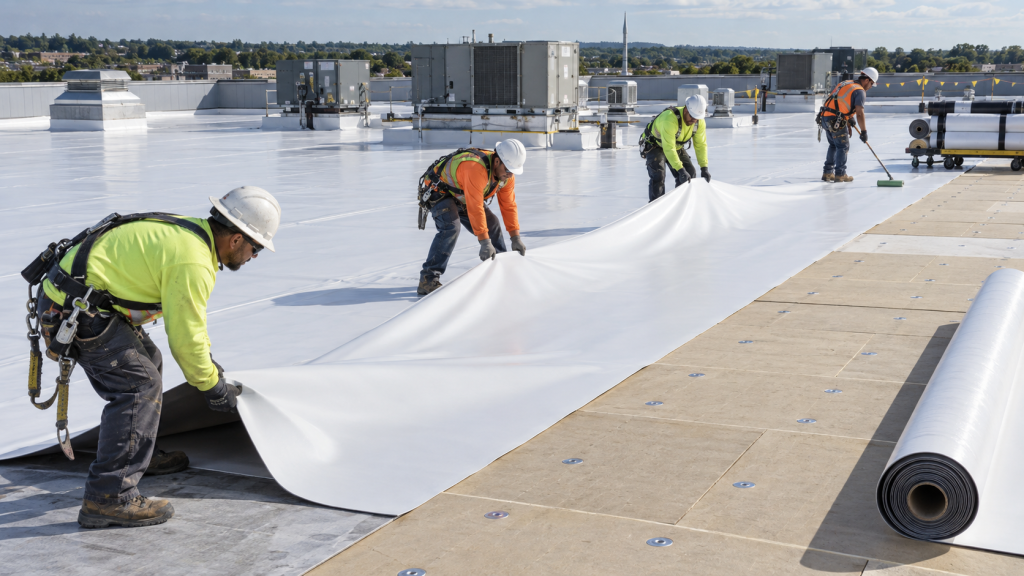
After a heavy Dallas rain, it is normal to see some water on a flat commercial roof. It should be gone within a day or two. When water still sits there 48 hours later, it is called ponding, and it is one of the most common causes of early roof failure on low-slope buildings.
Why Ponding Is a Problem
- Faster aging: standing water and sun break down membranes and coatings faster
- Leaks: any small defect under a pond leaks continuously
- Weight: water is heavy, and large ponds add load to the structure
- Warranties: many manufacturer warranties exclude damage from ponding water
- Dirt and growth: ponds collect debris and can grow algae
Common Causes
- Clogged drains, scuppers and gutters
- Drains set too high or in the wrong locations
- Sagging decks or crushed insulation
- Rooftop equipment and curbs that block water flow
- Roofs built with too little slope
Simple Fixes First
Start by clearing every drain, scupper and gutter and checking that downspouts flow freely. Sometimes that solves it.
Permanent Fixes
- Additional drains in low areas
- Crickets (small sloped sections) that send water around equipment and toward drains
- Tapered insulation that builds slope into the roof during repair or replacement
- Deck repair where the structure has sagged
Tapered insulation is usually done during a roof replacement, when the old roof is removed. It is the most complete fix for roofs that were built too flat.
Check After Every Big Rain
Take photos of the roof two days after a heavy rain. Mark where water remains. Over time, this record shows whether ponding is growing and helps your roofer design the fix.
Flat Roof Repair in Dallas
We fix ponding and drainage problems on commercial roofs across Dallas, Garland and Carrollton. Call 866 865 2560 for an inspection.