
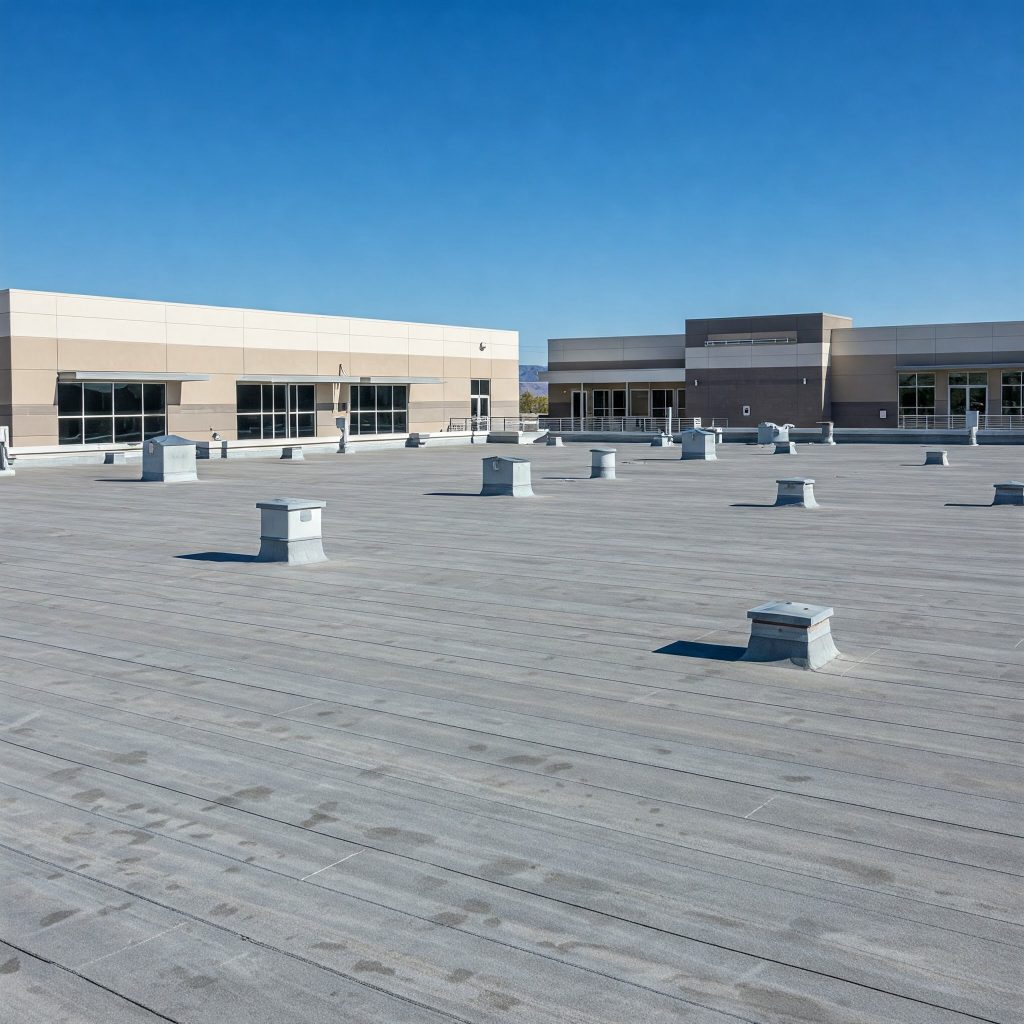
TPO roof repair is one of the most common calls a commercial roofer gets. TPO, short for thermoplastic polyolefin, covers millions of square feet of warehouses, stores, and offices across the country. It is tough, bright, and affordable. Still, no roof lasts forever. Seams open, punctures happen, and the sun slowly wears the surface down. So when a problem shows up, owners face a simple question with a big price tag: can we patch it, or is it time to replace the roof?
This guide explains how TPO works, which problems a patch can truly fix, and the signs that tell you the membrane has reached the end of its life.
What Makes TPO Different
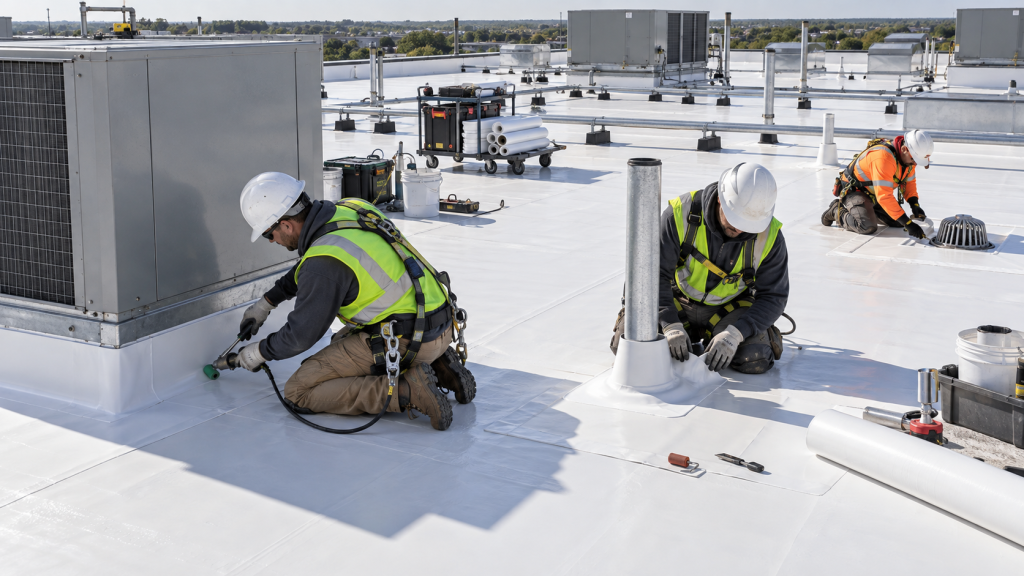
TPO is a single-ply membrane. In other words, it is one thick sheet laid over insulation and fastened or glued to the roof deck. Crews join the sheets by heat-welding the seams. A hot-air welder melts the edges together, so the seam becomes one solid piece of plastic.
That welded seam is a big reason TPO works so well. It also makes repairs simple when the membrane is still healthy. A trained tech can clean the surface, lay down a new piece of TPO, and weld it in place. Done right, the patch becomes part of the roof.
However, welding only works on membrane that can still take heat. Old, chalky, or brittle TPO may not bond well. That is the first clue that a patch may not be enough.
Common Problems a TPO Roof Repair Can Fix
Many TPO issues are small and local. In those cases, a repair is the smart, low-cost choice. Typical fixable problems include:
- Punctures from dropped tools, foot traffic, or debris
- Small open seams where a weld failed in one spot
- Flashing gaps around pipes, vents, or curbs
- Loose termination bars at the roof edge
- Storm damage in a limited area
- Cuts from HVAC service near rooftop units
For each one, the fix is usually a welded patch or new flashing. As long as the surrounding membrane is sound, the repaired area should last as long as the rest of the roof.
How a Proper TPO Roof Repair Works
A good repair follows a few clear steps. First, the tech finds the true source of the leak, which is not always right above the wet spot inside. Next, they clean the area. TPO collects dirt and oils, so it needs a special cleaner before welding. Then they cut a patch with rounded corners, which resist peeling. Finally, they weld the patch and probe the seam with a small tool to check for gaps.
Shortcuts cause trouble. For example, a dab of caulk or a strip of tape may stop a drip for a few weeks. Yet it rarely lasts, and it can make a later weld harder. So insist on a welded repair by a crew trained on your membrane brand.
Check What Is Under the Membrane
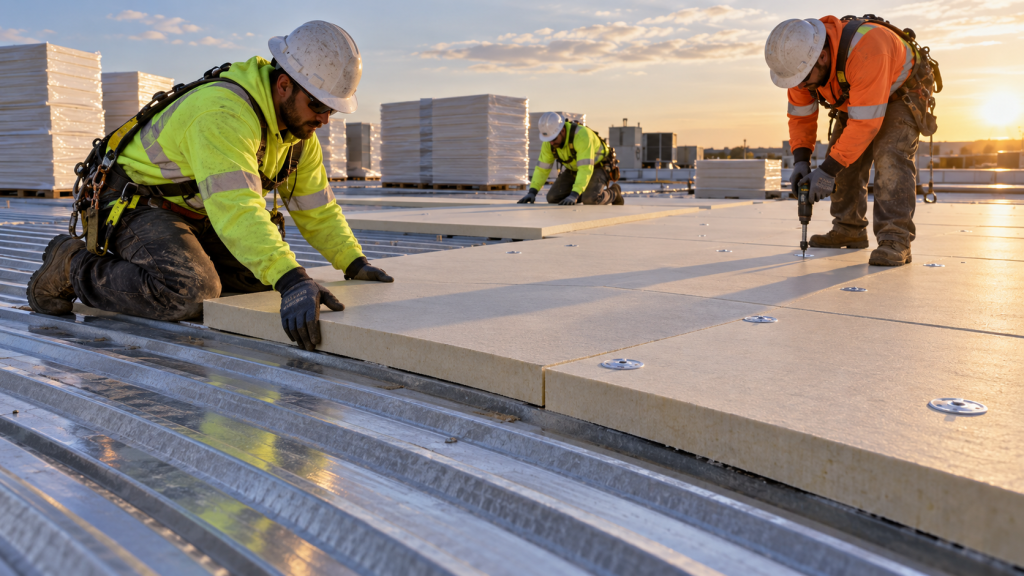
The membrane is only the top layer. Below it sits insulation, and below that sits the roof deck. When water gets through a hole, it soaks into the insulation. Wet insulation loses much of its value, adds weight, and can rot the deck over time.
So before deciding on a TPO roof repair, find out how wet the roof is. Roofers use moisture meters, infrared scans, or small core cuts to map wet areas. If only a small patch of insulation is wet, crews can cut it out, replace it, and patch over it. If large areas are soaked, a simple patch will not solve the problem.
Signs That Patching Is No Longer Enough
At some point, even a careful TPO roof repair stops making sense. Watch for these warning signs:
- Seams failing in many places at once
- Chalky, cracked, or brittle membrane that will not weld
- Large areas of wet insulation
- Leaks that return soon after each repair
- Shrinking membrane pulling away from edges and walls
- A roof that is near or past its expected life
Any one sign may still be fixable. However, several together usually point toward replacement.
The Age Question
Most TPO roofs last a long time when installed and maintained well. Yet age still matters. Sun, heat, and weather slowly break down the top layer. As a result, older TPO gets thinner and harder to weld.
If your roof is near the end of its expected life, a large repair may only buy a little time. In that case, it often makes sense to plan for replacement now and use small repairs to keep things dry until the work is done.
Comparing TPO Roof Repair Costs Over Time
A TPO roof repair costs far less than a new roof today. But the real question is cost over time. A simple way to compare is to divide the price of each option by the years of service it buys.
For instance, a repair that buys two more years may cost more per year than a new roof that lasts twenty. On the other hand, a small repair on a young roof is almost always the better deal. Our post on repair vs. replacement walks through this math in more detail.
Repair, Restore, or Replace?
There is also a middle path. Some aging TPO roofs can be restored with a coating system. Crews clean the roof, fix the seams, replace wet areas, and apply a fluid coating over the top. This can extend roof life at a lower cost than a full tear-off. Still, it only works when the roof is mostly dry and the membrane is in fair shape. Learn more on our roof coatings page.
TPO Roof Repair and Your Warranty
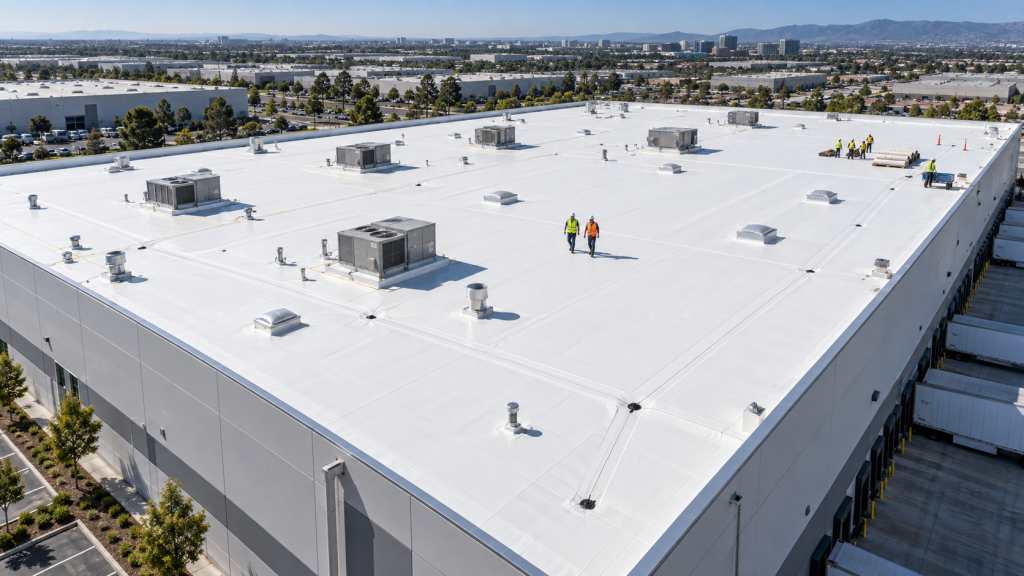
Many TPO roofs carry a maker’s warranty. That warranty often requires repairs by an approved contractor using approved materials. A wrong patch can void coverage. So before any TPO roof repair, check your warranty papers and call the maker if you are unsure.
Preventing the Next TPO Roof Repair
Once the roof is repaired, a few habits help it last. Limit foot traffic and add walk pads near rooftop units. Keep drains clear. Ask HVAC techs to protect the membrane while they work. In addition, schedule inspections twice a year and after big storms. The National Roofing Contractors Association offers helpful guidance on roof care.
Emergency TPO Roof Repair
Sometimes a leak cannot wait. A storm tears the membrane, or a big hole opens over a server room. In that case, an emergency TPO roof repair comes first. Crews dry the area as best they can and seal the opening with a temporary patch. Then, once the weather clears, they return to make a proper welded repair.
Temporary fixes are fine for a few days. However, do not let them become permanent. Schedule the full repair quickly, before water finds its way under the patch. Our emergency roofing page explains what to expect.
What a Good Repair Report Includes
After any repair, ask for a short report. It should show photos before and after, explain the cause, and list what the crew did. It should also note any other problems they saw. This record helps you track the roof over time. In addition, it helps if you ever need to file a warranty or insurance claim.
A Quick Decision Guide
- Is the damage small and local? Repair it.
- Is the membrane still flexible and weldable? Repair it.
- Is the insulation mostly dry? Repair or restore it.
- Are seams failing roof-wide? Plan to replace it.
- Is the roof near the end of its life? Budget for replacement.
FAQ on TPO Roof Repair
How long does a TPO roof repair last?
A properly welded patch on healthy membrane can last as long as the rest of the roof.
Can you patch old TPO?
Sometimes. If the surface is too weathered to weld, though, a patch may not hold.
Get the Right Answer for Your Roof
A careful inspection tells you whether a patch will do or a new roof is due. Visit our commercial roof repair page, or schedule a roof assessment today.