
Roof repair vs replacement is a choice every commercial building owner eventually faces. A leak shows up, a roofer takes a look, and suddenly there are two very different prices on the table. One is small and quick. The other is large and long-lasting. Picking the right one is not about finding the cheapest number today. Instead, it is about comparing value over time, risk, and how the roof fits into your bigger plans for the building. This guide gives you a simple, clear way to compare your options.
Owners, property managers, and asset managers can use these steps to make a confident decision.
Start With the Roof’s Condition
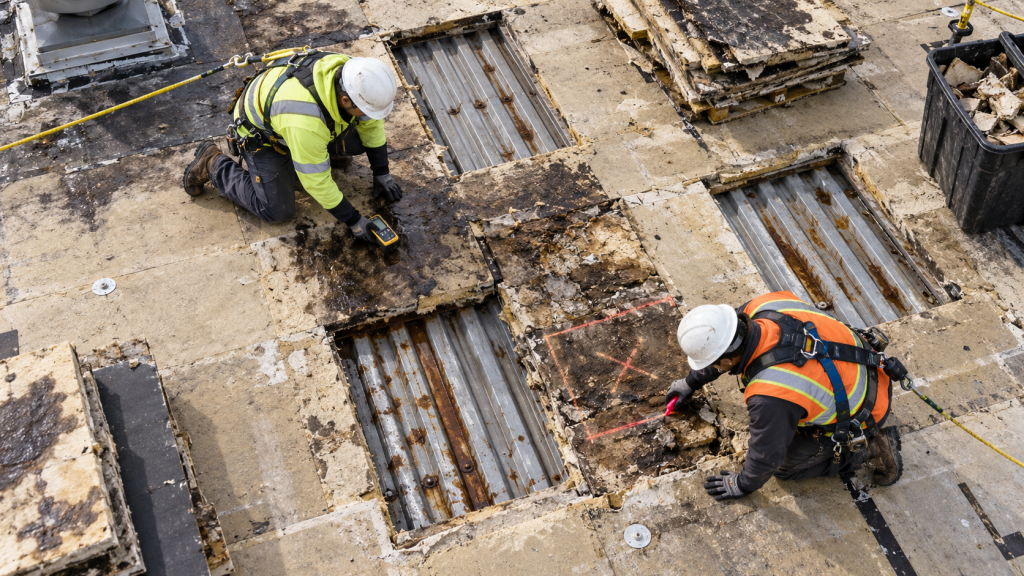
First, every good decision starts with facts. So begin with a professional inspection. A thorough roofer will walk the whole roof, check seams and flashing, look at drains, and inspect the deck from below. They should also take photos and provide a written report.
Ask for a moisture survey too. Infrared scans or meters show where insulation is wet. This matters a lot, because a roof can look fine on top while hiding major damage below.
Roof Repair vs Replacement: The Key Questions
Next, with the inspection in hand, ask these questions:
- How old is the roof, and how long is it expected to last?
- Is the damage local or spread across the roof?
- How much of the insulation is wet?
- Is the membrane still flexible and repairable?
- How many repairs have we paid for in recent years?
- Is the roof under warranty?
The answers point toward one path or the other.
When Repair Makes Sense
In general, repair is the right choice when:
- The roof is young or middle-aged.
- Damage is limited to a few spots.
- Insulation is mostly dry.
- The membrane is still in good shape.
- The roof is still under warranty.
In these cases, a well-done repair can restore full performance at a fraction of the cost. Our roof repair page explains common fixes.
When Replacement Makes Sense
On the other hand, replacement is often the better choice when:
- The roof is near or past its expected life.
- Leaks keep returning in new places.
- Large areas of insulation are wet.
- The membrane is brittle, cracked, or shrinking.
- The deck shows rust or sagging.
- Repair costs are climbing year after year.
In these situations, more patches only delay the inevitable. Each one buys a little time but adds to the total bill. Worse, they may let hidden damage grow.
Compare Cost per Year of Life
Here is a simple tool for the roof repair vs replacement decision. Divide the cost of each option by the number of years it will buy.
For example, suppose a large repair might keep an old roof working for two more years. Meanwhile, a new roof might last twenty. Even though the new roof costs much more, its cost per year may be lower. By contrast, a small repair on a young roof almost always wins this comparison.
Of course, this math is not perfect. Still, it helps you look past the sticker price and see the true value of each option.
Consider the Middle Option: Restoration
Sometimes there is a third choice. Restoration uses repairs plus a fluid coating to extend roof life. It suits roofs with dry insulation and a membrane that still holds together. Restoration can cost less than replacement and may qualify as maintenance for accounting purposes. Learn more on our roof coatings page.
Energy in the Roof Repair vs Replacement Choice
In addition, a new roof can include thicker insulation and a reflective surface. Together, these can lower heating and cooling bills. In hot climates, a bright white roof can cut cooling costs noticeably. Include these savings when you compare options, especially if you plan to own the building for many years.
Think About Downtime and Tenants
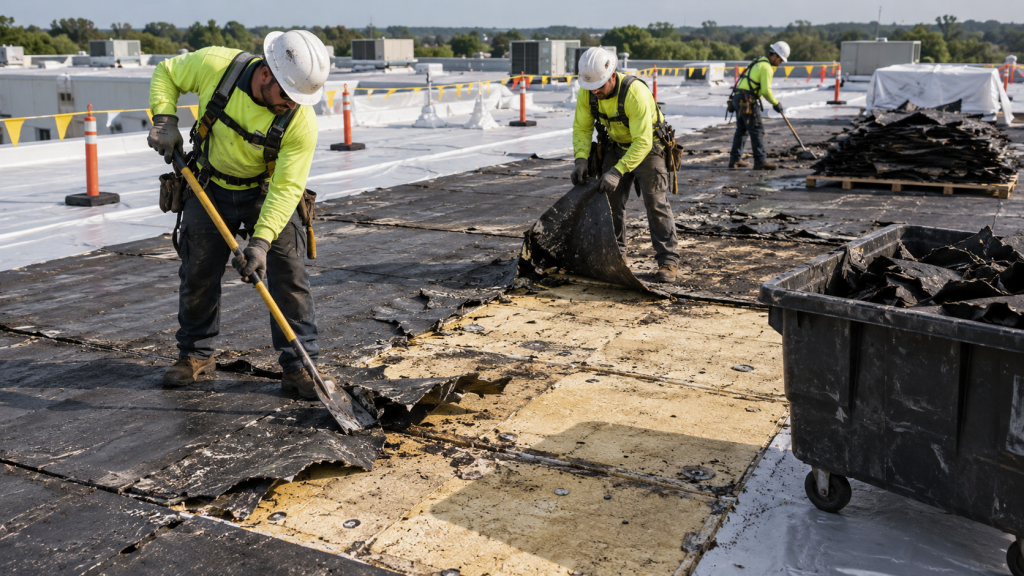
Of course, repairs are quick and quiet. Replacement involves tear-off, noise, odors, and crane lifts. For occupied buildings, that matters. However, planned replacement can be phased and scheduled to limit disruption. Emergency replacement after a major failure cannot. So timing is part of the decision.
Warranties and Roof Repair vs Replacement
Also, an existing warranty may cover repairs at little or no cost. Check it before paying for work. Meanwhile, a new roof comes with a fresh warranty, which adds value and peace of mind. Compare warranty terms when you get bids.
Plan Around Your Budget Cycle
Typically, roof replacement is a capital expense. Many owners plan it years in advance. If your roof is aging, use small repairs to keep it dry while you budget for replacement. That way, the big project happens on your schedule. Our capital planning guide offers more ideas.
A Real-World Example
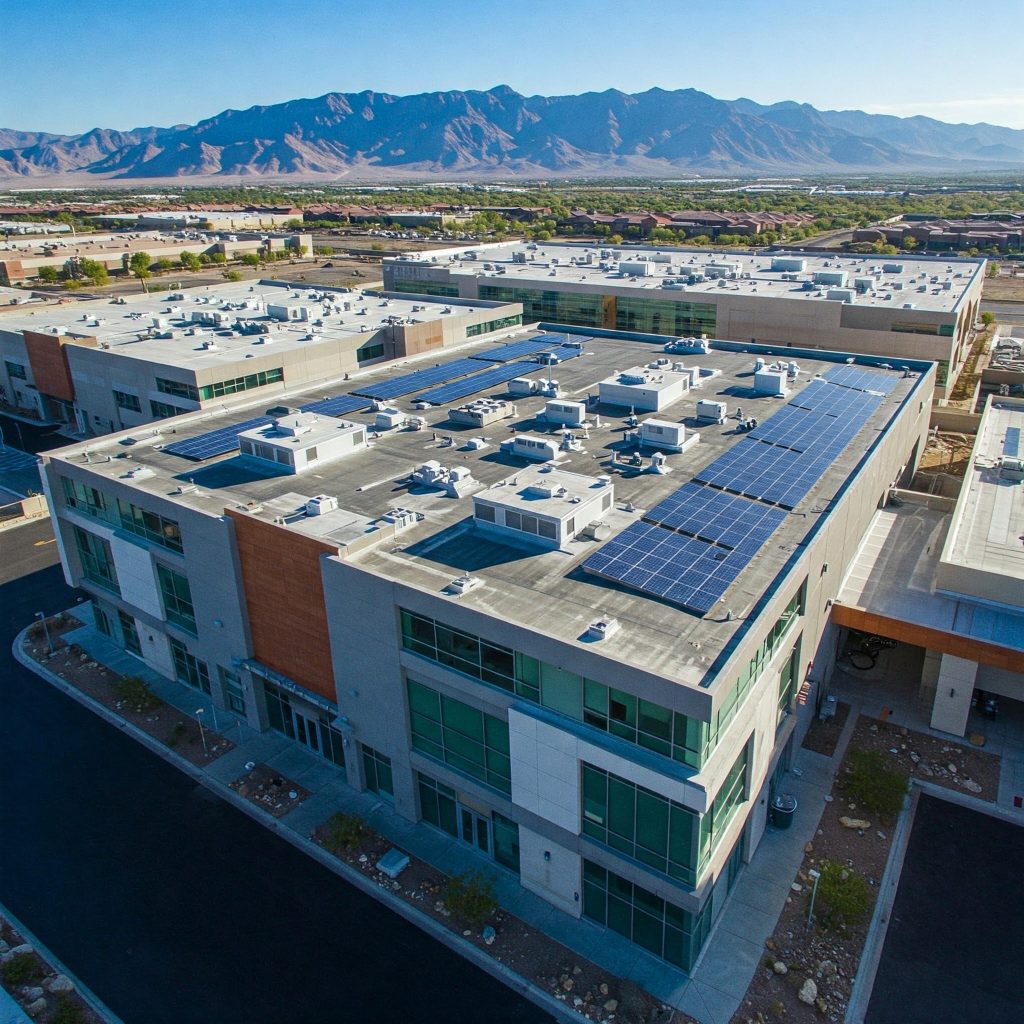
Picture a 40,000-square-foot warehouse with a twenty-year-old roof. It leaked three times last year. Each repair cost a few thousand dollars. An infrared scan shows wet insulation in about a third of the roof.
The roofer offers two paths. Path one is more repairs, with no promise of how long they will last. Path two is a full replacement with a long warranty. When the owner divides each cost by the years it buys, the new roof wins. As a result, the owner schedules replacement for the spring and keeps the old roof dry with small repairs until then. That is the roof repair vs replacement process at work.
Questions to Ask Your Roofer
- How many more years will this repair buy?
- How much of the insulation is wet?
- What would replacement cost, and what warranty comes with it?
- Is restoration an option here?
- What happens if we wait one more year?
Honest answers make the choice much clearer. In fact, a good roofer will welcome these questions, because they lead to a decision you can trust.
A Simple Roof Repair vs Replacement Checklist
- Get a full inspection with photos.
- Get a moisture survey.
- List the roof’s age and repair history.
- Price both repair and replacement.
- Compare cost per year of life.
- Add energy savings and warranty value.
- Consider tenant impact and timing.
- Decide, then schedule.
How Climate Changes the Answer
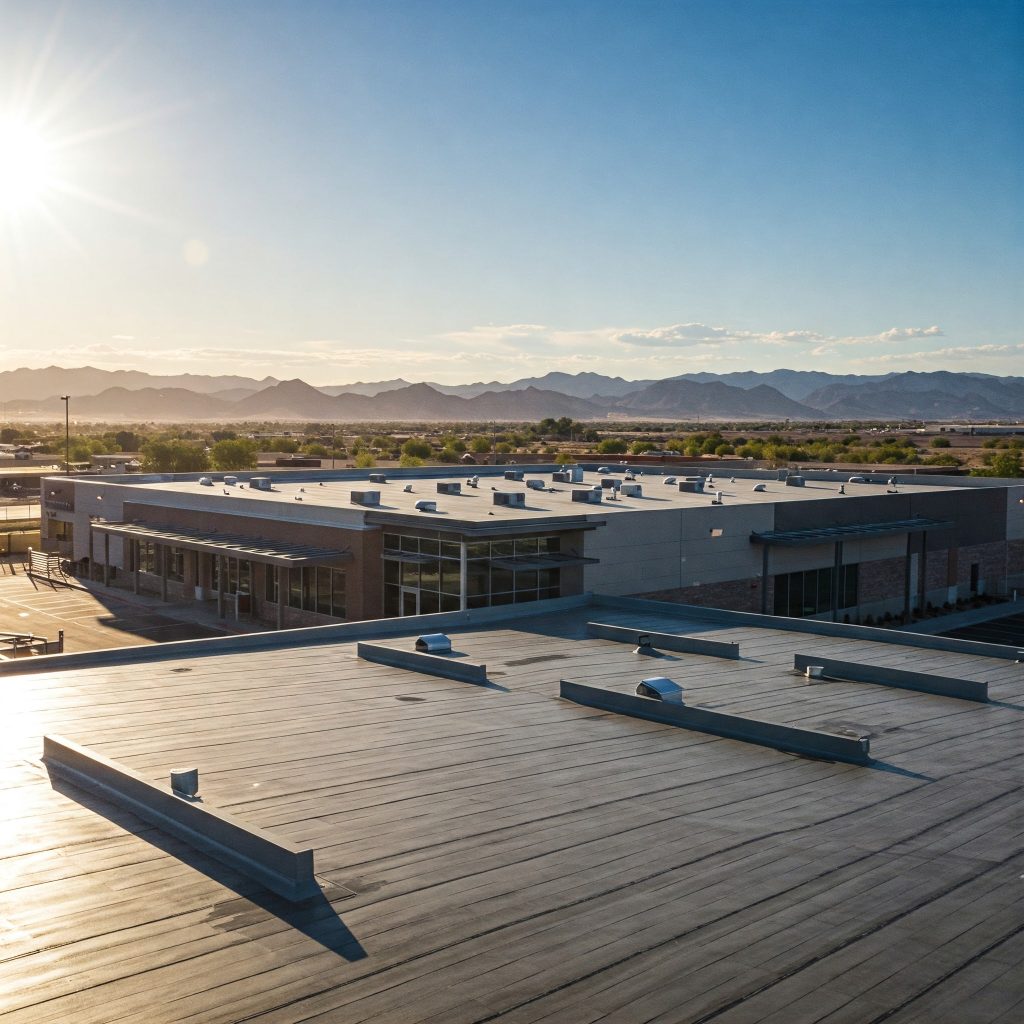
Where your building sits also matters. In hot, sunny regions, heat and UV wear membranes faster. So a roof there may reach the end of its life sooner. In hail-prone areas, one storm can damage a whole roof at once. Meanwhile, in cold regions, freeze and thaw cycles stress seams and flashing.
As a result, the same roof may lean toward repair in one city and replacement in another. Ask a local roofer how your climate affects the roof repair vs replacement choice. They see these patterns every day.
Common Mistakes
- Choosing the cheapest option without looking at life span
- Skipping the moisture survey
- Ignoring a valid warranty
- Waiting until an emergency forces the decision
- Using caulk and tape instead of proper repairs
FAQ on Roof Repair vs Replacement
Is roof repair vs replacement mainly about age?
Age matters, yet condition, moisture, and repair history matter just as much.
Can I get a second opinion?
Yes. For a big decision, a second inspection is a smart idea.
Make a Confident Choice
The right answer protects your building and your budget. Visit our roof replacement page, or ask for a side-by-side comparison of your options. The NRCA also publishes useful roofing guidance.