
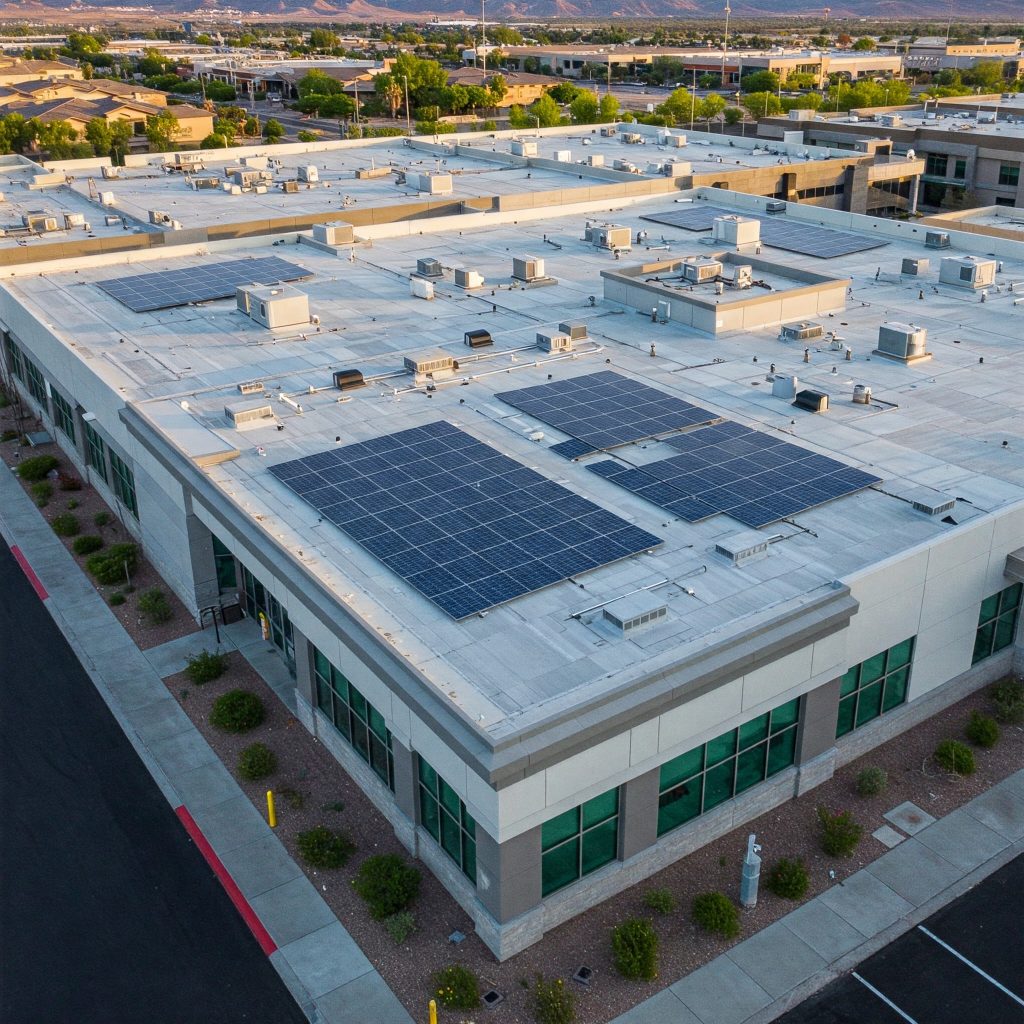
A roof replacement estimate tells you far more than a price. It shows how the contractor plans to do the job, what materials they will use, what they left out, and how they will protect your building. Yet many owners only look at the total at the bottom of the page. That is how surprises happen. Two bids can look close in price while covering very different work. This guide explains what a complete estimate should include, so you can compare bids fairly and choose with confidence.
Building owners, property managers, and facility teams can use this as a checklist when reviewing bids.

Why the Details Matter
Commercial roofing is complex. A single roof can include insulation, cover boards, membrane, flashing, edge metal, drains, and more. If a bid leaves out even one piece, the missing work becomes a change order later. As a result, the “cheap” bid can end up costing the most.
A detailed roof replacement estimate protects both sides. You know exactly what you are buying. Meanwhile, the contractor has a clear scope to follow.
1. Roof Replacement Estimate Basics
First, every estimate should start with the basics:
- Building address and roof areas included
- Total square footage of each area
- Date of the site visit
- How long the price is valid
- Contractor license and insurance details
If the estimate does not show square footage, ask. Otherwise, you cannot compare prices fairly.
2. Tear-Off or Overlay
Your roof replacement estimate should say whether crews will remove the old roof or cover it. A tear-off removes old layers down to the deck. An overlay, sometimes called a recover, installs a new roof over the old one.
Of course, each choice has pros and cons. Tear-off costs more but lets crews inspect and repair the deck. Overlay costs less but only works when the old roof is dry and codes allow it. Make sure each bid uses the same approach, or at least explains why it differs.
3. Deck Inspection and Repair
Once the old roof comes off, crews often find damaged deck. A good roof replacement estimate addresses this up front. It should include a unit price for deck repair, such as a price per square foot or per sheet. That way, if crews find bad deck, you already know the cost.
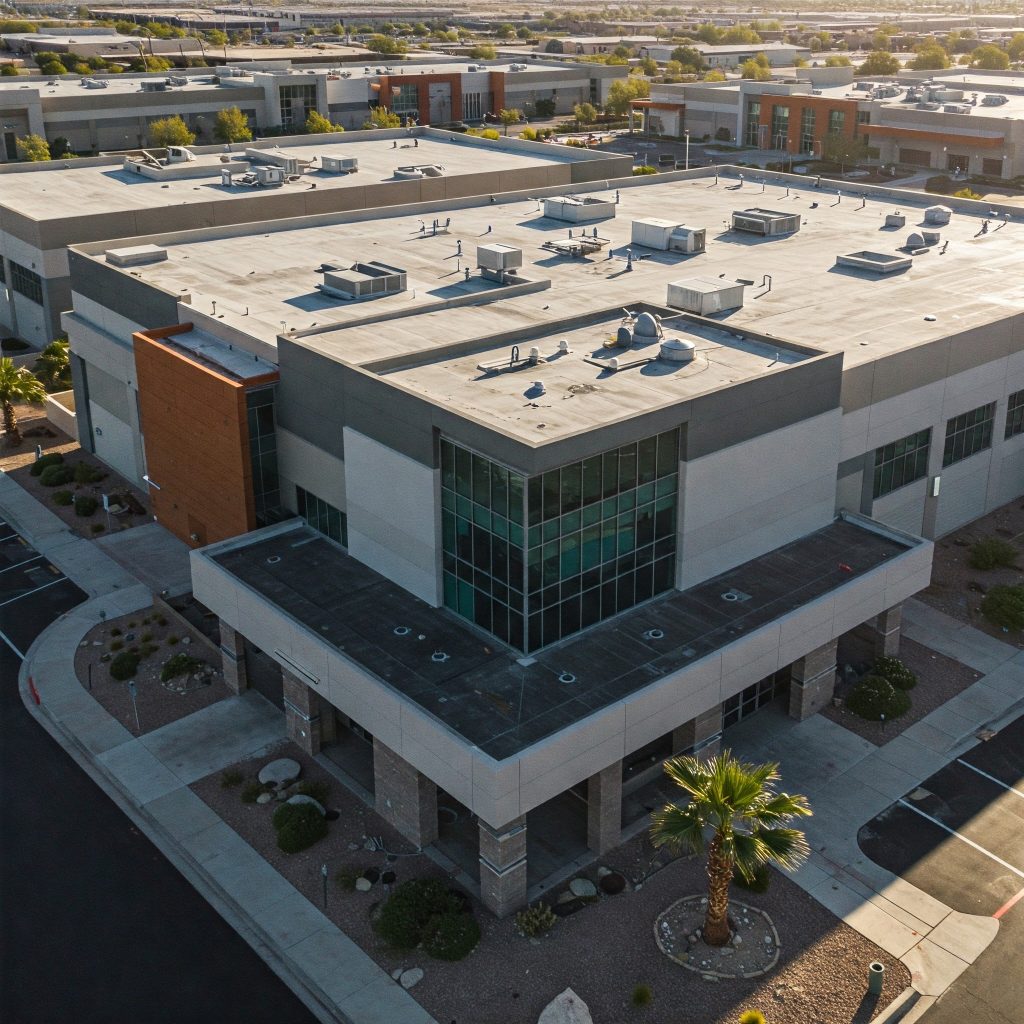
4. Insulation in a Roof Replacement Estimate
Next, insulation affects energy bills, comfort, and code compliance. In short, the estimate should list:
- Insulation type, such as polyiso
- Thickness and total R-value
- Whether the insulation tapers toward drains
- Cover board type and thickness
- How the crew attaches each layer
Energy codes set minimum insulation levels. If one bid is much cheaper, check whether it includes less insulation.
5. Membrane or Roof System
Next, the estimate should name the roof system. For example, it may say TPO, PVC, EPDM, modified bitumen, or metal. It should also list the thickness, color, maker, and attachment method, such as mechanically fastened or fully adhered. These details affect durability, wind resistance, and warranty.
6. Flashing and Edge Metal
Notably, most leaks start at edges and penetrations. So flashing deserves close attention. A complete estimate covers:
- Wall and curb flashing
- Pipe and vent boots
- Edge metal, gutters, and downspouts
- Coping on parapet walls
- Expansion joints
If the bid just says “flashing as needed,” ask for detail.
7. Drainage Work
Drainage keeps water moving off the roof. The estimate should explain the plan for drains, scuppers, and crickets. Will the crew replace drains or reuse them? Will tapered insulation fix ponding? Our guide to flat roof drainage explains why this matters.
8. Rooftop Equipment Coordination
Also, HVAC units, vents, and other equipment sit on many commercial roofs. Some must be lifted or disconnected during roof work. The estimate should say who handles this. Often, a mechanical contractor must disconnect and reconnect units. Clarify whether that cost is included.
9. Warranty Details in a Roof Replacement Estimate
A strong roof replacement estimate spells out warranties clearly:
- Maker’s warranty type and length
- Whether it covers labor and materials
- Contractor’s workmanship warranty
- Inspection or maintenance requirements
Not all warranties are equal. Compare what each one actually covers.
10. Safety, Protection, and Cleanup
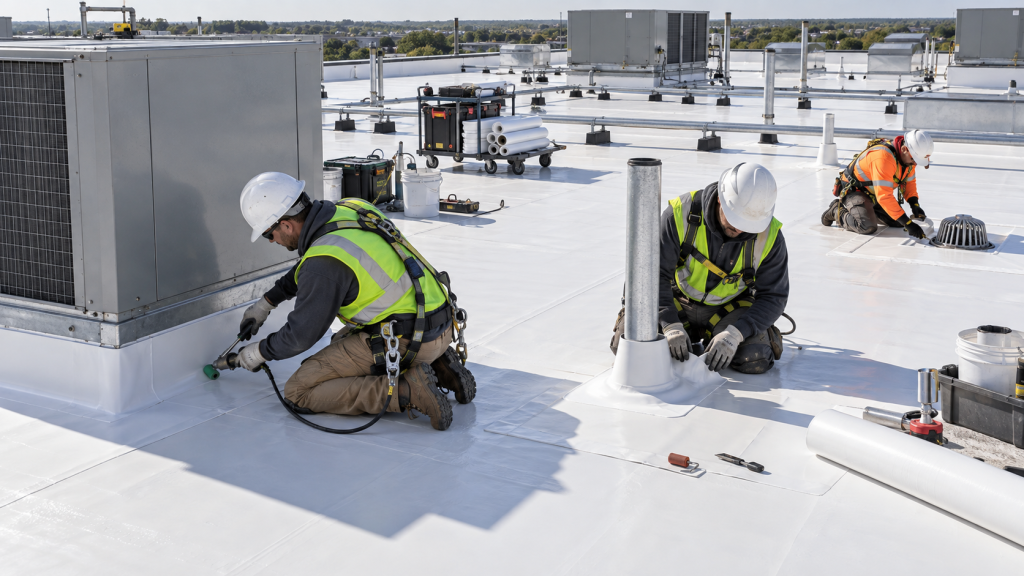
Meanwhile, roof work brings risks to workers, tenants, and the public. The estimate should describe safety measures, such as guardrails, warning lines, and fall protection. The OSHA fall protection rules apply to commercial roofing. It should also cover protecting the building, landscaping, and parking areas, plus daily cleanup and debris removal.
11. Schedule and Phasing
Ask for an estimated start date and duration. For occupied buildings, ask how the crew plans to phase the work. In addition, ask how they handle weather delays and how the roof will stay watertight each night.
12. Roof Replacement Estimate Exclusions and Allowances
Finally, the estimate should list permits included, items excluded, and any allowances. Exclusions are as important as inclusions. Common exclusions include structural repairs, HVAC work, asbestos removal, and interior damage. Allowances cover uncertain items, such as extra deck repair.
How to Compare Each Roof Replacement Estimate
- Line up bids side by side.
- Check that each covers the same scope.
- Compare insulation, membrane, and warranty.
- Note exclusions and allowances.
- Ask questions about any gaps.
- Then compare prices.
Unit Prices in a Roof Replacement Estimate
Even a careful roof replacement estimate cannot see under the old roof. So smart estimates include unit prices for likely surprises. Examples include a price per square foot of deck repair, per sheet of wet insulation, or per foot of rotted wood nailer. With these prices set up front, change orders stay fair and quick.
Ask each bidder for the same list of unit prices. Then compare them. A low base bid with high unit prices can end up costing more than a fair bid with fair unit prices.
Payment Terms
Look at how the contractor wants to be paid. Common terms include a small deposit, progress payments, and a final payment after completion. Be careful with large deposits before work starts. Also, check that the final payment is tied to a punch list and warranty paperwork.
A Sample Estimate Outline
A clear estimate might follow this order: project details, scope summary, tear-off plan, deck repair unit prices, insulation, membrane, flashing, drainage, equipment work, safety, schedule, warranty, exclusions, allowances, payment terms, and signatures. If a bid skips several of these, ask for more detail before you compare it.
Red Flags
- A one-line estimate with no detail
- No mention of insulation or flashing
- Vague warranty language
- Large deposits demanded up front
- No proof of license or insurance
Questions to Ask Before You Sign
- Did you include tear-off down to the deck?
- What R-value will the new insulation reach?
- Which flashing and edge metal are in your price?
- Who disconnects the rooftop units?
- What exactly does your warranty cover?
Clear answers turn a confusing pile of bids into an easy choice. They also show which contractor really studied your roof.
FAQ on the Roof Replacement Estimate
How many bids should I get?
Three is a good number for most projects. More can help on very large roofs.
Why are my bids so different?
Usually because they include different scopes, materials, or warranties. Compare line by line.
Get a Clear, Detailed Bid
A thorough roof replacement estimate saves money and stress later. Visit our roof replacement services page, or request a detailed estimate for your building.