
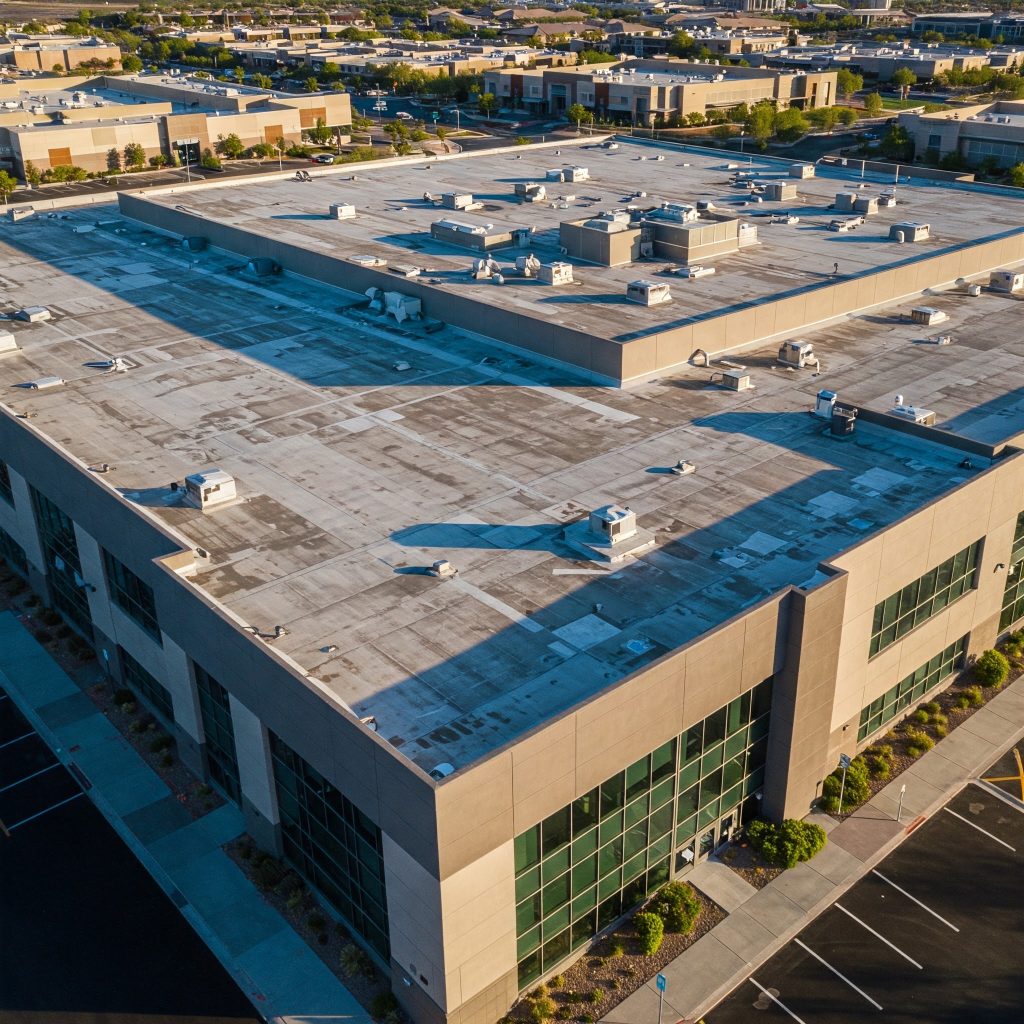
Commercial roof leak repair starts long before anyone grabs a patch. The hardest part is not fixing the hole. It is finding it. Water can enter at one spot, travel along the deck or insulation, and drip into the building twenty feet away. If the roofer patches the wrong place, the leak keeps coming back while hidden damage grows. This guide explains where leaks usually start, how pros track them down, what to do in an emergency, and how to make repairs that last.
Property managers, facility teams, and building owners can use it to respond quickly and wisely when water shows up inside.
Why Commercial Roof Leak Repair Starts With Detective Work
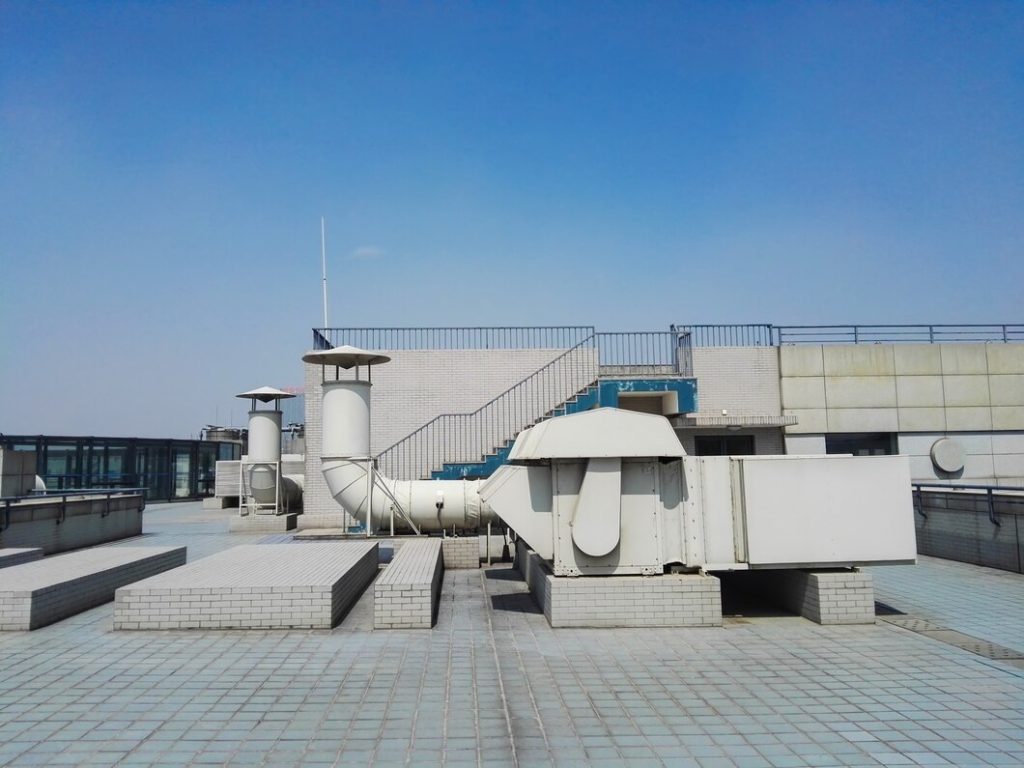
On a flat roof, water does not always fall straight down. Instead, it moves sideways. It can run along the top of the insulation, follow the flutes of a metal deck, or track along a pipe before it finally drips. As a result, the stain on your ceiling may be far from the real opening.
Wind-driven rain adds another twist. Some leaks only appear when wind blows from one direction. Others show up only during heavy storms when drains back up. That is why careful investigation matters so much.
Where Leaks Usually Start
In practice, most leaks begin in a few predictable places. So commercial roof leak repair usually starts with these spots:
- Flashing around walls, curbs, and parapets
- Penetrations such as pipes, vents, and conduits
- Rooftop equipment curbs and service panels
- Seams in single-ply membranes
- Drains and scuppers that crack or clog
- Edge metal and coping that loosen over time
- Punctures from foot traffic or dropped tools
Starting the search at these spots saves time.
Step 1: Gather Clues From Inside
Commercial roof leak repair begins indoors. Note where water appears, when it happens, and how much comes in. Does it leak during every rain, or only heavy storms? Does it follow wind from a certain direction? Take photos and mark the spot on a floor plan. These clues help the roofer narrow the search.
Step 2: Inspect the Roof Above
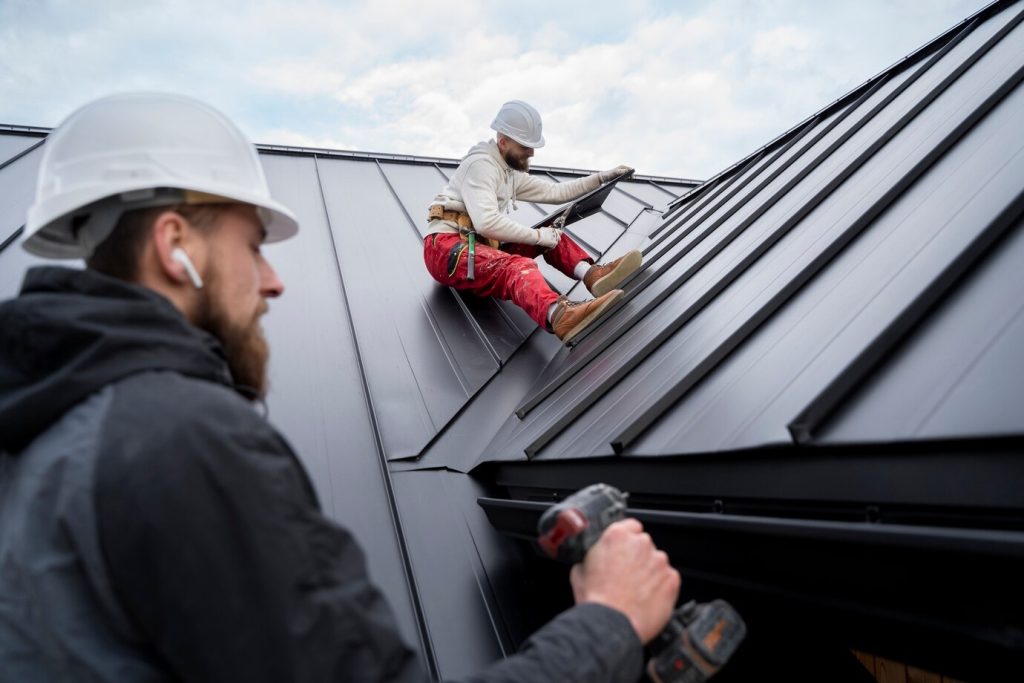
Next, a roofer inspects the roof above and around the leak. They look upslope, since water flows downhill toward drains. They check every penetration, seam, and flashing within a wide area. Often the cause is obvious, such as a split boot or open seam. Sometimes it is not.
Step 3: Testing Tools for Commercial Roof Leak Repair
When the source is hidden, pros use tools:
- Infrared scans find wet insulation, which holds heat differently than dry areas.
- Moisture meters confirm wet spots under the membrane.
- Core cuts show exactly how wet the layers are.
- Water testing floods one area at a time while someone watches inside.
- Electronic leak detection finds tiny breaks in some membranes.
These methods turn guesswork into facts.
Emergency Steps While You Wait
If water is coming in now, act fast to limit damage:
- Move people, equipment, and inventory away from the leak.
- Place buckets and tarps to catch water.
- Shut off power to wet electrical areas.
- Clear roof drains if it is safe to do so.
- Call a roofer for emergency service.
- Document everything with photos for insurance.
Never send untrained staff onto a wet roof during a storm. Falls are a serious risk. Our emergency roofing page explains how crews respond.
Temporary vs. Permanent Fixes
During a storm, a roofer may apply a temporary patch. That is fine for a few days. However, temporary fixes are not meant to last. Once the weather clears, schedule a permanent commercial roof leak repair using the right materials for your roof system.
Making a Commercial Roof Leak Repair Last
In any commercial roof leak repair, lasting work follows the roof maker’s methods. Single-ply roofs usually get a heat-welded patch. By contrast, modified bitumen may need new torch-applied or cold-applied layers. Metal roofs, meanwhile, often need new fasteners, sealant, or panels.
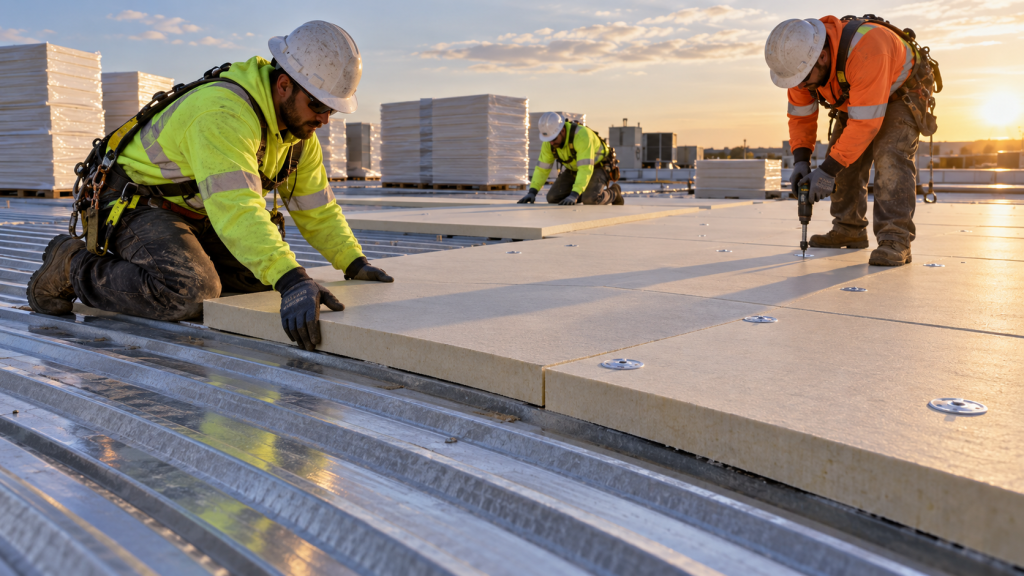
Good repairs also deal with wet insulation. If the layers under the leak are soaked, crews should cut them out and replace them. Otherwise, the wet material keeps causing problems.
Check for Hidden Damage
Water rarely stays in one place. Before closing out a commercial roof leak repair, check the deck, insulation, ceiling tiles, and walls for damage. Wet materials can grow mold within days. The EPA mold guidance explains why fast drying matters.
When Leaks Point to a Bigger Problem
Sometimes leaks keep coming back no matter how many patches go on. That usually means the roof is aging out. If you see repeated leaks, widespread wet insulation, or failing seams across the roof, it may be time to consider replacement. Read our guide to replacement warning signs.
Preventing the Next Commercial Roof Leak Repair
- Inspect the roof twice a year and after major storms.
- Keep drains and gutters clear.
- Add walk pads around rooftop equipment.
- Ask other trades to protect the roof when they work.
- Fix small problems before they grow.
Who Pays for Commercial Roof Leak Repair?
Ownership matters. In many leases, the landlord handles the roof. In others, tenants share the cost. So check the lease before work starts. In addition, check any roof warranty. A covered leak may cost you little or nothing, as long as an approved roofer does the work.
Insurance may also apply. Sudden storm damage is often covered, while slow wear usually is not. Photos and repair reports make claims much easier.
A Short Story From the Field
Picture a grocery store with a drip over the produce aisle. Two roofers patch the spot above it, yet the drip returns. A third roofer takes a wider look. Upslope, near a rooftop unit, a service panel screw has torn the membrane. Water runs along the deck for thirty feet before it falls. One small welded patch at the real source ends the problem. That is why commercial roof leak repair always starts with finding the source.
When to Call in the Pros Right Away
Some leaks need help immediately. Call a roofer at once if water reaches electrical panels, server rooms, or medical equipment. Also call if ceilings sag, if water flows rather than drips, or if a storm has torn part of the roof. These cases can turn dangerous quickly. Fast action protects people first, then property.
Leaks Around Rooftop Units
Rooftop HVAC units cause a large share of leaks. Their curbs need flashing on every side. Service panels get opened often, and techs sometimes leave screws or sharp metal on the roof. Condensate lines can drip and wear the membrane. So check these units first. Also, ask your HVAC contractor to protect the roof during service. A few walk pads and a little care prevent many future calls.
Keeping Records
Finally, track every commercial roof leak repair. Note dates, locations, causes, and costs. Over time, this log shows patterns. It also helps with warranty claims and budget planning.
FAQ on Commercial Roof Leak Repair
Why does my roof only leak during certain storms?
Wind direction and heavy rain can push water into weak spots that stay dry during normal rain.
How quickly should a leak be fixed?
As soon as possible. Water damage spreads fast, especially into insulation and ceilings.
Stop the Leak at Its Source
Finding the true source saves money and protects your building. Visit our roof repair page, or call for leak investigation today.