
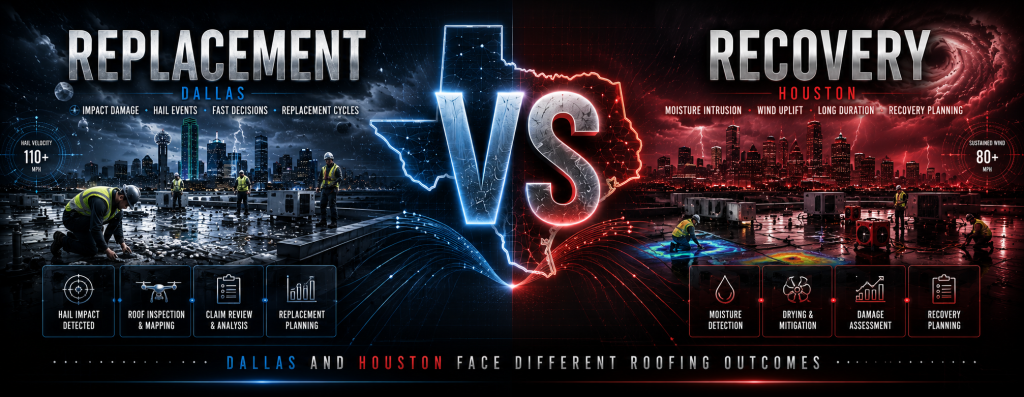

North Dallas vs West Houston Roofing — Corporate Campus Roofing Systems
Corporate campuses create a different roofing environment from that of downtown skyscrapers or industrial facilities.
Buildings spread outward rather than upward.
Roof areas become significantly larger.
Mechanical systems become more extensive.
Replacement planning becomes more complex.
North Dallas and West Houston represent two of the most important corporate employment centers in Texas. Both regions contain major office campuses, headquarters facilities, technology operations, financial institutions, healthcare providers, and professional service firms.
Surface similarities exist.
Environmental pressures create important differences.
Those differences influence how roofing systems are designed, maintained, repaired, and eventually replaced.

Quarter 1: Winter Conditions Across Corporate Roofing Portfolios
North Dallas begins the year with frequent temperature fluctuations.
Cold fronts move rapidly across the region.
Warm periods often follow immediately behind winter weather systems.
Expansion and contraction place stress on roofing assemblies.
Large corporate campuses frequently contain multiple connected roof sections.
Movement accumulates across thousands of square feet.
Flashing systems, transitions, expansion joints, and rooftop penetrations absorb much of that stress.
West Houston faces a different winter challenge.
Humidity remains a factor throughout much of the season.
Moisture management often receives greater attention than thermal movement.
Corporate facility managers frequently monitor drainage performance, waterproofing conditions, and rooftop equipment connections where moisture intrusion can develop over time.
One market battles movement.
The other manages moisture.
Both require proactive inspection programs.
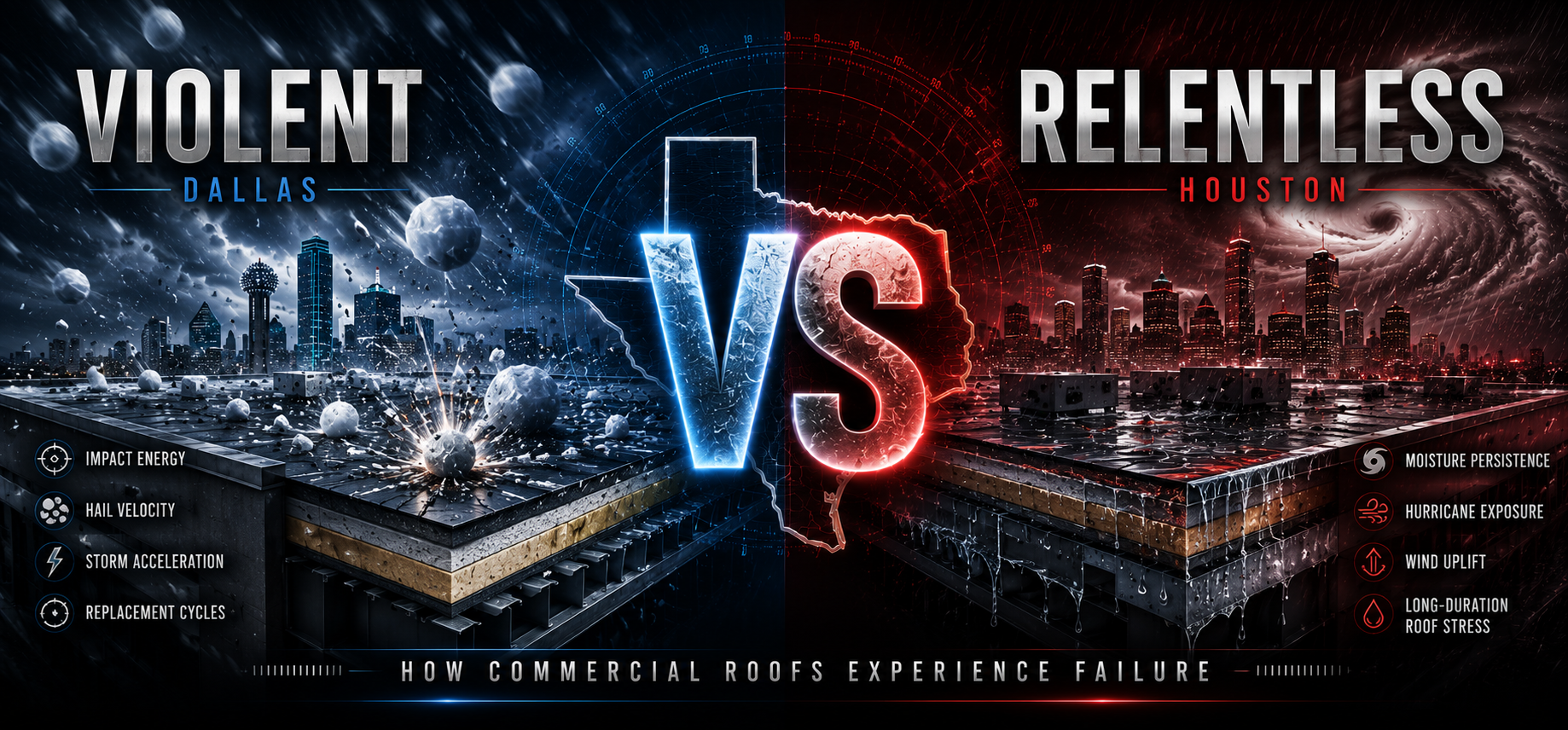
Corporate Roofing Systems Are Built For Business Continuity
Most corporate campuses cannot tolerate unexpected roofing failures.
Office operations depend on uninterrupted performance.
Technology infrastructure remains sensitive to water intrusion.
Executive offices require stable operating environments.
Meeting spaces, training facilities, and collaborative work areas often occupy multiple structures throughout a campus.
North Dallas contains some of the largest concentrations of corporate headquarters in Texas.
Financial services, telecommunications, technology, and professional services occupy extensive office portfolios throughout the region.
West Houston contains major energy-sector headquarters, engineering firms, global logistics operations, and large-scale corporate campuses connected to the Energy Corridor.
Roof replacement decisions frequently extend beyond roofing concerns.
Business continuity often becomes the primary objective.
Quarter 2: Spring Storms And Campus Roofing Exposure
Spring weather begins separating the two markets.
North Dallas operates within one of America’s most active hail environments.
Large storm systems frequently move across the Metroplex.
Impact damage becomes a major driver of commercial roof replacement.
Corporate campuses often contain extensive rooftop equipment that increases vulnerability.
HVAC systems, communication infrastructure, and solar installations create additional exposure points.
West Houston experiences severe weather as well.
Wind-driven rain becomes increasingly important.
Moisture infiltration often develops around rooftop penetrations and equipment curbs.
Storm events may not produce the same hail intensity seen in North Texas.
Extended weather exposure creates different forms of deterioration.
Facility managers frequently evaluate long-term waterproofing performance rather than focusing solely on impact resistance.

Hail Resistance Versus Moisture Management
Corporate roofing systems must respond to local environmental threats.
North Dallas owners often prioritize hail-resistant assemblies.
Material durability receives significant attention.
Protective surfacing becomes important.
Impact performance influences replacement specifications.
West Houston owners frequently place greater emphasis on drainage, attachment systems, and waterproofing reliability.
Moisture remains a year-round concern.
Water management becomes a long-term operational issue.
Failure patterns therefore emerge differently.
Dallas roofs often experience sudden storm-related damage.
Houston roofs often deteriorate through prolonged environmental exposure.
Understanding that distinction helps explain why replacement strategies differ between the two regions.
Quarter 3: Summer Heat Across Major Employment Centers
Summer places enormous pressure on corporate roofing systems.
North Dallas experiences prolonged periods of intense solar exposure.
Roof temperatures climb significantly above ambient air temperatures.
Expansion cycles accelerate.
Protective coatings age faster.
Material fatigue increases.
Large roof surfaces magnify those effects.
West Houston encounters similar heat.
Humidity changes the outcome.
Moisture retention often increases thermal stress within roofing assemblies.
Drainage performance becomes increasingly important.
Standing water creates additional concerns.
Organic growth develops more easily.
Waterproofing systems face continuous environmental pressure.
Owners planning replacement projects often prioritize solutions that reduce long-term maintenance requirements.
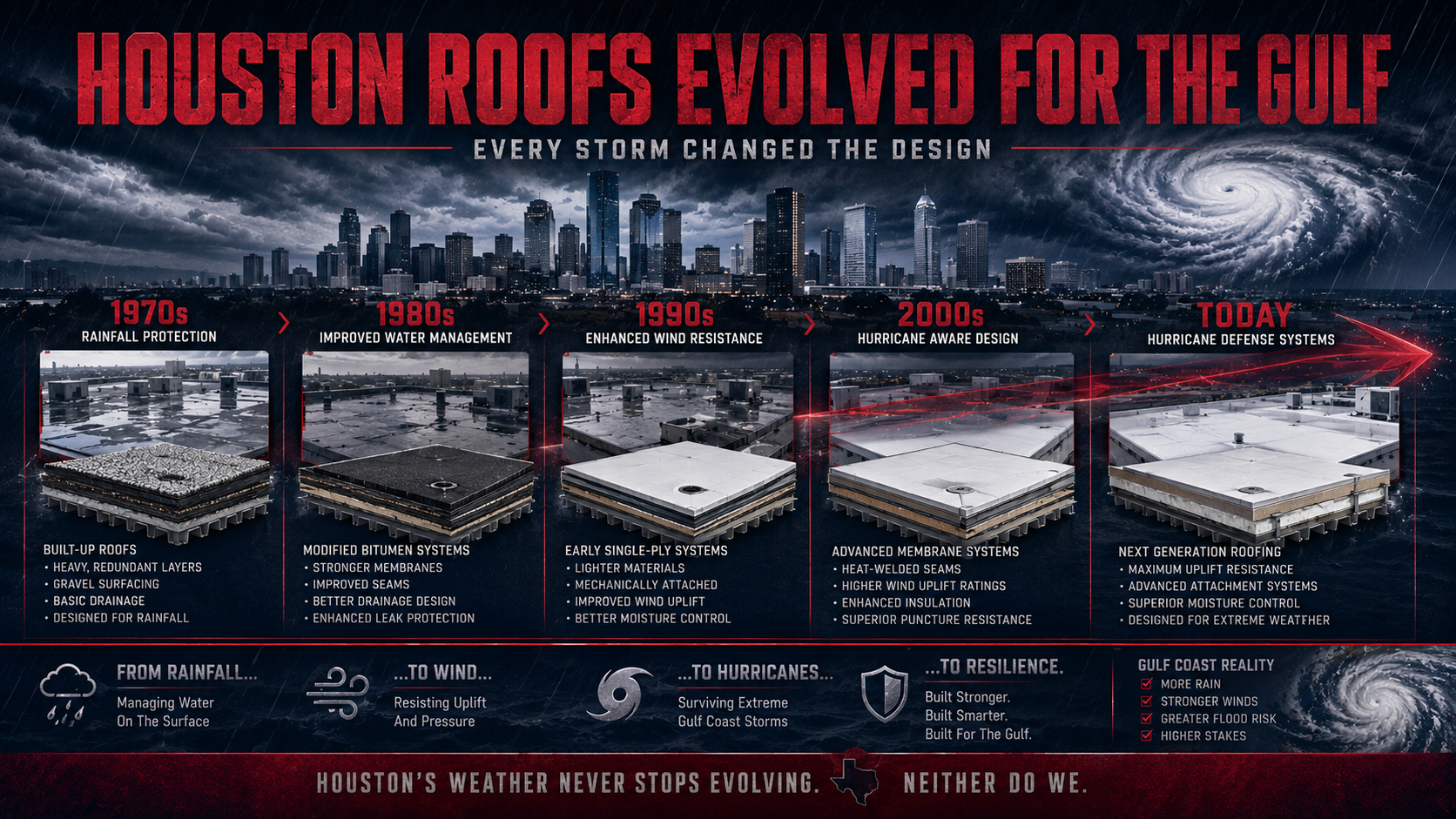
Wealth Concentration And Capital Planning
Both markets contain significant concentrations of corporate wealth.
Budget priorities differ slightly.
North Dallas continues benefiting from rapid business growth, corporate relocations, and expanding office development.
Many organizations view roofing systems as part of broader asset-management strategies.
West Houston contains substantial energy-sector investment and large institutional ownership groups.
Risk management frequently plays a larger role in replacement planning.
Operational reliability often receives equal consideration alongside installation costs.
Long-term lifecycle performance becomes increasingly important.
Many ownership groups evaluate roofing projects over decades rather than years.
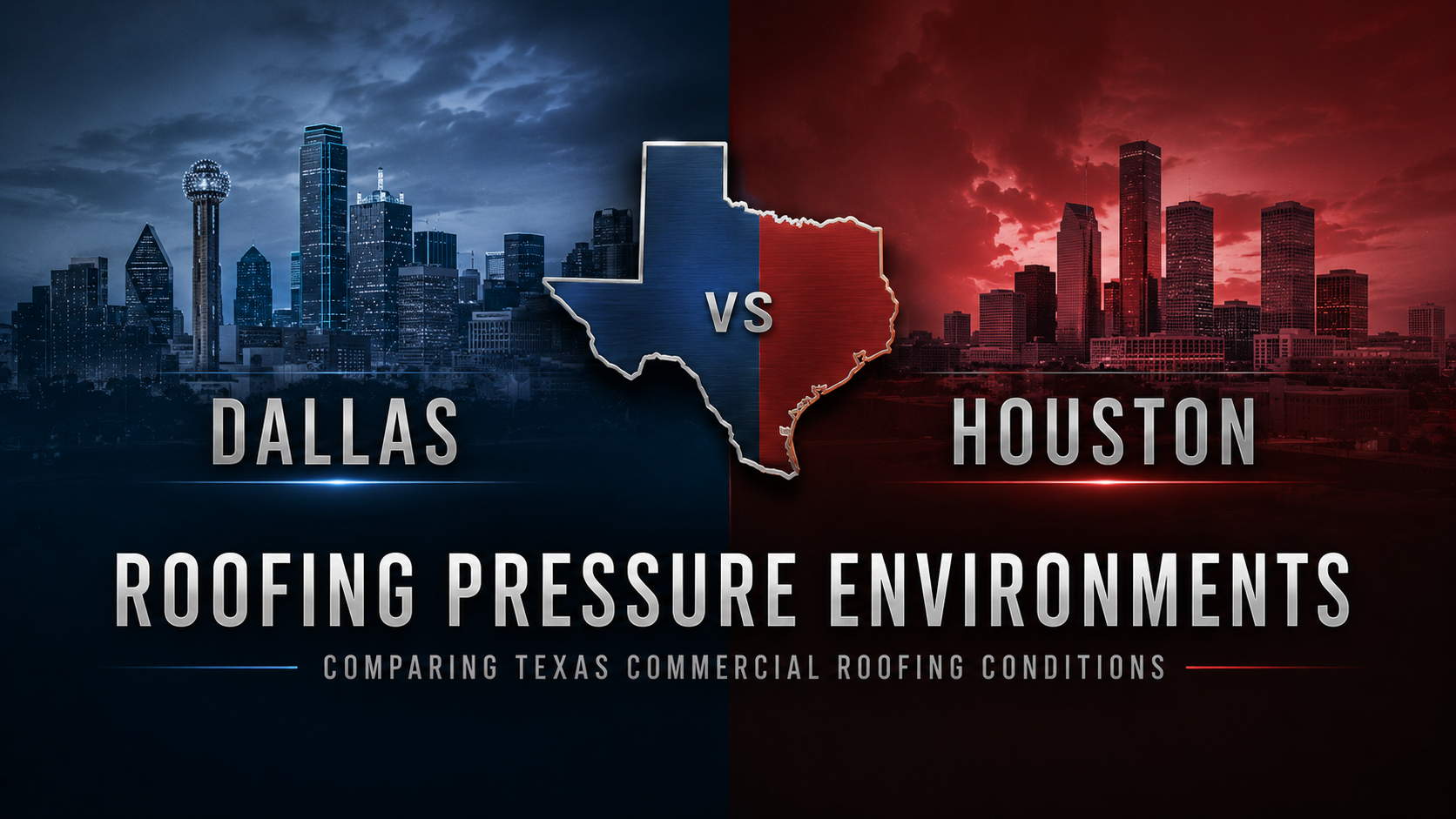
Quarter 4: Budget Cycles And Replacement Decisions
The fourth quarter often becomes one of the busiest periods for commercial roofing planning.
North Dallas property managers frequently evaluate damage accumulated during spring and summer storm activity.
Capital budgets begin funding replacement projects identified throughout the year.
West Houston owners continue monitoring tropical weather activity well into the fall season.
Hurricane-related concerns remain part of the planning process.
Inspection programs often intensify after major weather events.
Preventative replacement becomes attractive when risks begin exceeding acceptable thresholds.
Many large corporate campuses schedule roofing work during periods that minimize operational disruption.
Timing therefore becomes a strategic consideration.
North Dallas Versus West Houston: Two Corporate Roofing Environments
North Dallas corporate campuses operate within a hail-driven environment where thermal movement, impact resistance, and severe weather exposure influence many roofing decisions.
West Houston corporate campuses function within a moisture-driven environment where waterproofing performance, drainage management, and wind resistance often receive greater attention.
The building types may appear remarkably similar.
Environmental pressures create very different priorities.
Successful commercial roof replacement projects begin with understanding how local conditions shape long-term roofing performance.
Corporate campuses depend on reliability.
Regional conditions determine how that reliability is achieved.