
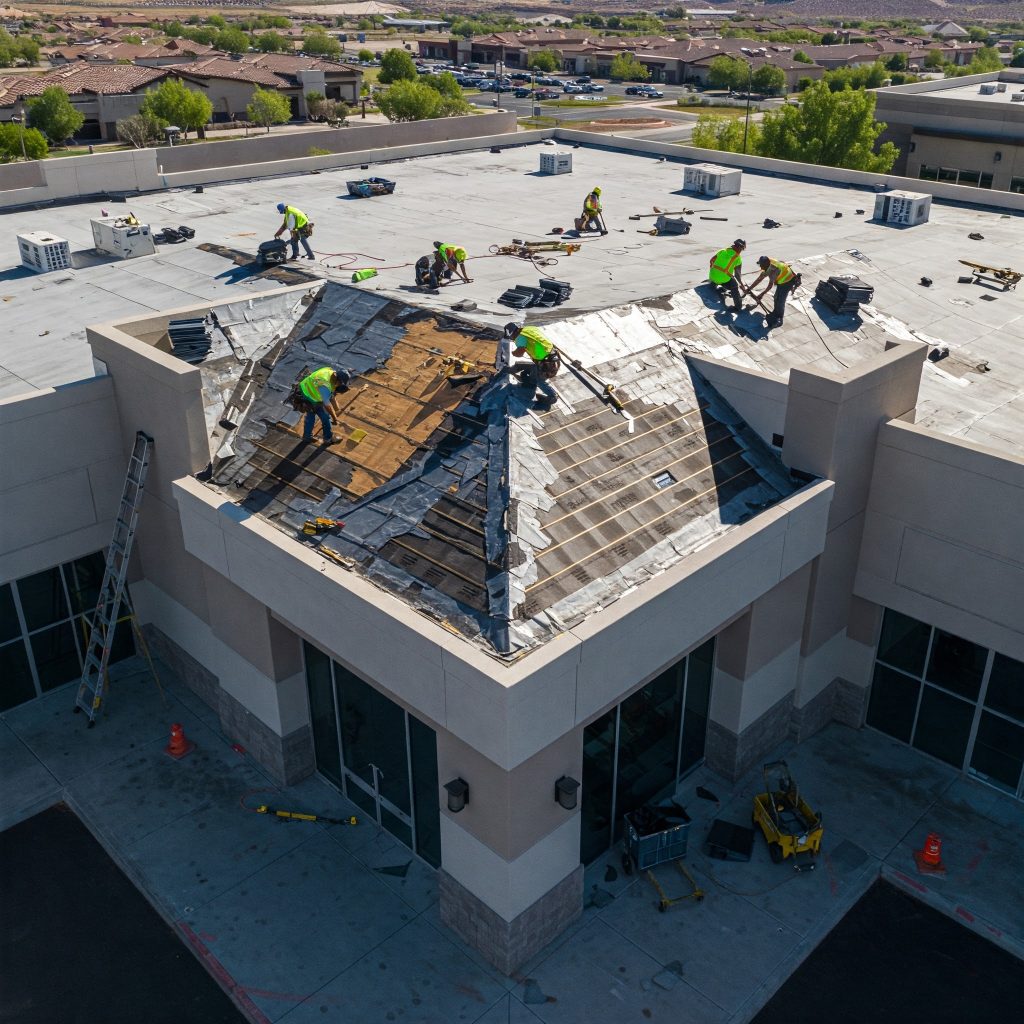
Commercial roof replacement is one of the largest repairs a building owner will ever fund. Because of that, many owners wait as long as they can. Sometimes waiting works. Often, though, it turns a planned project into an emergency, with wet insulation, damaged ceilings, and upset tenants. The good news is that roofs usually give plenty of warning before they fail. This guide walks through the clearest signs that your building needs a new roof, so you can plan the work on your schedule instead of the weather’s.
Property owners, facility managers, and asset managers can use these signs to spot trouble early and budget wisely.
Why Timing Matters
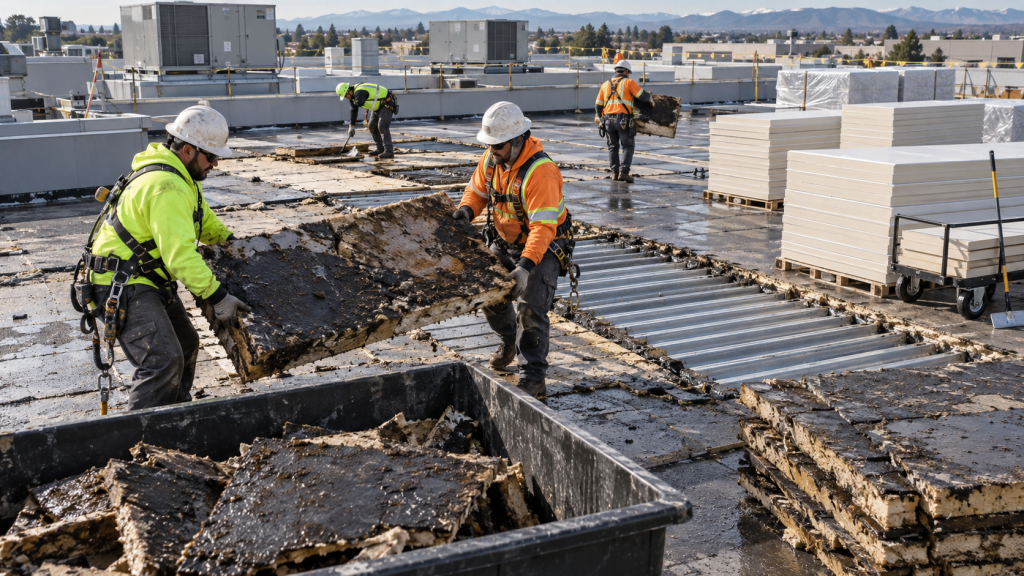
A roof does more than keep rain out. It protects insulation, equipment, inventory, and the people inside. When it fails, the damage spreads fast. Water soaks insulation, rusts metal decks, stains ceilings, and can lead to mold.
Planned commercial roof replacement costs less than emergency work. Crews can schedule in good weather, order the right materials, and phase the job around your tenants. In contrast, a rushed replacement after a major leak often costs more and disrupts more.
Sign 1: Leaks That Keep Coming Back
One leak is a repair. However, leaks that keep returning often mean commercial roof replacement is near. If your roofer fixes a spot and a new leak appears nearby a few weeks later, the roof may be failing as a whole. Repeated calls also add up. At some point, the money spent on patches would be better spent on a new roof.
Sign 2: Wet Insulation Calls for Commercial Roof Replacement
Water often hides below the surface. A roof can look fine from above while the insulation underneath is soaked. Infrared scans and moisture surveys reveal these wet zones.
When large areas are wet, the roof loses its insulating value and gains weight. Moreover, trapped water can rot wood decks and rust steel. If a survey shows widespread moisture, commercial roof replacement is usually the right answer.
Sign 3: Ponding Water That Will Not Drain
Flat roofs are not truly flat. They need a slight slope to move water to drains. When water sits for more than a day or two after rain, that is called ponding. It speeds up membrane wear, adds weight, and finds every weak spot.
Some ponding can be fixed with new drains or crickets. However, widespread ponding often signals a sagging deck or crushed insulation. In those cases, replacement lets crews rebuild the slope with tapered insulation. Our guide to flat roof drainage explains how this works.
Sign 4: Open Seams and Shrinking Membrane
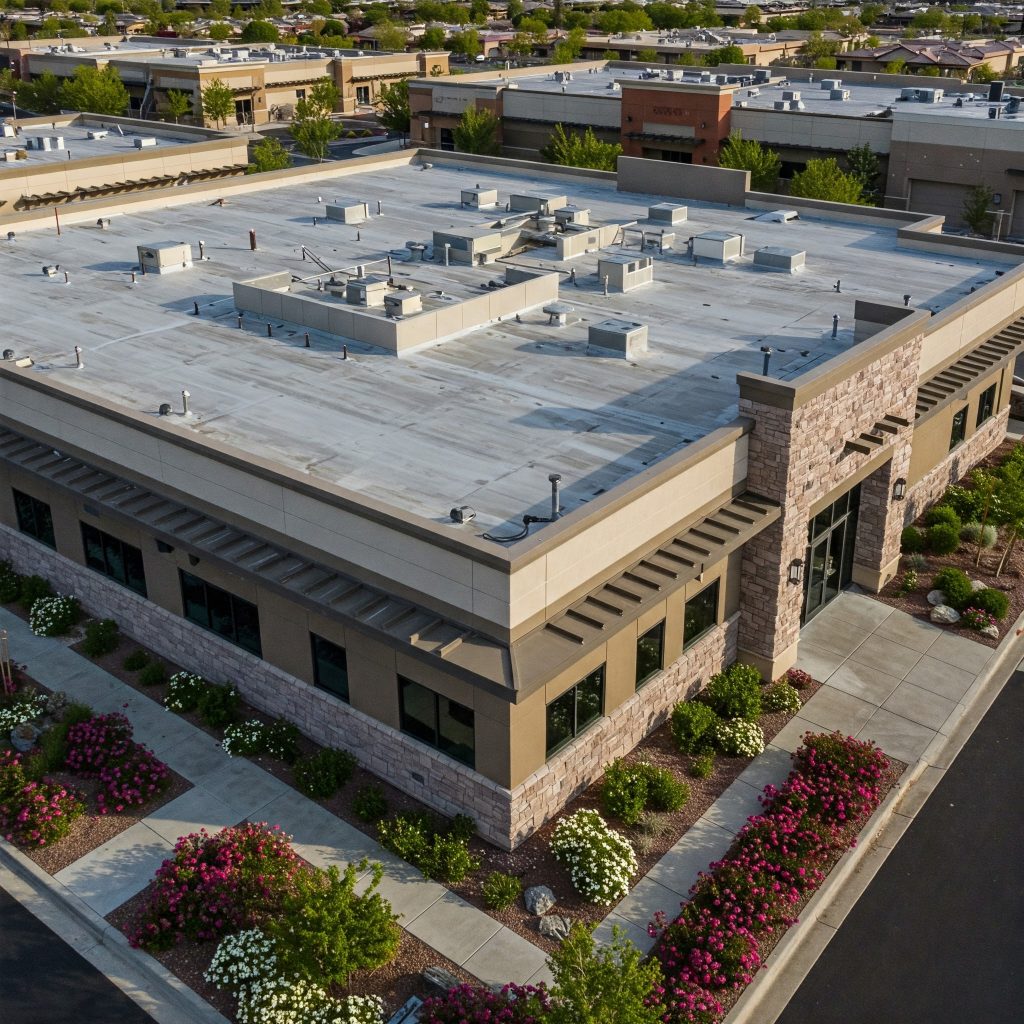
Single-ply roofs, like TPO and EPDM, rely on seams. When many seams open at once, the membrane is likely aging out. Shrinking membrane is another clue. As it pulls tight, it can tear at walls, curbs, and edges. These problems tend to spread, so patching one spot often leads to another.
Sign 5: Blisters, Cracks, and Alligatoring
Built-up and modified bitumen roofs show age in different ways. Blisters form when moisture or air gets trapped between layers. Cracks and a pattern called alligatoring show that the surface has dried out. A few blisters can be cut and patched. Yet a roof covered in them is near the end.
Sign 6: Damaged or Failing Flashing
In fact, flashing seals the edges of the roof and every opening, such as curbs, pipes, and walls. It is where most leaks start. If flashing is loose, cracked, or pulling away in many places, the problem may run deeper than a single repair.
Sign 7: Rusted or Sagging Deck
Next, look up from inside the building. Rust stains, sagging panels, or soft spots on the roof deck are serious signs. They mean water has been getting in for a while. In some cases, sections of deck must be replaced along with the roof. Catching this early limits the damage.
Sign 8: Rising Energy Bills
Wet or crushed insulation does not insulate well. As a result, heating and cooling costs climb. If your bills keep rising with no other explanation, the roof may be part of the cause. A new roof with fresh insulation and a reflective surface can cut energy use. The Cool Roof Rating Council lists rated roofing products.
Sign 9: Age and Commercial Roof Replacement
Every roof type has an expected life. When a roof reaches the later part of that range, owners should start planning, even if it still looks fine. That way, commercial roof replacement can happen on your timeline. Our roof life cycle page explains typical lifespans by system.
Sign 10: Storm Damage
Hail, high winds, and fallen debris can damage a roof in minutes. Sometimes the damage is obvious, like torn membrane or missing edge metal. Other times it is hidden, such as bruised insulation or cracked seams. After any major storm, schedule an inspection. Then, if damage is widespread, talk with your insurer about replacement.
Next Steps Toward Commercial Roof Replacement
- Schedule a professional inspection. Ask for photos and a written report.
- Request a moisture survey. Find out how much insulation is wet.
- Compare repair and replacement. Look at cost over the years each option buys.
- Plan the budget. Use capital planning to schedule the project.
- Choose the right season. Mild, dry weather makes for a smoother job.
Our capital planning page offers more tips on budgeting for a roof.
What Commercial Roof Replacement Involves
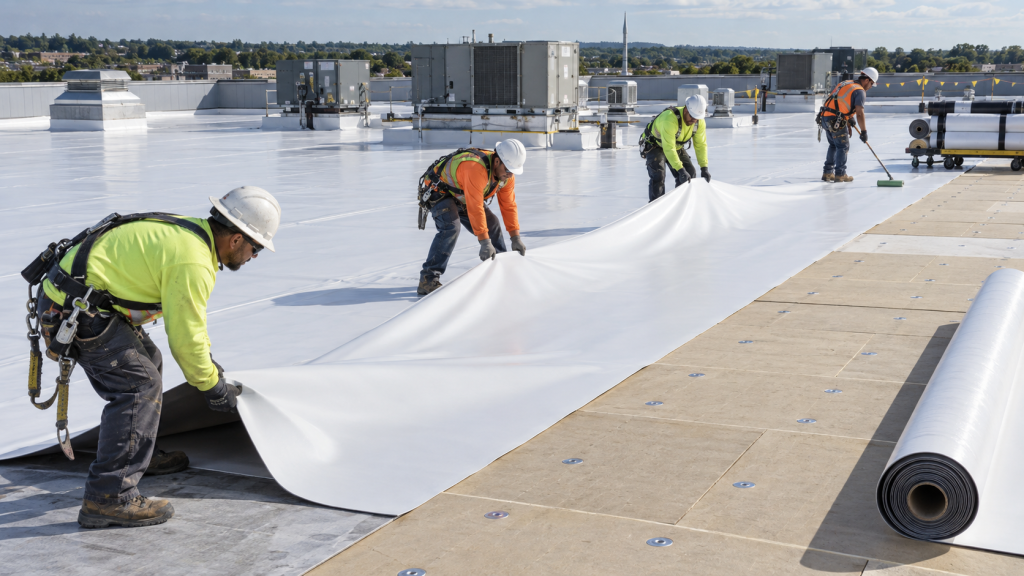
Knowing the process helps you plan. First, crews set up safety lines and protect the area around the building. Next, they tear off the old roof in sections. Then they inspect and repair the deck, install new insulation, and lay the new membrane. Finally, they install flashing, edge metal, and drains, then clean up.
Most crews work section by section. That way, the building stays dry each night. In addition, good crews cover rooftop equipment and protect walkways below.
How to Talk With Tenants
Tenants notice roof work. There is noise, a crane, and sometimes odors. So give them notice early. Share the schedule, the work hours, and a contact person. Also, explain what to expect each week. When tenants know the plan, complaints drop and the job goes smoother.
Planning a Smooth Commercial Roof Replacement
Once you decide to replace, good planning keeps the job smooth. Choose the right system for your building and climate. Get clear, detailed bids. Plan around tenants and operations. Also, ask about warranties and how the crew will protect the building during tear-off.
Choosing the New Roof System
Commercial roof replacement is also a chance to upgrade. TPO, PVC, EPDM, modified bitumen, and metal each have strengths. For example, white single-ply roofs reflect heat in sunny climates. Modified bitumen stands up to heavy foot traffic. Metal lasts a long time on sloped roofs. Ask your roofer which system fits your building, climate, and budget best.
FAQ on Commercial Roof Replacement
How long does commercial roof replacement take?
It depends on size and complexity. Smaller roofs may take days, while large or complex roofs can take several weeks.
Can a new roof go over the old one?
Sometimes, if codes allow and the old roof is dry and sound. Often, though, a full tear-off is the better choice.
Plan Before the Next Storm
Spotting these signs early gives you time and choices. Visit our roof replacement services page, or book a roof evaluation today.