
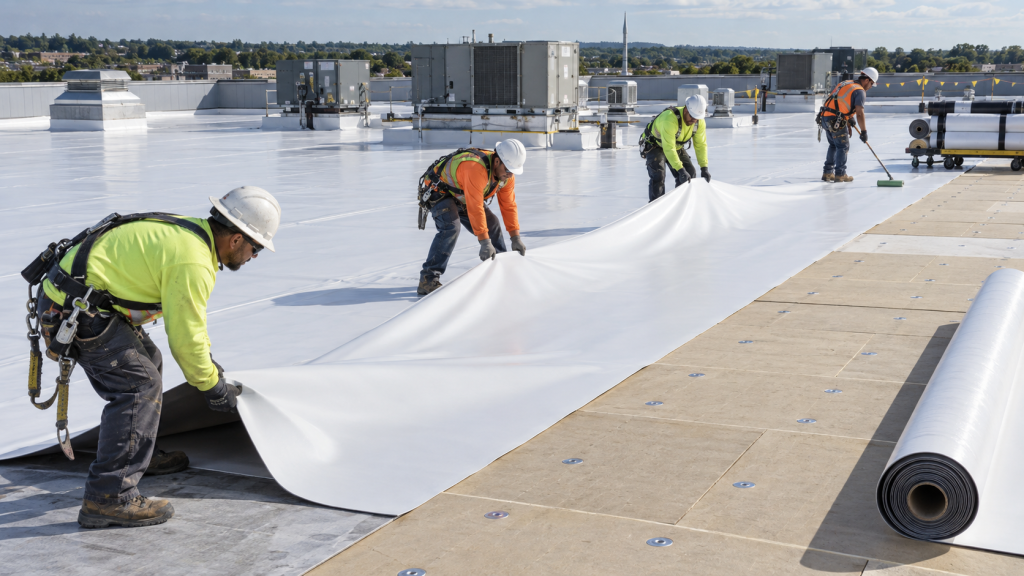
Few roofing calls in North Texas come in as often as requests for Dallas TPO roof repair. TPO, a white single-ply membrane, covers thousands of warehouses, offices, and retail centers across the Metroplex. It reflects heat, resists many chemicals, and installs quickly. Yet it is not indestructible. Hail, foot traffic, heat cycling, and poor installation can all lead to leaks, open seams, and punctures. This guide explains how to spot these problems, how pros repair them, and when it is time to consider replacement.
Property managers, building engineers, and owners across Dallas can use it to respond quickly and choose the right fix.
What Is a TPO Roof?
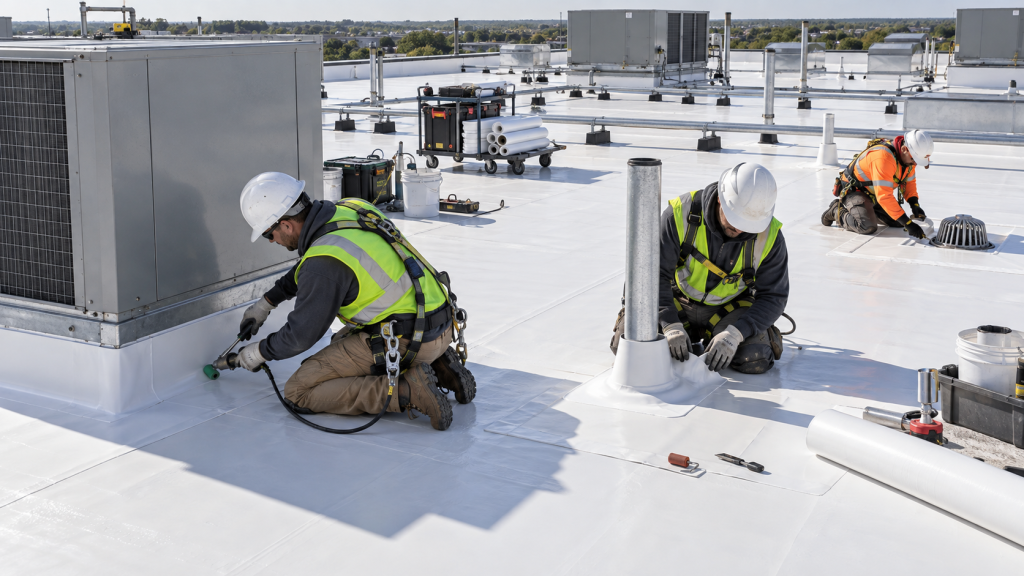
TPO stands for thermoplastic polyolefin. It comes in large sheets that crews lay over insulation. Then they fuse neighboring sheets with hot air, so the edges melt into one another. When done well, these welded seams become one continuous membrane. As a result, TPO can be very watertight. However, its performance depends on good seams, proper attachment, and regular care.
Why TPO Roofs Fail in Dallas
North Texas weather puts TPO to the test. Common causes of damage include:
- Hail: Large hailstones can bruise or puncture the membrane.
- Heat cycling: Hot days and cooler nights stress seams and flashing.
- Foot traffic: Service techs and tools can scuff or cut the surface.
- Poor welds: Seams that were not welded fully can open over time.
- Debris: Sharp objects and clogged drains can damage the roof.
The Dallas-Fort Worth area sees frequent spring hail. So many TPO roofs need checks after storms.
Sign 1: Leaks Inside the Building
In most cases, leaks are the first sign of trouble. Look for stained ceiling tiles, drips, or damp walls. However, the leak inside may be far from the damage on the roof. Water can travel along the deck before it drips down. Therefore, finding the source takes careful inspection.
Sign 2: Open or Loose Seams
Simply put, seams are the joints where sheets meet. If a weld fails, the seam can lift or open. Roofers check seams with a probe tool to find weak spots. Open seams let water slip under the membrane and soak insulation.
Sign 3: Punctures and Cuts
Meanwhile, punctures come from hail, dropped tools, or sharp debris. Even small holes, however, can let in a lot of water. Inspect areas around rooftop units carefully, since technicians often work there.
How Dallas TPO Roof Repair Works
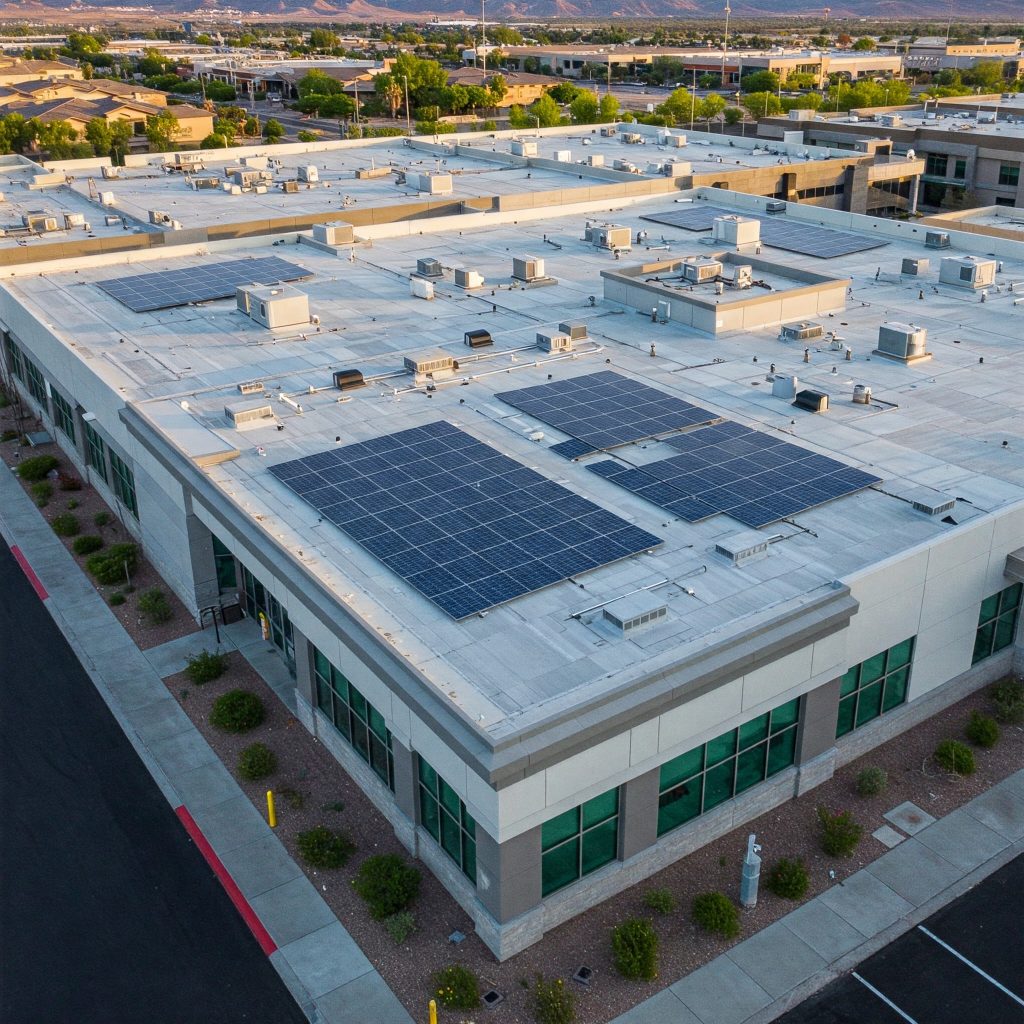
In general, Dallas TPO roof repair follows a clear process. First, the roofer cleans the damaged area. TPO must be clean for new material to bond well. Next, they prepare the surface with a special cleaner or primer. Then they heat-weld a TPO patch over the damage. For open seams, they reweld the seam and may add a cover strip. Finally, they probe the repair to confirm a solid bond.
Dallas TPO Roof Repair for Punctures
For punctures, crews usually cut a round patch larger than the hole. Rounded corners resist peeling better than square ones. Then they weld the patch in place. If water got under the membrane, they may cut out wet insulation and replace it before patching.
Dallas TPO Roof Repair for Open Seams
By contrast, open seams need careful work. Crews clean the seam, dry it fully, and reweld it with a hot-air welder. In some cases, they add a strip of membrane over the seam for extra protection. Then they test the seam along its full length.
Dallas TPO Roof Repair After Hail
After a hail storm, inspect the roof quickly, since Dallas TPO roof repair is easier when damage is fresh. Look for dents, cracks, and bruised areas. Also check rooftop units, skylights, and metal edges. Document damage with photos for insurance. The National Weather Service Fort Worth office keeps storm reports that can support claims.

Flashing and Rooftop Equipment
Many TPO leaks start at flashing, not in the field of the roof. For example, flashing wraps around pipes, curbs, walls, and drains. Over time, heat and movement can loosen these details. In addition, rooftop units vibrate, which stresses nearby seams. So inspect every curb, pipe boot, and wall flashing closely. Often, a small fix at a flashing stops a leak that seemed far away.
Drains and Ponding Water
Standing water speeds up wear on TPO. It also adds weight and hides damage. Therefore, keep drains and scuppers clear, especially after storms. If water ponds for more than two days, ask your roofer about tapered insulation or extra drains. These upgrades help the roof shed water faster and last longer.
Temporary Fixes Before Permanent Repair
Sometimes a leak happens during a storm, when crews cannot weld safely. In that case, roofers may apply a temporary patch or tape. Then they return for a full heat-welded repair once the roof is dry. Temporary fixes stop damage inside the building. However, they are not meant to last. So always schedule the permanent Dallas TPO roof repair soon after.
Keeping Repair Records
Good records save money over time. Keep photos, dates, locations, and invoices for every repair. In addition, mark repaired areas on a roof plan. This history shows patterns, such as repeat leaks near a certain unit. It also helps when you decide between repair and replacement.
What Repairs Typically Cost
Costs vary with the size and type of damage. A small patch is usually quick and affordable. In contrast, long seam repairs or wet insulation replacement cost more. Emergency calls during storms may also cost extra. So ask for a written quote with photos. Then compare it with the cost of replacing the section or the whole roof. In many cases, early repairs save money by stopping water before it spreads.
When Repair Is Not Enough
Of course, repairs work well for limited damage. However, replacement may be the better choice when:
- Seams are failing across large areas.
- Wet insulation covers big areas.
- The membrane feels stiff or shows cracks.
- Leaks return soon after repairs.
- The roof is near the end of its life.
Our post on patching vs replacing TPO explains how to decide.
Preventing Future Damage
- Inspect the roof each spring and fall.
- Inspect again after major hail or wind storms.
- Add walkway pads near rooftop equipment.
- Keep drains clear of debris.
- Limit roof access to trained workers.
Choosing a Dallas TPO Roof Repair Contractor
Above all, pick a roofer with TPO experience and manufacturer training. Also, ask about warranties on repairs. Also ask whether repairs will affect any existing manufacturer warranty. Many TPO warranties require approved contractors for repairs. Our roof repair services page explains our approach.
FAQ on Dallas TPO Roof Repair
How long does Dallas TPO roof repair take?
Most repairs take a few hours to a day, depending on size and weather.
Can hail damage TPO?
Yes. Large hail can bruise or puncture the membrane, and the damage is not always visible from the ground. A close inspection on the roof is the only way to know for sure. Schedule one after every major storm.
Will repairs void my warranty?
They might if done by an unapproved contractor. Check your warranty terms.
Keep Your Roof Watertight
Quick, quality repairs protect your building and budget. Visit our Dallas roofing page, or schedule a roof inspection.