
Commercial roof inspections are one of the simplest and most valuable tools a property manager has. A roof that gets checked regularly lasts longer, leaks less, and costs less over its life. Yet many managers are not sure what a good inspection includes, how often to schedule one, or what to do with the report. This guide explains all of that in plain terms, so you know exactly what to expect and how to put the findings to work.
Whether you manage one building or a large portfolio, these tips will help you get more value from every visit.
Why Commercial Roof Inspections Matter
Most roof problems start small. A loose flashing, a clogged drain, or a small puncture can sit unnoticed for months. Meanwhile, water slowly soaks the insulation and damages the deck. By the time a leak shows inside, the repair is much bigger.
Regular commercial roof inspections catch these problems early, when they are cheap to fix. They also document the roof’s condition over time. That record helps with budgeting, warranty claims, insurance, and even property sales.
How Often to Schedule Commercial Roof Inspections
A good rule of thumb is twice a year: once in spring and once in fall. Spring visits find winter damage. Fall visits prepare the roof for harsh weather ahead.
In addition, inspect after any major storm, such as hail, high winds, or heavy snow. Also inspect after other trades work on the roof, since HVAC techs and others can damage the membrane without knowing it.
What the Inspector Checks
A thorough inspection covers the whole roof system. Typically, the inspector looks at:
- Membrane surface: punctures, cracks, blisters, and wear
- Seams: open, lifted, or poorly sealed areas
- Flashing: walls, curbs, parapets, and penetrations
- Drains and gutters: clogs, damage, and ponding water
- Edge metal and coping: loose or missing pieces
- Rooftop equipment: curbs, panels, and condensate lines
- Debris: leaves, trash, and loose items
- Interior signs: stains, drips, and deck damage

Moisture Surveys
Visual checks only show the surface. To find hidden water, many managers add a moisture survey every few years. Infrared scans taken at night show wet insulation, which holds heat longer than dry areas. Moisture meters and small core cuts then confirm the findings.
Moisture surveys are especially useful on older roofs or before deciding between repair and replacement.
What a Good Report Includes
The inspection is only as useful as its report. A strong report should include:
- Roof plan showing each area and problem location
- Clear photos of every issue
- Description of each problem and its cause
- Priority level, such as urgent, soon, or monitor
- Repair recommendations with cost estimates
- Overall condition rating and expected remaining life
If a report only says “roof looks okay,” ask for more detail.
Using Findings From Commercial Roof Inspections
Commercial roof inspections pay off when you act on them. Start with urgent items, such as open seams or damaged flashing. Then schedule the “soon” items before the next season. Keep “monitor” items on a list and check them at the next visit.
Over time, the reports build a history. That history shows whether the roof is stable or declining. It also helps you plan major work years in advance. Our capital planning page explains how to fold roof data into budgets.
Warranty and Insurance Benefits
Many roof warranties require regular inspections and maintenance. Skipping them can void coverage. So keep every report on file.
Insurance claims also go smoother with good records. For example, if hail damages your roof, recent inspection photos prove the roof was in good shape before the storm.
Safety During Inspections
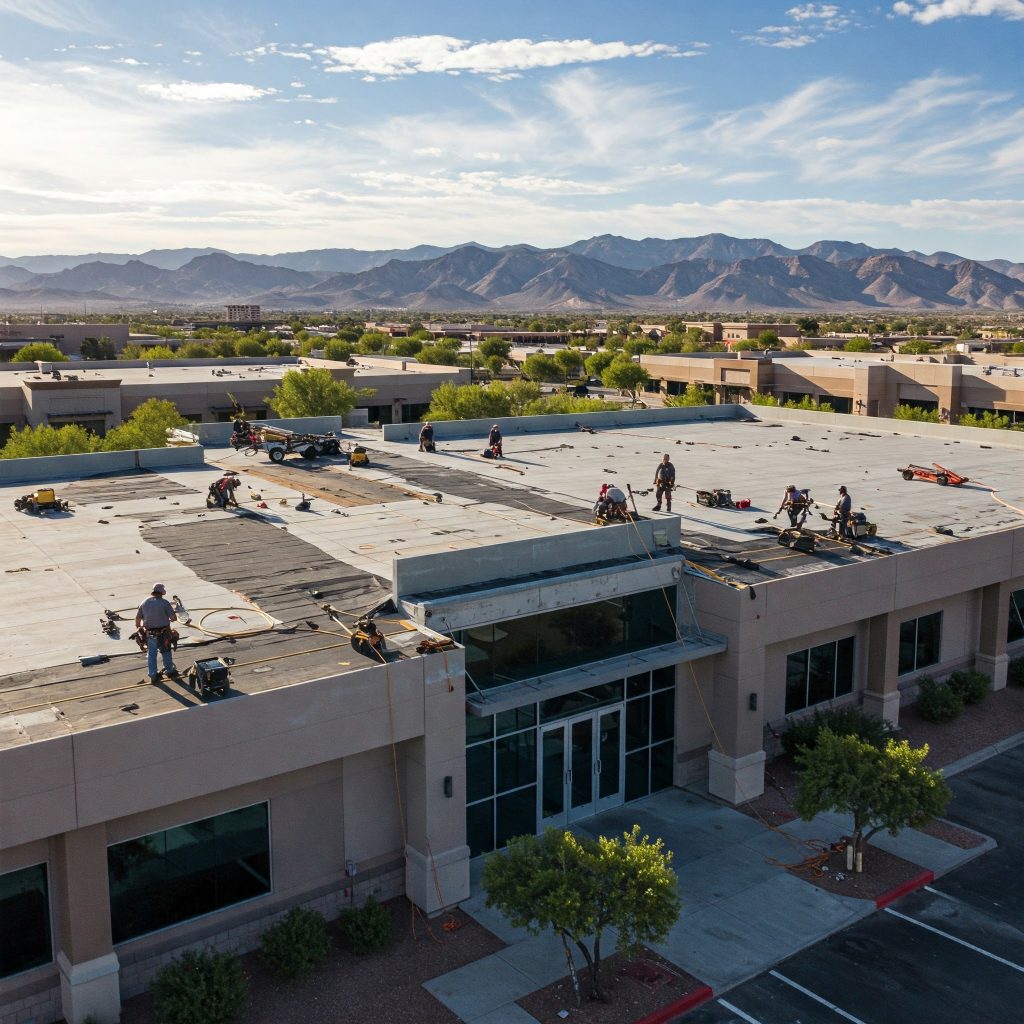
Roof work is risky. Inspectors should follow fall protection rules, especially near edges and skylights. The OSHA fall protection guidance applies. Property managers should also control roof access, so only trained people go up.
Drone Inspections
Drones are becoming a common tool. They capture aerial photos quickly and safely, especially on large or steep roofs. Still, drones cannot feel soft spots or probe seams. So they work best alongside a hands-on inspection, not instead of one.
What Commercial Roof Inspections Cost
Costs depend on roof size, access, and whether a moisture survey is included. Many roofers also offer maintenance plans that bundle inspections with minor repairs. These plans can save money and make budgeting easier.
Choosing an Inspector
Pick a licensed, insured commercial roofer with experience on your roof type. Ask for a sample report. Look for clear photos, priorities, and cost estimates. Also, ask whether they are approved by your roof maker for warranty work.
A Simple Property Manager Checklist
- Schedule inspections each spring and fall.
- Add storm and post-trade inspections.
- Request a detailed report with photos.
- Fix urgent items right away.
- Plan “soon” items before the next season.
- Keep every report on file.
- Add a moisture survey every few years.
Inspecting Different Roof Types
Each roof system shows wear in its own way. So a good inspector adjusts their focus. On TPO and PVC roofs, they probe seams and look for chalky, thinning membrane. EPDM calls for checks of seam tape, shrinkage, and edge flashing. Modified bitumen and built-up roofs, by contrast, show blisters, cracks, and lost granules. With metal roofs, they check fasteners, rust, and sealant at laps.
Make sure your inspector knows your roof type well. In addition, share the original installation details and warranty papers. These help them spot problems that matter most for your system.
Inspections Before Buying or Leasing
Commercial roof inspections are also smart before you buy or lease a building. A pre-purchase inspection tells you the roof’s condition and remaining life. As a result, you can negotiate price or ask the seller to make repairs. Likewise, tenants can use an inspection to confirm the landlord’s roof is in good shape before signing a long lease.
Turning Reports Into a Budget
Each report should feed your budget. First, total the urgent repairs for this year. Next, estimate the “soon” items for next year. Then use the remaining life rating to plan replacement. Over several years, this simple routine turns surprise roof bills into planned expenses. In turn, owners and lenders gain confidence in your numbers.
Access Control Between Commercial Roof Inspections
Limit roof access to trained people. Keep the hatch or door locked, and use a sign-in log. Then you always know who was up there and when. This record also helps if new damage shows up between commercial roof inspections. In many cases, the log points straight to the trade that caused it, which makes repairs easier to resolve.
Questions to Ask After Each Visit
- What are the top three problems, and how urgent are they?
- Is any insulation wet?
- How many years of life does the roof have left?
- What should we budget for next year?
- Did other trades damage anything since the last visit?
These questions turn a long report into clear next steps. In addition, they help you explain roof needs to owners and lenders in plain terms.
FAQ on Commercial Roof Inspections
How long do commercial roof inspections take?
Most take a few hours, depending on roof size and access.
Do I need to be there?
Not always. However, a quick walk-through of the findings with the inspector is very helpful.
Schedule Your Next Inspection
Regular checks protect your roof, budget, and tenants. Visit our roof inspection page, or book an inspection today.