
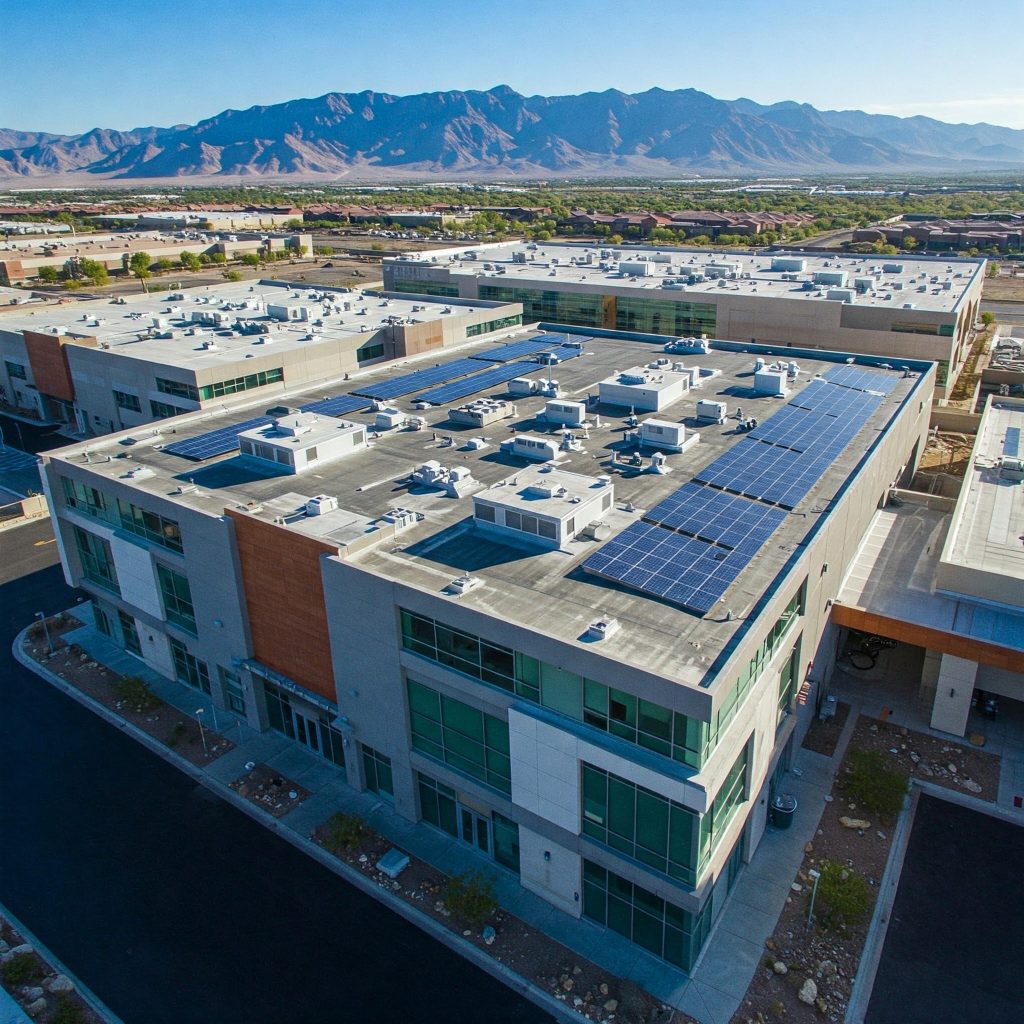
Houston commercial roof replacement comes with a challenge most cities do not face to the same degree: rain. The Houston area gets roughly 50 inches of rain in a typical year, plus tropical storms and the occasional hurricane between June and November. A roof that is open for even a few hours during a downpour can let water into offices, stores, and warehouses below. At the same time, businesses still need to run. This guide explains how to plan a roof replacement around heavy rain and daily operations, so your building stays dry and your doors stay open.
Property managers, building owners, and facility teams across Greater Houston can use it to plan their next project.

Why Rain Changes Everything in Houston
In drier cities, crews can tear off large sections of roof and leave them open overnight. In Houston, that is risky. Sudden storms roll in fast, especially on summer afternoons. In addition, humidity slows drying and can trap moisture in insulation. As a result, Houston commercial roof replacement must be planned in small, watertight steps.
Step 1: Choose the Right Season
Timing matters. Late fall and winter often bring fewer heavy storms and milder heat. So many owners schedule replacements from about November through early spring. However, rain can still happen any month. Therefore, the plan must handle wet weather no matter when work starts. The National Weather Service Houston/Galveston office posts forecasts and storm outlooks that crews watch daily.
Step 2: Inspect and Plan the Scope
Before work starts, a roofing contractor inspects the roof. They look at the deck, insulation, drains, flashing, and rooftop equipment. Then they may take core samples to see how wet the existing layers are. This information shapes the scope. For example, wet insulation must come out, while dry areas may stay under a recover system.
Step 3: Phasing a Houston Commercial Roof Replacement
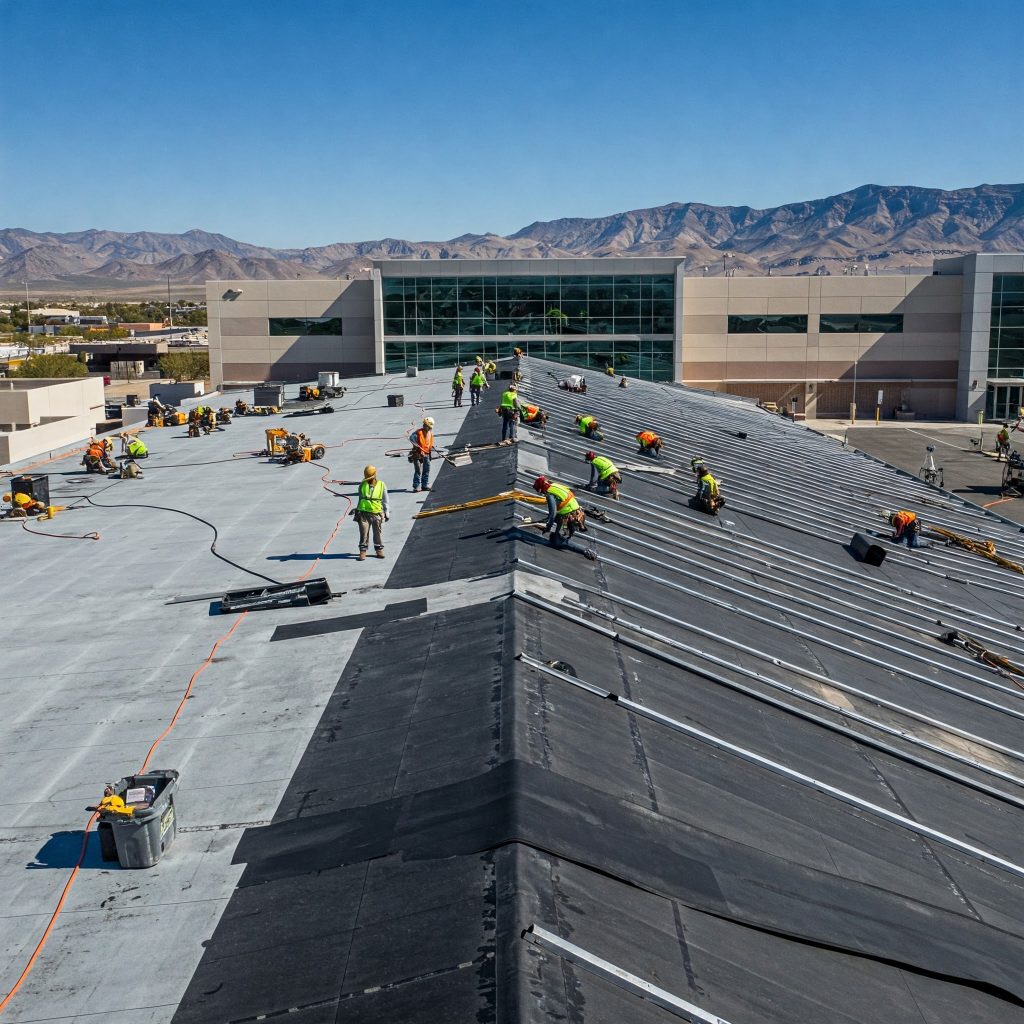
The key to Houston commercial roof replacement is phasing. Instead of tearing off the whole roof, crews remove only what they can make watertight the same day. Then they install new insulation and membrane over that section before leaving. This approach is often called “tear off and dry in daily.” It protects the building every night.
Step 4: Plan for Sudden Storms
Even with good forecasts, storms surprise crews. So a good contractor keeps temporary protection on site. This includes tarps, temporary membranes, and materials to seal edges quickly. In addition, crews should watch radar and stop tear-off when storms approach. A clear storm plan should be part of every contract.
Protecting the Inside of the Building
Even with careful work, leaks can happen. So protect sensitive areas below the work zone. For example, cover computers, inventory, and equipment with plastic sheeting. Move valuable items away from areas under active work. Also keep an emergency contact list handy, so tenants can report drips right away.
Keeping Business Operations Running
Most Houston businesses cannot close for a roof project. Therefore, planning around operations is just as important as planning around rain. Here are common strategies:
- Schedule noisy tear-off for early mornings or weekends.
- Phase work so only one area is affected at a time.
- Keep entrances, parking, and fire lanes clear.
- Plan crane lifts for low-traffic hours.
- Coordinate rooftop HVAC shutdowns with tenants.
Houston Commercial Roof Replacement and Tenants
Clear communication keeps tenants calm. Before work starts, share the schedule, expected noise, and safety rules. During the project, send short weekly updates. If a leak or delay happens, explain it quickly. Our property manager guide offers more tips for tenant communication.
Roof Systems for Houston Commercial Roof Replacement
Houston’s heat, humidity, and storms affect the roof choice. Common options include:
- TPO: a white, reflective membrane that helps cut cooling costs
- PVC: durable and resistant to chemicals and grease
- Modified bitumen: tough and familiar to many crews
- Roof coatings: a way to extend some roofs instead of replacing them
Reflective roofs can lower cooling loads during long Houston summers. In addition, good drainage design is vital, because ponding water can shorten roof life.

Drainage Matters in Heavy Rain
Heavy rain tests every drain and scupper. During replacement, check that drains are clear and sized correctly. Tapered insulation can improve slope and move water to drains faster. In addition, overflow drains or scuppers protect the roof if main drains clog. Our post on flat roof drainage explains these upgrades.
Wind and Hurricane Preparation
Hurricane season brings strong winds. So the new roof should meet local wind uplift requirements. Edge metal, fasteners, and attachment methods all matter. Ask your contractor how the system is rated for wind. Also plan what to do if a storm threatens during construction, such as securing loose materials and equipment.
Permits and Inspections
Most commercial roof replacements in Houston need a permit. Inspectors may check the deck, attachment, and final installation. A licensed contractor handles the permit and schedules inspections. Keep copies of all paperwork for insurance and future sales.
Budgeting for Houston Commercial Roof Replacement
Costs depend on roof size, system type, wet insulation, deck repairs, and access. Phased work and weather delays can add time. So build a contingency into the budget. Our roof replacement services page explains common cost factors.
Daily Checklist for Crews and Managers
A short daily routine keeps the project on track. Each morning, the crew lead checks the forecast. Next, they decide how much roof to open. Then they stage temporary protection near the work area. Before leaving, they seal every open edge and clear loose debris. Meanwhile, the property manager checks in with tenants about any drips or noise. As a result, small problems get fixed before they grow.
Houston Commercial Roof Replacement on Warehouses vs Offices
Different buildings need different plans. For example, a warehouse may have high ceilings and stored goods that must stay dry. So crews may cover racks with plastic and schedule work around shipping. By contrast, an office building has people at desks below. Noise and odors matter more there. Therefore, crews may work early mornings, use low-odor adhesives, and shut off air intakes during certain tasks. In both cases, a tailored plan makes Houston commercial roof replacement smoother.
Common Mistakes to Avoid
- Tearing off more roof than crews can dry in the same day
- Skipping a storm plan in the contract
- Forgetting to protect inventory and equipment below
- Ignoring drainage during the replacement
- Failing to tell tenants about the schedule
FAQ on Houston Commercial Roof Replacement
How long does Houston commercial roof replacement take?
Many projects take a few weeks. Larger roofs and rainy weather can extend the timeline, so build some cushion into your schedule.
Can my business stay open during the work?
Usually, yes. Phased work and good protection let most businesses keep running. Crews can also shift loud tasks to early mornings or weekends to keep disruption low.
What is the best time of year to replace a roof in Houston?
Late fall through early spring often works best, though crews must plan for rain at any time of year.
Plan Your Project With Confidence
A smart plan keeps your building dry and your business moving. Visit our Houston roofing page, or contact our team to schedule an inspection.