
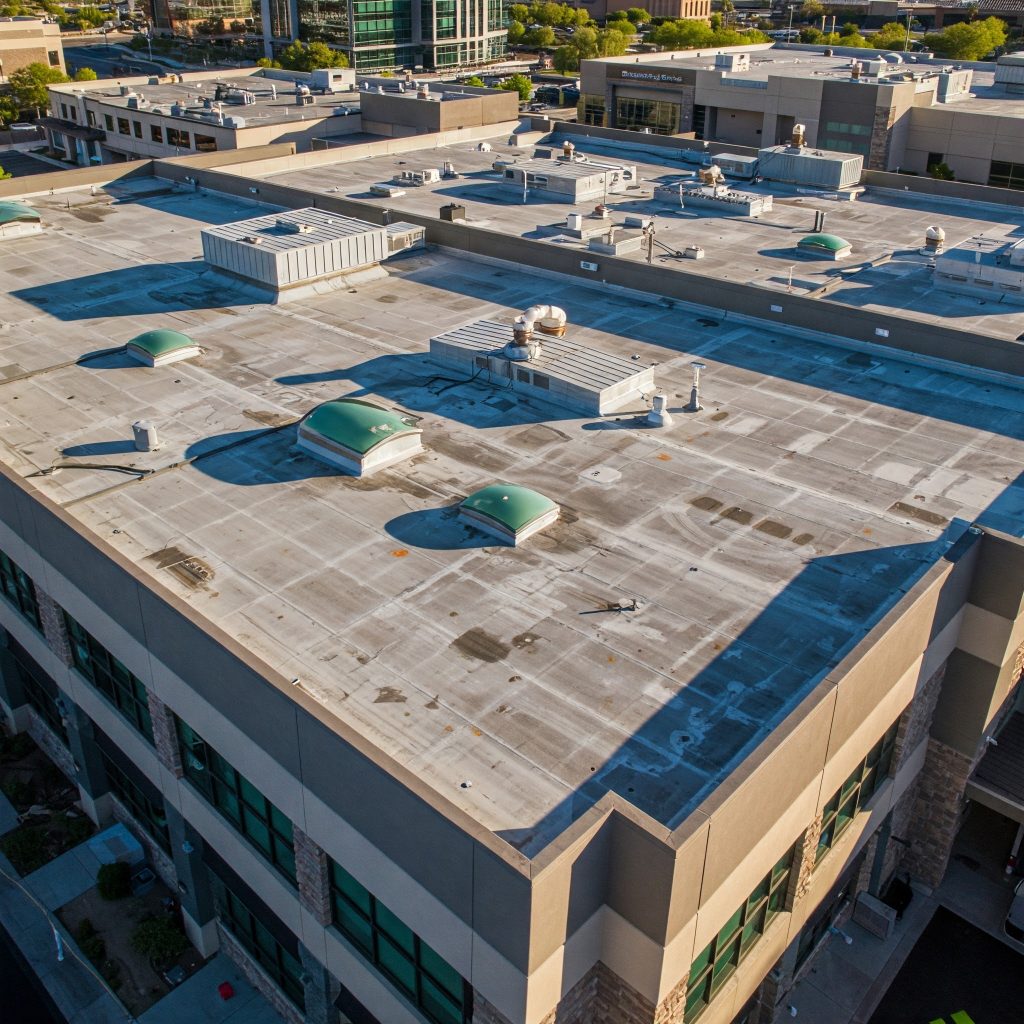
Commercial roof cleaning rarely makes the top of a facility manager’s list. After all, a roof is out of sight. Yet dirt, debris, algae, and grease can quietly shorten a roof’s life, raise energy bills, and even void warranties. A clean roof is easier to inspect, reflects more heat, and lasts longer. This guide explains when your roof needs cleaning, which methods are safe for each roof type, and why some jobs belong to trained professionals.
Property managers, building owners, and maintenance teams can use it to decide when and how to clean.
Why Commercial Roof Cleaning Matters
First, dirt is not just a cosmetic problem. On a commercial roof, buildup causes real damage:
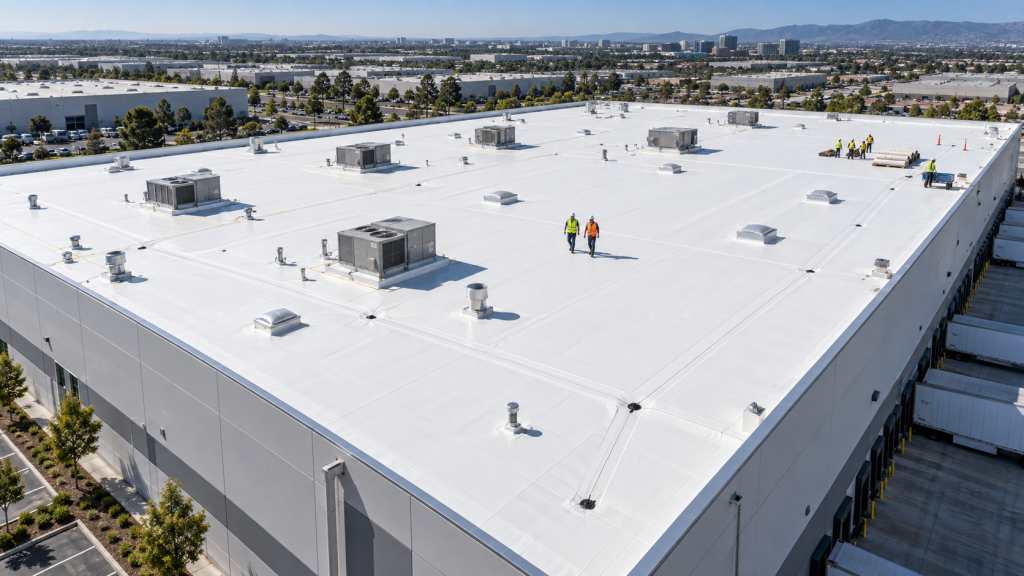
- Reduced reflectivity: White roofs lose their ability to reflect sun when dirty, raising cooling costs.
- Clogged drains: Leaves and debris block drains, causing ponding.
- Algae and moss: Growth holds moisture against the membrane.
- Grease damage: Restaurant exhaust can break down some membranes.
- Hidden problems: Dirt hides cracks, punctures, and open seams.
Regular commercial roof cleaning helps prevent all of these.
Signs Your Roof Needs Cleaning
So watch for these clues:
- A white roof that now looks gray or brown
- Leaves, branches, or trash collecting in corners
- Green or black growth in shaded or damp areas
- Grease or oil stains near kitchen exhaust fans
- Standing water near clogged drains
- Rising cooling bills with no other cause
If you see any of these, it is time to schedule cleaning.
Cool Roofs and Energy Savings
Today, many commercial buildings have white or light-colored roofs, often called cool roofs. These surfaces reflect sunlight and keep buildings cooler. However, dirt and grime reduce that reflectivity over time.
A good wash can bring back much of that lost reflectivity. Cooling bills may then fall, particularly in sunny cities. Aged reflectance data is published by the CRRC.
Safe Commercial Roof Cleaning Methods
Of course, the right method depends on your roof type. Using the wrong one can cause damage.
Single-Ply Roofs (TPO, PVC, EPDM)
Most single-ply membranes can be cleaned with low-pressure water and mild cleaners approved by the maker. Soft brushes help remove dirt. High-pressure washing can damage seams or force water under the membrane, so crews keep pressure low.
Modified Bitumen and Built-Up Roofs
These roofs often have granules or gravel on the surface. Aggressive washing can strip granules and expose the layers below. So crews use gentle methods and focus on debris removal.
Metal Roofs
Metal roofs can usually handle gentle washing. Still, crews must avoid harsh chemicals that can damage coatings and finishes.
Commercial Roof Cleaning for Algae and Growth
Meanwhile, in damp or shaded areas, algae, moss, and lichen can grow. They hold moisture against the roof and can break down some materials. Professionals use approved cleaners to remove growth without harming the membrane. Afterward, they rinse thoroughly to protect drains and landscaping below.
Grease From Restaurant Exhaust
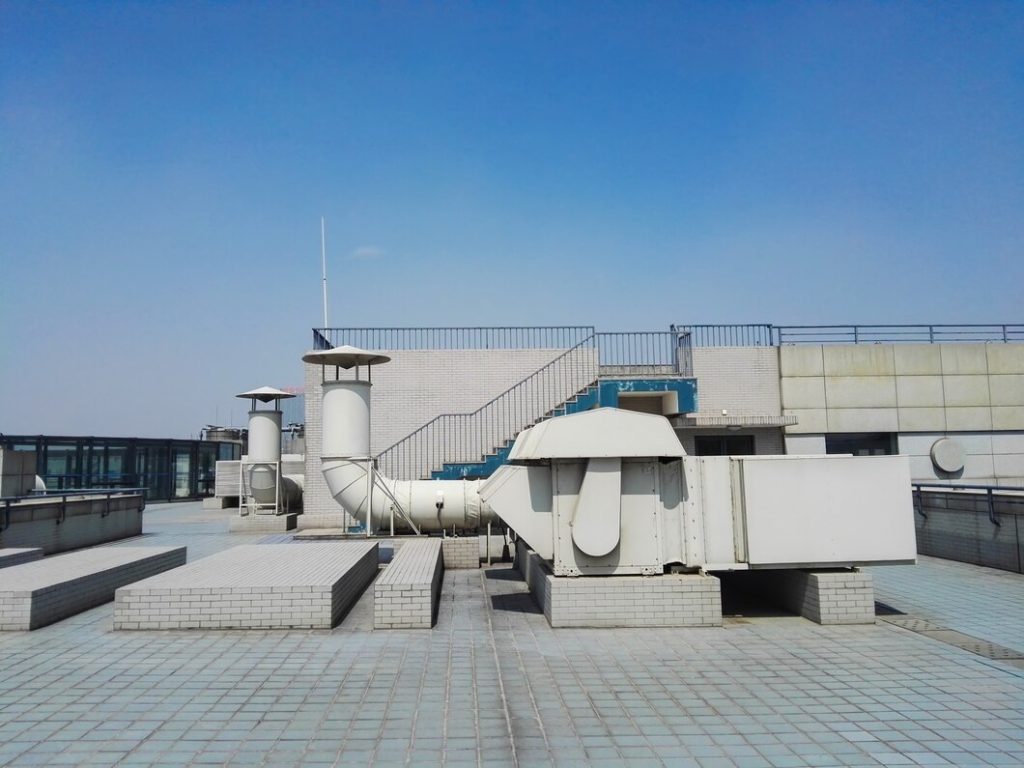
In addition, restaurant roofs face a special challenge. Kitchen exhaust fans release grease, which collects on the roof. Grease can soften and break down some membranes. In addition, it creates a fire risk and a slippery surface.
Grease containment systems around exhaust fans help. Regular commercial roof cleaning around these areas is also important. PVC membranes resist grease better than some others, so they are common on restaurant roofs.
Why Professionals Should Handle It
At first, roof cleaning may sound simple. Yet it carries real risks:
- Falls: Wet roofs are slippery, and edges are dangerous.
- Membrane damage: Wrong pressure or chemicals can harm the roof.
- Warranty issues: Unapproved cleaners can void coverage.
- Runoff: Cleaning water must be managed to protect drains and the environment.
Trained crews follow OSHA fall protection rules and the roof maker’s guidelines.
Pairing Cleaning With Inspection
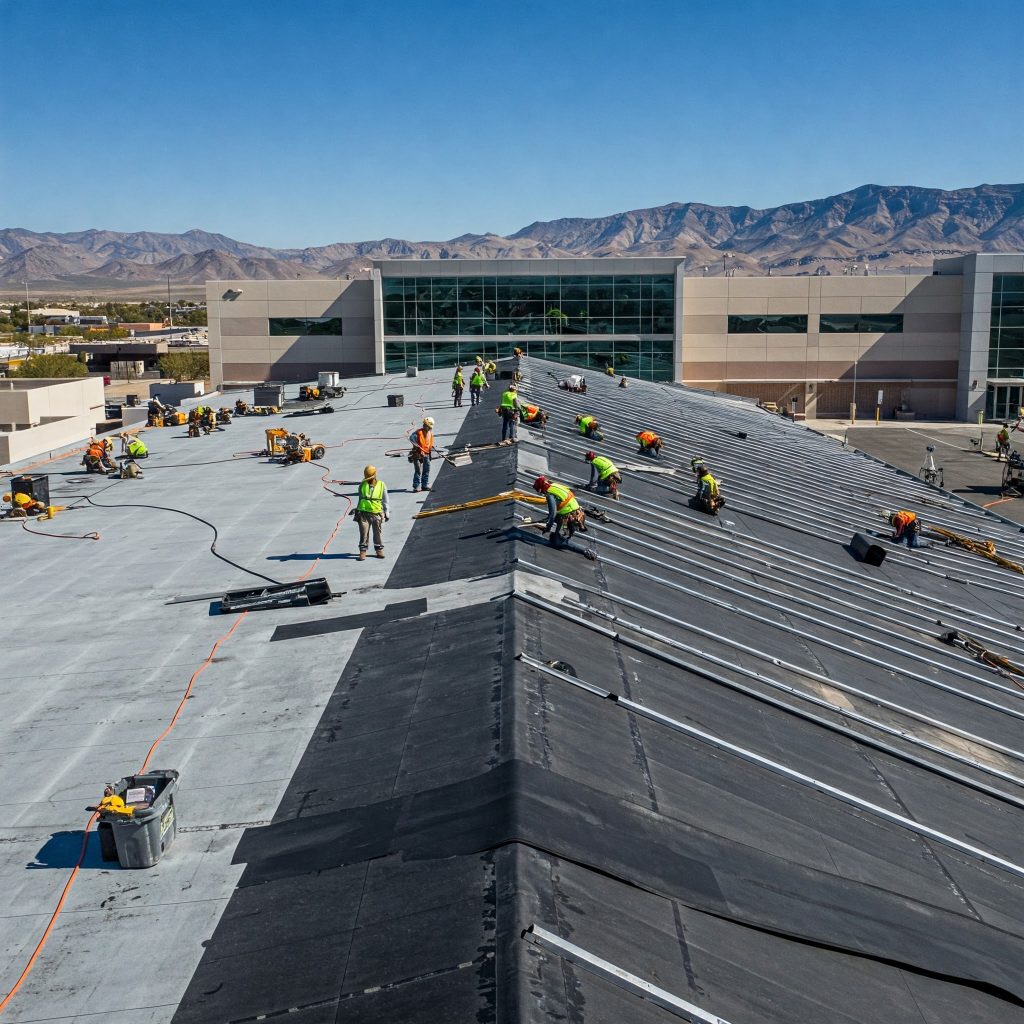
Also, a clean roof is much easier to inspect. Many owners schedule commercial roof cleaning right before an inspection. That way, the inspector can see cracks, punctures, and seam problems clearly. Read our guide to commercial roof inspections for more.
How Often to Schedule Commercial Roof Cleaning
In general, frequency depends on your location and building use. Roofs near trees may need cleaning every fall. Restaurant roofs may need more frequent attention around exhaust fans. Meanwhile, roofs in dusty or polluted areas may need annual cleaning to stay reflective.
Cleaning Before Coatings
If you plan to apply a roof coating, cleaning is the first step. Coatings bond poorly to dirty surfaces. So crews thoroughly clean and dry the roof before applying any coating. Learn more on our roof coatings page.
What a Professional Cleaning Visit Looks Like
A typical visit follows a clear order. First, the crew walks the roof and notes problem areas. Next, they remove loose debris by hand or with blowers. Then they clear drains and gutters. After that, they apply approved cleaners to dirty or stained areas and scrub gently. Finally, they rinse with low-pressure water and check that drains flow freely. Many crews also take before and after photos for your records.
Protecting the Area Below
Cleaning water has to go somewhere. Good crews protect landscaping, sidewalks, and parked cars below. They also control runoff so cleaners do not enter storm drains in large amounts. In addition, they schedule work when foot traffic is light. These steps keep tenants and neighbors happy.
Budgeting for Commercial Roof Cleaning
Cleaning costs depend on roof size, access, and how dirty the roof is. Many owners bundle cleaning with spring or fall inspections to save on mobilization. Over time, the cost is often offset by lower energy bills, fewer drain clogs, and longer roof life.
Seasonal Cleaning Tips
Season matters for cleaning. Fall is the best time to clear leaves before winter rain and snow. Spring cleaning removes winter grime and pollen. In hot regions, early summer cleaning restores reflectivity before peak cooling season. Avoid cleaning during freezing weather, since wet surfaces can ice over and become dangerous.
Cleaning After Construction
Construction on or near your building can leave a mess on the roof. For example, nearby demolition spreads dust. Rooftop equipment installs leave screws, metal shavings, and packaging. Painting crews may drip on the membrane. So schedule commercial roof cleaning after any major work. Metal shavings, in particular, can rust and stain white roofs or even puncture them. A quick sweep and wash protects the roof and the warranty.
Questions to Ask Before Commercial Roof Cleaning
- Which cleaners do you use, and are they approved for our membrane?
- What water pressure will you use?
- How will you protect drains and the ground below?
- Will you report any damage you find?
Good answers show the crew understands roofs, not just washing. They also protect your warranty and your budget.
Common Mistakes
- Using high-pressure washers on single-ply membranes
- Applying harsh chemicals without checking the warranty
- Letting untrained staff clean the roof
- Ignoring grease buildup around kitchen fans
- Forgetting to clear drains after cleaning
FAQ on Commercial Roof Cleaning
Can commercial roof cleaning lower energy bills?
Yes, especially for white roofs, since cleaning restores reflectivity.
Will cleaning void my warranty?
Not if crews use methods and cleaners approved by the roof maker.
Keep Your Roof Clean and Strong
A clean roof lasts longer and performs better. Visit our roof services page, or schedule a professional cleaning today.