
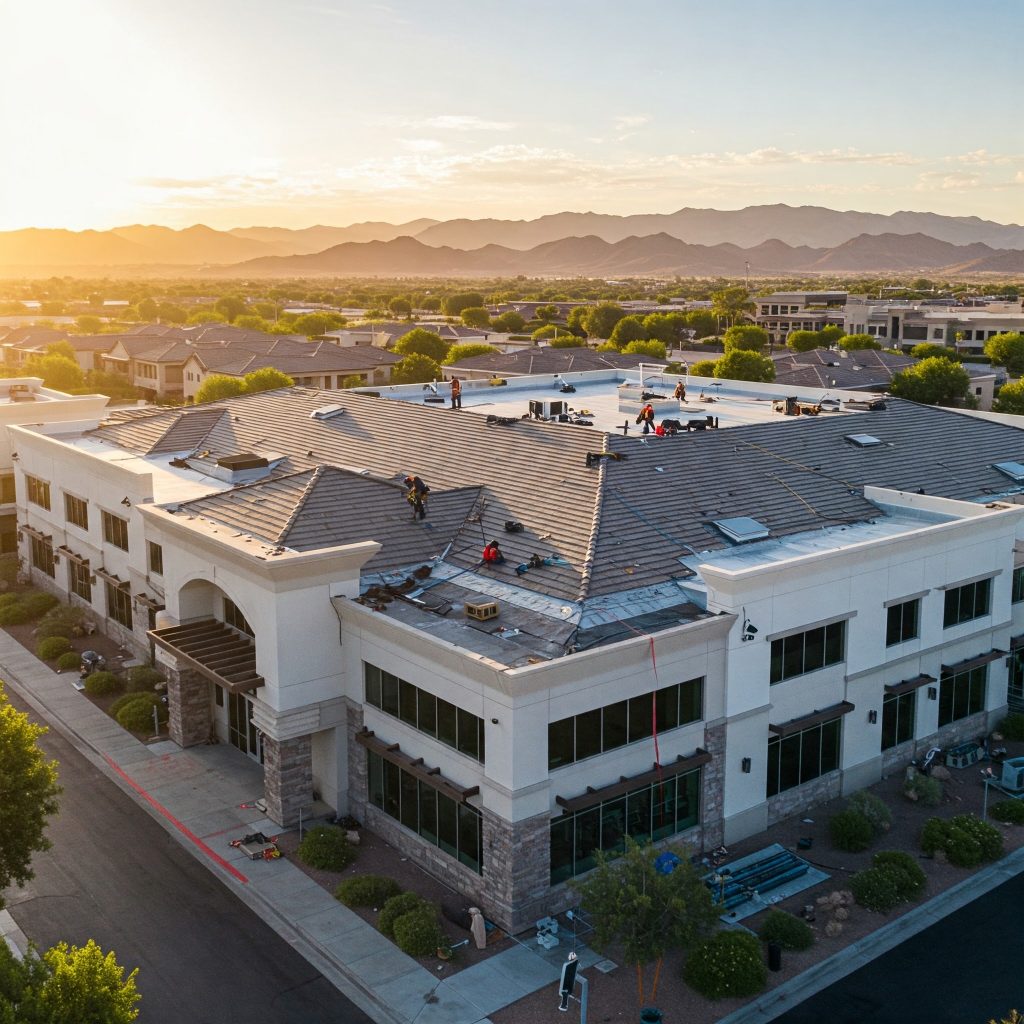
Commercial roof maintenance is the difference between a roof that lasts its full life and one that fails early. Most big roof repairs start as small, cheap problems: a clogged drain, a loose flashing, a little puncture near an HVAC unit. Left alone, each one grows. Water seeps in, soaks insulation, and spreads. With a simple routine, though, you can catch these issues while they are still minor. This guide explains what to check, when to check it, and how to build an easy maintenance plan.
Facility managers, property managers, and building owners can put these steps to work right away.
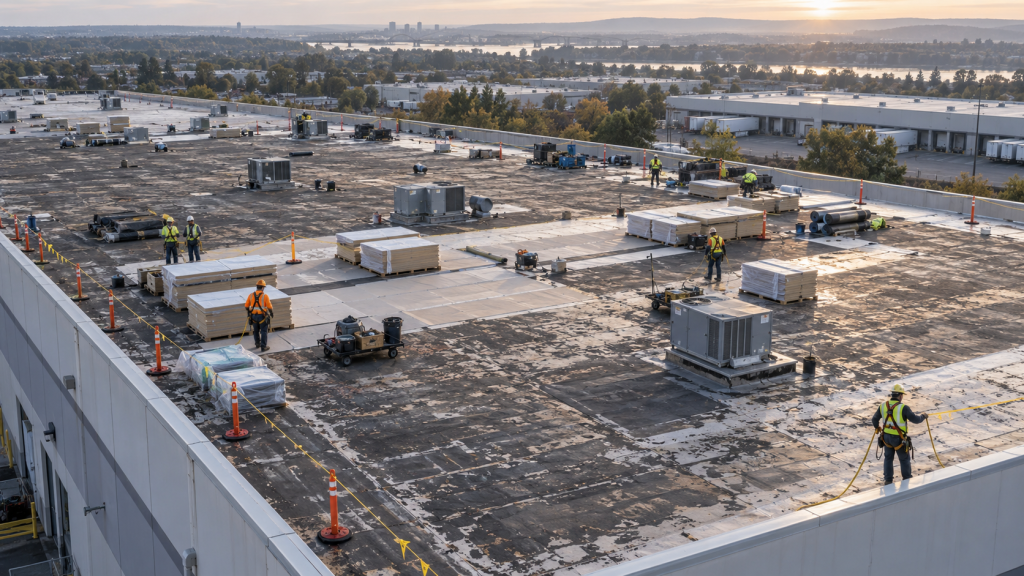
Why Small Problems Grow
First, roofs face constant stress. Sun breaks down surfaces. Rain tests every seam. Wind lifts edges. Temperature swings make materials expand and shrink. Meanwhile, people walk on the roof to service equipment.
As a result, each of these creates small wear points. On their own, they are minor. Over time, however, water finds them. Once water gets under the membrane, damage spreads quietly. That is why steady commercial roof maintenance matters so much.
The Most Common Small Problems
In practice, these are the issues maintenance crews find most often:
- Clogged drains and gutters from leaves, trash, and dirt
- Loose or cracked flashing at walls and curbs
- Small punctures from tools, debris, or foot traffic
- Open seams on single-ply roofs
- Cracked sealant around pipes and vents
- Loose edge metal after wind events
- Damage near rooftop units from service work
- Ponding water in low spots
Each one is usually cheap to fix when caught early.
A Seasonal Commercial Roof Maintenance Plan
A simple seasonal plan keeps maintenance on track.
Spring
Inspect for winter damage. Check flashing, seams, and edges. Clear drains of debris. Look for ponding after spring rains.
Summer
Check for sun damage and blisters. Inspect around HVAC units, which run hard in summer. Make sure condensate lines drain properly.
Fall
Clear leaves from drains and gutters. Inspect the whole roof before winter. Fix any open seams or loose flashing.
Winter
Watch for ice dams and heavy snow loads. Keep drains open. Limit foot traffic on cold, brittle membranes.
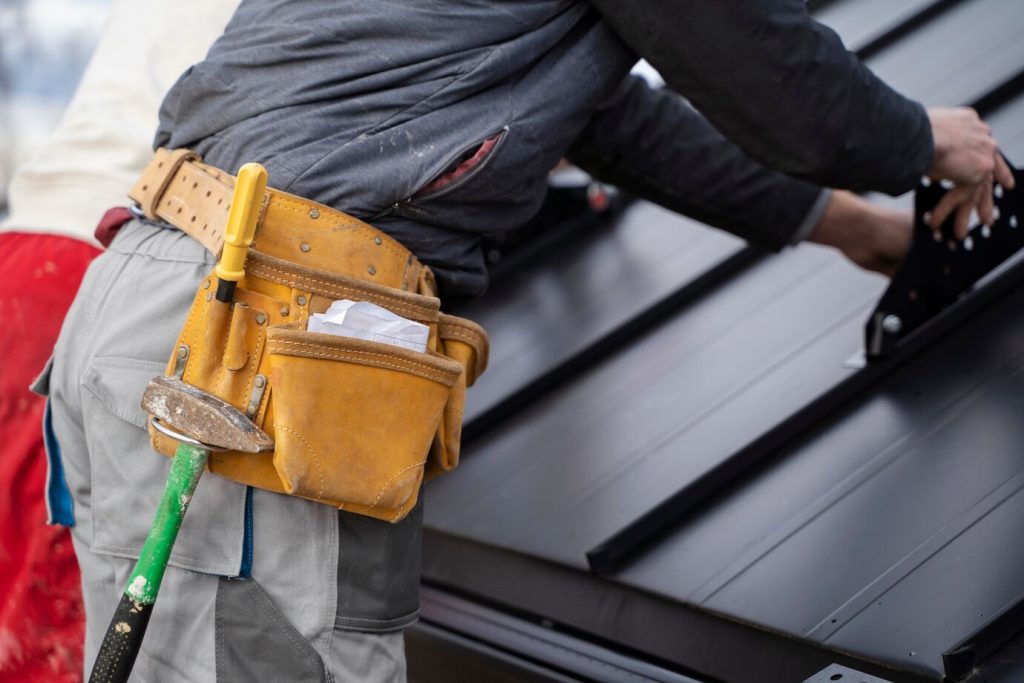
After Storms
In addition, storms can cause sudden damage. After hail, high winds, or heavy snow, schedule a quick inspection. Look for torn membrane, lifted edges, and debris. Then fix problems before the next storm hits.
Managing Rooftop Traffic
Also, many roof problems start with foot traffic. HVAC techs, electricians, and other trades all walk on the roof. Some drop tools or leave screws behind. To reduce damage:
- Install walk pads to key equipment.
- Require a sign-in log for roof access.
- Ask contractors to protect the roof while working.
- Inspect after other trades finish.
Keep Drains Clear
Surprisingly, clogged drains cause a large share of roof problems. When water cannot escape, it ponds, adds weight, and pushes into seams. During heavy storms, it can even overflow flashing. So clear drains, scuppers, and gutters regularly, especially in fall.
Document Everything
Good records make commercial roof maintenance more effective. Keep a log of inspections, repairs, photos, and costs. This history shows trends, supports warranty claims, and helps you plan budgets. Our facility manager guide offers more record-keeping tips.
Know When to Call a Pro
Of course, staff can handle simple tasks like clearing debris. However, repairs to seams, flashing, and membranes should go to a trained roofer. Wrong materials or methods can void warranties and cause new leaks. In addition, roof work carries fall risks, so follow OSHA fall protection rules.
Maintenance Agreements
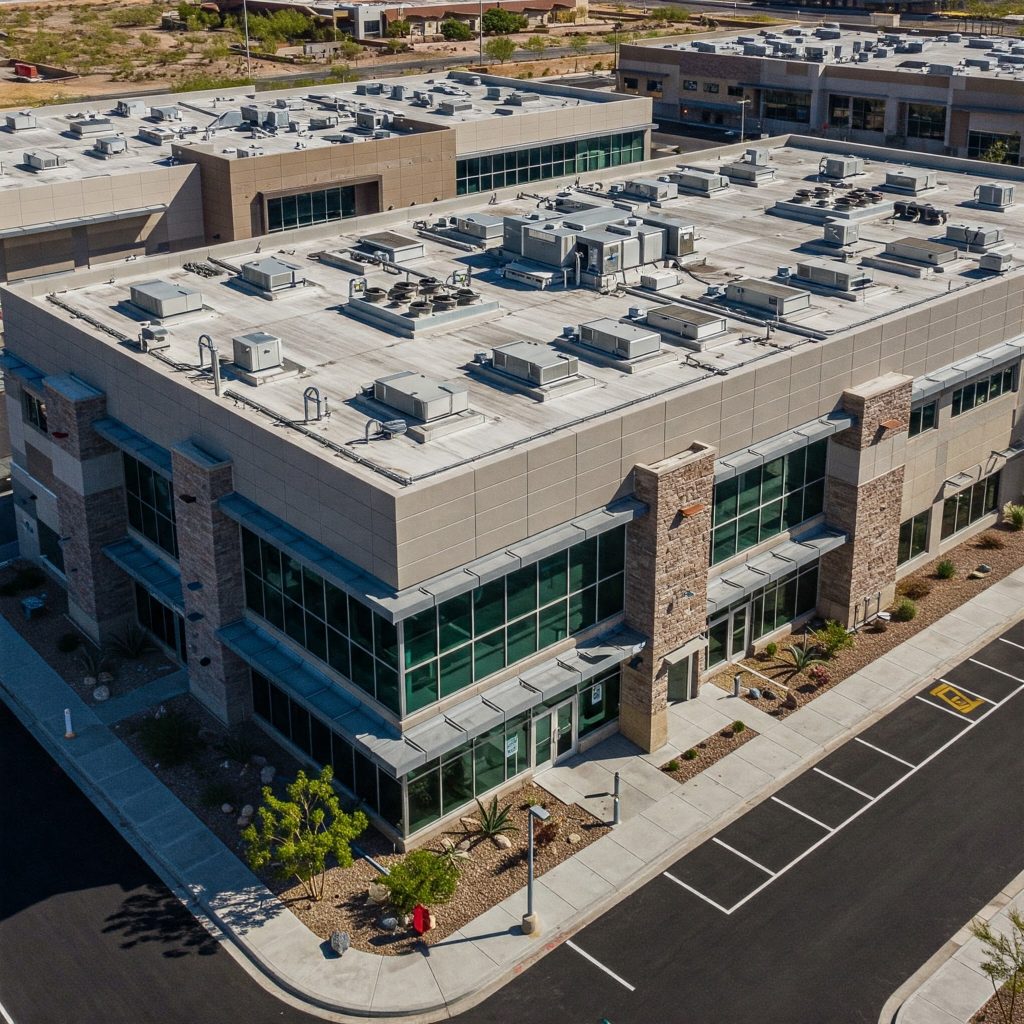
Meanwhile, many roofers offer maintenance agreements. These usually include scheduled inspections, minor repairs, and priority service. They make budgeting easier and ensure nothing gets missed. They can also satisfy warranty requirements.
The Payoff of Commercial Roof Maintenance
Overall, steady maintenance pays off in several ways. Roofs last longer, so replacement can wait. Leaks happen less often, so tenants stay happy. Energy costs stay lower when insulation stays dry. Moreover, budgets become more predictable because big surprises are rare.
When Maintenance Is No Longer Enough
Eventually, every roof reaches the end of its life. When fixes stack up and wet areas spread, a new roof may be the smarter spend. Our article on end-of-life signs explains what to watch for.
Commercial Roof Maintenance by Roof Type
Different roofs need slightly different care. For instance, TPO and PVC roofs need seam checks and gentle cleaning to stay reflective. EPDM roofs need attention to seam tape and flashing. Modified bitumen roofs need checks for blisters and lost granules. Metal roofs need fastener and sealant checks, plus rust spot repair.
Ask your roofer to tailor the plan to your system. In addition, follow the maker’s care guide, since many warranties require it.
Budgeting for Commercial Roof Maintenance
Maintenance costs are small and steady. Big repairs, by contrast, are large and sudden. So set aside a yearly amount for inspections and minor fixes. Many owners base it on roof size and age. Over time, this steady spending lowers total roof costs and makes capital planning far easier.
A Quick Example
Picture two identical warehouses. One owner pays for inspections twice a year and fixes small problems right away. The other waits for leaks. After ten years, the first roof is still in good shape. The second roof has wet insulation, a rusted deck section, and a replacement bill years ahead of schedule. That gap shows the real value of commercial roof maintenance.
Training Your Team for Commercial Roof Maintenance
Your own staff can help a lot. Teach them to spot water stains, listen for drips during storms, and report problems fast. Also, train them on roof access rules. Only trained people should go up, and they should always use proper fall protection. With a little training, your team becomes an early warning system. In turn, small problems reach your roofer before they grow into big ones.
Using Technology
Simple tools can make maintenance easier. For example, shared photo folders keep every inspection in one place. Calendar reminders keep visits on schedule. Some owners also add water sensors near known trouble spots. When a sensor gets wet, it sends an alert right away. These small tools help you act faster and track the roof over time. Best of all, most cost very little compared with a single major repair.
Working With Tenants
Tenants are often the first to notice a problem. A drip over a desk or a stain on a ceiling tile is an early clue. So make it easy for them to report issues. Give them one contact and a quick way to send photos. Then respond fast. Tenants who feel heard report problems sooner, which keeps small issues small.
Simple Commercial Roof Maintenance Checklist
- Inspect each spring and fall.
- Inspect after major storms.
- Clear drains and gutters often.
- Check flashing, seams, and edges.
- Protect the roof from foot traffic.
- Fix small problems right away.
- Keep detailed records.
FAQ on Commercial Roof Maintenance
How much does commercial roof maintenance cost?
It depends on roof size and condition. Yet routine maintenance usually costs far less than major repairs.
Can maintenance extend roof life?
Yes. Well-maintained roofs often outlast neglected ones by many years.
Start Your Maintenance Plan
A little care now prevents big bills later. Visit our roof repair page, or set up a maintenance plan today.